Overview
Few animals in North America are as instantly recognizable — or as endlessly fascinating — as the raccoon. With its distinctive black facial mask, ringed bushy tail, and nimble front paws, the raccoon (Procyon lotor) has carved out a unique place in both the natural world and human cultural imagination. From dense forest hollows to suburban backyards, this adaptable mammal has demonstrated a remarkable ability to thrive alongside humanity, earning both admiration and a reputation for cleverness that few other wild animals can match.
For wildlife enthusiasts, hunters, and outdoor adventurers alike, the raccoon represents one of North America's most engaging and widespread species. It plays a meaningful ecological role in the environments it inhabits, and it has a long history as a quarry for hunters, particularly in the tradition of nighttime hunting with hounds. Whether you encounter a raccoon on a hiking trail in a western state like Montana or spot one raiding a garden compost bin on a quiet suburban street, there is always something compelling about this masked mammal that invites a closer look.
This article explores the raccoon in depth — its biology, behavior, habitat preferences, hunting heritage, and conservation status — offering a comprehensive portrait of one of North America's most beloved and misunderstood wild creatures.
Biological Traits
The raccoon (Procyon lotor) belongs to the family Procyonidae, a group of primarily New World mammals that also includes coatis, ringtails, and olingos. The species name lotor comes from the Latin word for "washer," a nod to the raccoon's well-documented habit of seemingly "washing" its food in water before eating — a behavior that has charmed observers for centuries.
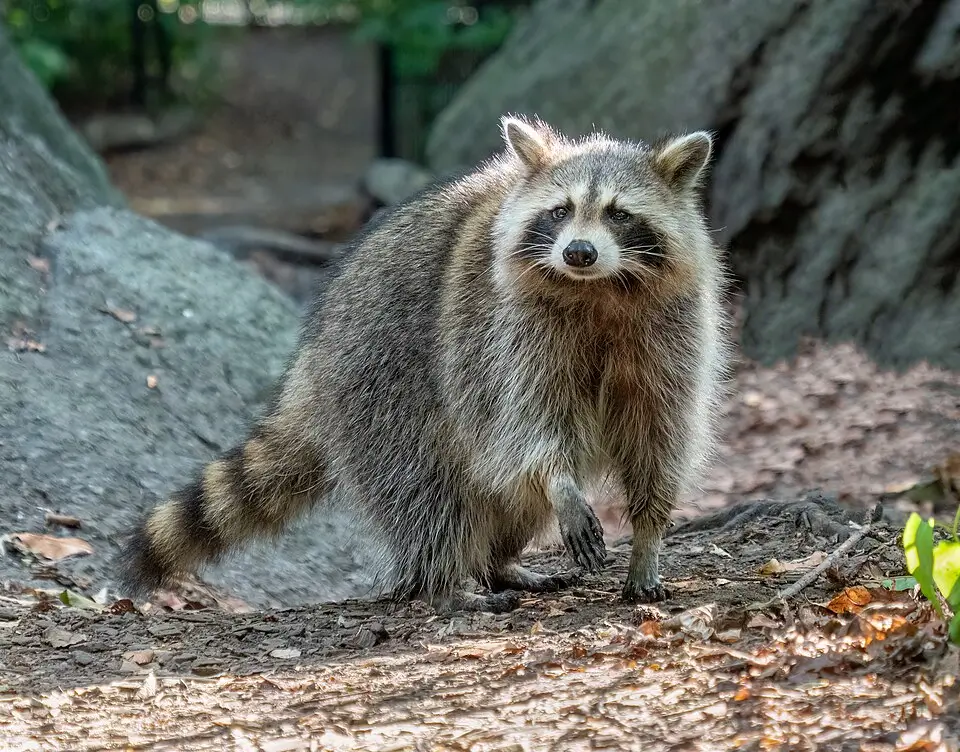
Raccoons are medium-sized mammals with a stocky, robust build. They are immediately identifiable by several key physical features. The black mask across the eyes, framed by white fur above and below, gives the animal its bandit-like appearance and is one of the most recognizable markings in the animal kingdom. The tail is thick and bushy, typically banded with alternating rings of dark and light fur. The coat overall tends to be a grizzled gray-brown, though coloration can vary somewhat across different geographic regions and individual animals.
One of the raccoon's most remarkable biological features is its front paws. Highly dexterous and equipped with long, sensitive fingers, raccoon forepaws function almost like hands. Raccoons use them to manipulate objects with surprising precision — opening latches, unscrewing lids, and probing into tight spaces for food. The tactile sensitivity of their paws is particularly acute when wet, which may help explain the food-washing behavior: immersing food in water may heighten the sensory experience of handling it.
Raccoons are omnivores with a broad and opportunistic diet. They consume a wide variety of foods, including fruits, nuts, insects, earthworms, crayfish, frogs, fish, bird eggs, small mammals, and human food waste. This dietary flexibility is one of the key factors driving the raccoon's success as a species. They are equally at home foraging in a forest stream for crayfish or raiding an unsecured trash can in a residential neighborhood.
Raccoons are generally nocturnal, though they may be active during daylight hours, particularly in late summer and autumn when they are building fat reserves for winter. They do not true hibernate, but in colder climates they may enter periods of torpor during the harshest winter weather, retreating to dens and living off stored body fat for weeks at a time. By late spring, when food becomes abundant again, raccoons become highly active.
Mating typically occurs in late winter, with females giving birth in spring after a gestation period of approximately 63 days. Litters generally range from two to five young, called kits. The kits are born helpless and remain with their mother for much of their first year, learning the foraging and survival skills they will need as adults. Raccoons are largely solitary animals as adults, though females may share overlapping home ranges, and males may associate loosely during breeding season.
The raccoon's intelligence has been the subject of scientific study for over a century. Research has demonstrated that raccoons possess excellent problem-solving abilities and long-term memory. In classic experiments, raccoons were able to remember solutions to tasks for up to three years. This cognitive flexibility, combined with their physical dexterity, makes them exceptionally good at exploiting new food sources and adapting to novel environments — a trait that has served the species extraordinarily well in an era of rapid human development.
Habitat & Range
The raccoon is one of the most widely distributed mammals in North America. Its native range extends across most of the continental United States, southern Canada, and into Central America and northern South America. It is found in an impressive diversity of habitats, including deciduous and mixed forests, wetlands, marshes, prairies, coastal areas, and urban and suburban environments.
Raccoons show a strong preference for areas near water. Rivers, streams, ponds, lakes, and wetlands provide rich foraging opportunities, including the aquatic invertebrates, fish, and amphibians that form an important part of the raccoon's diet. Wooded areas near water are considered prime raccoon habitat, offering both food and shelter in the form of hollow trees and dense vegetation.
In a state like Montana — the fourth-largest state in the United States, spanning the Mountain West and characterized by dramatic landscapes ranging from the Rocky Mountains in the west to the expansive prairies of the east — raccoons are present but not uniformly distributed. Montana's diverse geography includes river corridors, agricultural valleys, riparian zones along waterways like the Missouri and Yellowstone Rivers, and patches of dense woodland, all of which can support raccoon populations. The more heavily forested and riparian-rich western portions of the state tend to offer the most suitable habitat for raccoons compared to the more arid, open eastern plains, though raccoons are adaptable and can be found in agricultural and semi-rural settings across the state wherever food and shelter are available.
Raccoons are highly adaptable when it comes to denning. They will use hollow trees, rock crevices, brush piles, abandoned burrows dug by other animals, and even attics or crawl spaces in human structures. In areas with abundant food and shelter, raccoon populations can become quite dense.
Hunting Information
The raccoon has a rich and storied hunting heritage in North America. Raccoon hunting — often conducted at night with the aid of trained hounds — is a beloved tradition in many parts of the country, particularly in the South and Midwest. Hunters follow their dogs through the darkness as the hounds track and tree raccoons, and the sport blends woodsmanship, dog training, and an intimate familiarity with the nocturnal world that few other hunting pursuits can match.
Raccoon pelts have historically been an important part of the North American fur trade, and raccoon hunting for both sport and fur continues to be a meaningful tradition for many hunters and trappers. The meat of the raccoon is also consumed in various regional culinary traditions, particularly in rural communities across the South and Midwest.
Regarding raccoon hunting specifically in Montana, official hunting season dates, license requirements, and specific regulations were not available in the source data consulted for this article. Montana is governed by the Montana Fish, Wildlife & Parks (FWP) agency, which oversees hunting and trapping regulations for the state. Hunters and trappers interested in pursuing raccoons in Montana are strongly encouraged to consult the Montana FWP directly or visit the official Montana FWP website to obtain current, accurate, and up-to-date information on season dates, licensing requirements, bag limits, and any applicable restrictions. Regulations can change from year to year, and it is every hunter's responsibility to be fully informed before heading into the field.
Conservation
The raccoon (Procyon lotor) is currently listed as a species of least concern from a conservation standpoint. Its populations are stable and, in many areas, robust. The raccoon's extraordinary adaptability — its dietary flexibility, broad habitat tolerance, high reproductive rate, and cognitive problem-solving abilities — has allowed it not only to persist but in many cases to expand its range and increase in numbers even as human development has dramatically altered North American landscapes.
Raccoons have benefited in many ways from human presence. Urban and suburban environments offer abundant food resources in the form of unsecured garbage, gardens, compost, and supplemental wildlife feeding, and they provide denning opportunities in structures and landscaping features. As a result, raccoon populations in and around human settlements are often thriving.
While raccoons do not face significant threats at a species level, they are important in discussions of wildlife disease management. Raccoons are a primary reservoir for rabies in North America and can also carry canine distemper and other diseases. Wildlife managers and public health authorities monitor raccoon populations as part of broader disease surveillance programs. Responsible coexistence with raccoons — including securing garbage, not feeding wildlife, and vaccinating pets — helps reduce the risk of disease transmission and supports healthy, balanced wildlife populations.
From an ecological perspective, raccoons play several important roles. As omnivores, they help disperse seeds, control insect and invertebrate populations, and contribute to the complex web of predator-prey relationships in the ecosystems they inhabit. Larger predators, including coyotes, bobcats, great horned owls, and in some areas mountain lions and wolves, prey upon raccoons, making them an important link in food webs across North America.
Hunters and trappers who pursue raccoons contribute meaningfully to wildlife management efforts. Harvest data collected from hunting and trapping seasons provides valuable population information to wildlife agencies, helping managers make informed decisions about habitat conservation and population management. In this way, the hunting tradition surrounding raccoons is not only a cultural heritage but also a practical component of modern wildlife stewardship.