Overview
Few birds in North America carry the same nostalgic weight as the Northern bobwhite (Colinus virginianus). Its clear, whistling call — a bright, two-note "bob-WHITE!" ringing out across meadows and brushy fields — has become one of the most recognizable sounds of the American countryside. For generations of hunters, naturalists, and outdoor enthusiasts, the Northern bobwhite represents a living symbol of rural landscapes, warm summer mornings, and the timeless tradition of upland bird hunting.
Known colloquially as the "bobwhite quail" or simply "quail" across much of its range, this small but spirited bird has captured the hearts of millions across the eastern and central United States. It is one of the most studied game birds in North America, and its population trends have become something of a barometer for the health of grassland and early successional habitats throughout the continent. Whether you are a seasoned quail hunter with a pointing dog at your heel or a backyard birder hoping to catch a glimpse of a covey flushing from the field's edge, the Northern bobwhite is a species that commands admiration and respect.
This article explores the biology, habitat, hunting traditions, and conservation status of the Northern bobwhite — a bird that is as deeply woven into American outdoor culture as any species on the continent.
Biological Traits
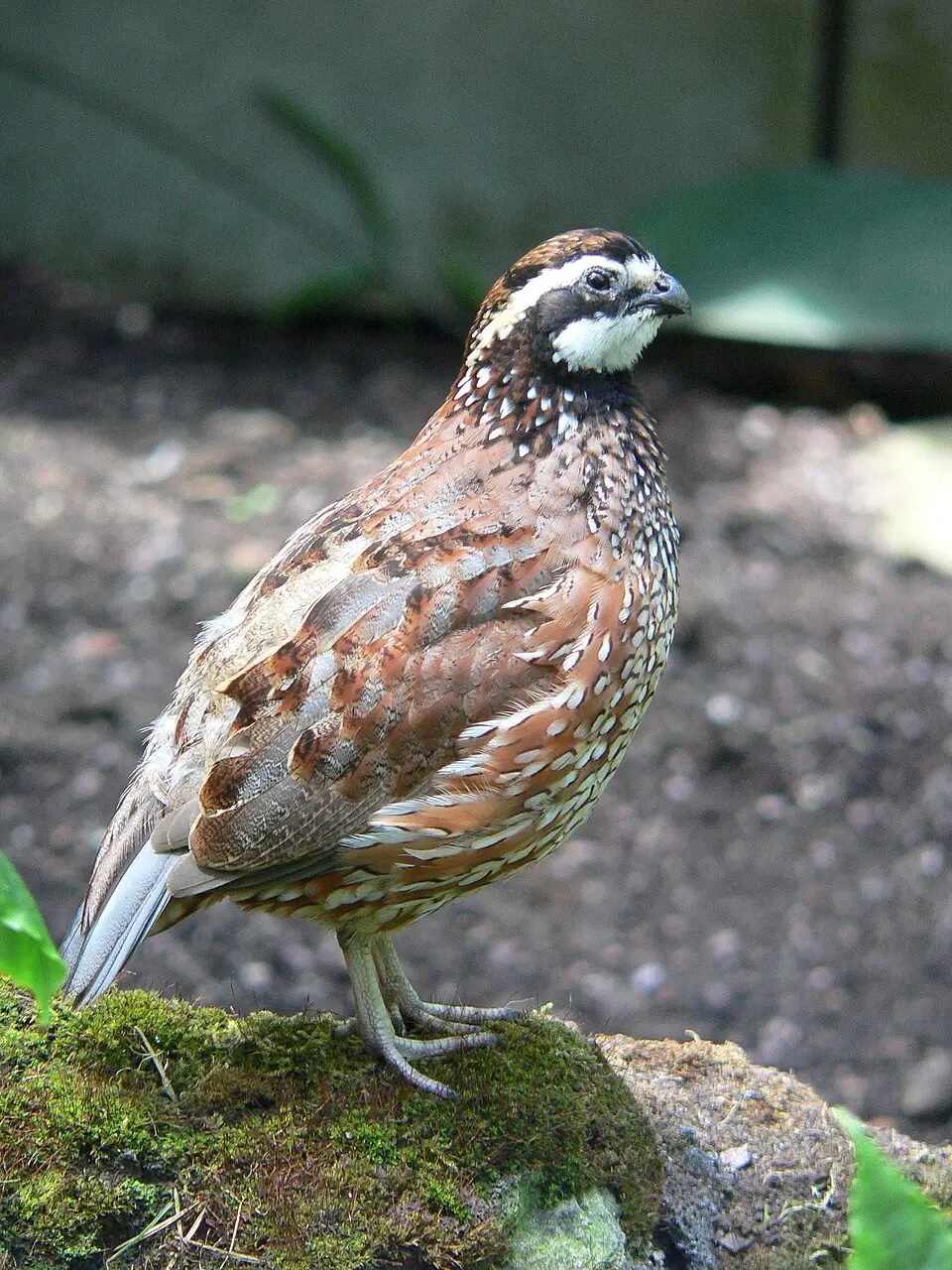
The Northern bobwhite (Colinus virginianus) belongs to the family Odontophoridae — the New World quails — and is the only member of the genus Colinus found regularly in the United States. It is a compact, round-bodied bird with short wings designed for explosive, short-distance flight rather than long sustained travel. This burst-style flight is one of its most defining characteristics and makes it a thrilling quarry for upland hunters.
Adult bobwhites display a rich, complex plumage pattern. Males are strikingly marked with a bold white supercilium (eyebrow stripe) and white throat patch that contrast sharply against a dark brown or black head. The body is a warm rufous-brown with intricate streaking and barring across the breast and flanks. Females share much of the same overall body patterning but differ in that their supercilium and throat patches are buff-colored rather than white, providing a useful field identification characteristic.
Bobwhites are notably small birds, with adults typically weighing between roughly 5 and 8 ounces and measuring somewhere in the range of 9 to 11 inches in length. Their wingspan is modest, generally in the range of 11 to 13 inches, reflecting their adaptation to close-cover environments where maneuvering through dense brush is far more important than soaring across open skies.
One of the most fascinating aspects of Northern bobwhite biology is their social structure. For much of the year — particularly in fall and winter — bobwhites gather in tight-knit family groups known as coveys. A typical covey may consist of anywhere from half a dozen to more than thirty individuals, though groups in the range of ten to twenty birds are most commonly observed. Covey life offers distinct survival advantages: more eyes to watch for predators, shared warmth during cold nights when birds roost together in a characteristic outward-facing circle, and communal foraging that improves feeding efficiency.
Their diet is broadly omnivorous with a strong preference for plant material. Seeds from a wide variety of grasses, legumes, and agricultural crops make up the backbone of their diet, while insects — particularly during the breeding season — provide critical protein, especially for developing chicks. Young bobwhite chicks are almost entirely insectivorous in their first weeks of life, a nutritional requirement that has important implications for habitat management.
Breeding typically begins in late spring and can extend well into summer and even early fall in some parts of the range. The bobwhite's nesting biology is notably flexible. Both males and females participate in incubating eggs and brooding chicks — an unusual trait among game birds — and a single pair may attempt multiple nesting cycles within a single breeding season, particularly if early nests are lost to predation or weather. Clutch sizes are generous, often ranging from 12 to 16 eggs. This high reproductive potential means that bobwhite populations can rebound relatively quickly under favorable conditions, though it also means that habitat quality remains the critical limiting factor.
Habitat and Range
The Northern bobwhite has one of the broadest natural distributions of any quail species in North America. Its range extends from southern Maine and the Great Lakes region in the north, sweeping southward through the entirety of the eastern United States, across the Gulf Coast states, and into parts of Mexico and Central America. The species is also found across the central plains states, with populations historically extending into portions of Kansas, Nebraska, and Oklahoma.
The bobwhite is fundamentally a bird of edge habitats — landscapes where open areas meet dense brush, woodland, or shrubby cover. Historically, fire-maintained pine savannas, open grasslands with interspersed shrubs, fencerows, and the edges of agricultural fields provided ideal conditions. The species thrives where there is a diverse mosaic of grasses for nesting cover, shrubby patches for loafing and escape cover, open bare ground for movement and dusting, and a reliable seed supply from native plants or crops.
It is worth noting that the Northern bobwhite is not typically considered a resident species of Montana. The state's geography — characterized by its dramatic Rocky Mountain ranges in the west, sweeping high plains in the east, and general elevation and climate patterns — falls largely outside the bobwhite's native range. Montana's native upland game birds include species such as the ring-necked pheasant (introduced), Hungarian partridge, sharp-tailed grouse, and several other native grouse species that are far better adapted to the state's landscapes and climate.
Hunting Information
The Northern bobwhite holds a place of extraordinary cultural significance in American hunting tradition. Quail hunting — often referred to simply as "going quail shooting" or "bird hunting" in many parts of the South and Midwest — built an entire subculture around the bobwhite, complete with specialized pointing and flushing dogs, distinctive hunting attire, and a rich body of literature and art. Breeds such as the English pointer, Brittany, and English setter have been developed and refined over generations specifically with bobwhite hunting in mind.
Hunting bobwhites is typically a pursuit of coveys found in early successional habitat — brushy fields, overgrown pastures, woodland edges, and the margins of agricultural land. Hunters work with well-trained bird dogs to locate and point coveys, then flush and shoot individual birds as they scatter explosively in multiple directions. After the initial covey flush, hunters may pursue individual birds, known as "singles," which often hold tighter for a dog and provide additional shooting opportunities.
Because the Northern bobwhite is not a species native to or regularly present in Montana, hunters in the state should consult the Montana Fish, Wildlife & Parks (FWF) directly for current and accurate information about any upland bird seasons, regulations, and licensing requirements. Specific season dates, bag limits, and license fees for any species can change from year to year and vary by hunting zone. For up-to-date and legally accurate information, always reference the official Montana FWF hunting regulations prior to any hunting activity.
Conservation
The Northern bobwhite has experienced significant and well-documented population declines across much of its historic range over the past several decades. Habitat loss — driven by agricultural intensification, fencerow removal, urban development, and the suppression of natural fire regimes — is widely considered the primary driver of these declines. The shift away from small-scale, diversified farming toward large-scale monoculture agriculture has dramatically reduced the patchwork of habitats that bobwhites depend upon.
Conservation organizations including Quail Forever, the National Bobwhite Conservation Initiative (NBCI), and the Bobwhite Quail Initiative have made significant efforts to reverse these trends through habitat restoration, land management education, and research. Prescribed burning — the reintroduction of fire to maintain open pine savannas and grasslands — has emerged as one of the most effective tools for creating and maintaining bobwhite habitat across the Southeast. Similarly, the restoration of native bunch grasses, the establishment of brush piles, and the planting of native legumes along field edges have all shown positive results in supporting bobwhite populations.
Private landowners play a critical role in bobwhite conservation, given how much of the bird's habitat exists on privately held agricultural lands. Programs administered through the USDA Natural Resources Conservation Service (NRCS), such as the Conservation Reserve Program (CRP), have helped incentivize habitat improvements on private land by providing financial support for planting native grasses, wildflowers, and shrub cover on marginal agricultural fields.
The long-term outlook for the Northern bobwhite depends heavily on continued investment in landscape-scale habitat management, the maintenance of working agricultural lands that support early successional vegetation, and the engagement of hunters and landowners as active conservation partners. The bobwhite's story is ultimately one of interconnection — between people and land, between hunting heritage and ecological stewardship, and between the health of rural landscapes and the persistence of one of America's most beloved wild birds.