Overview
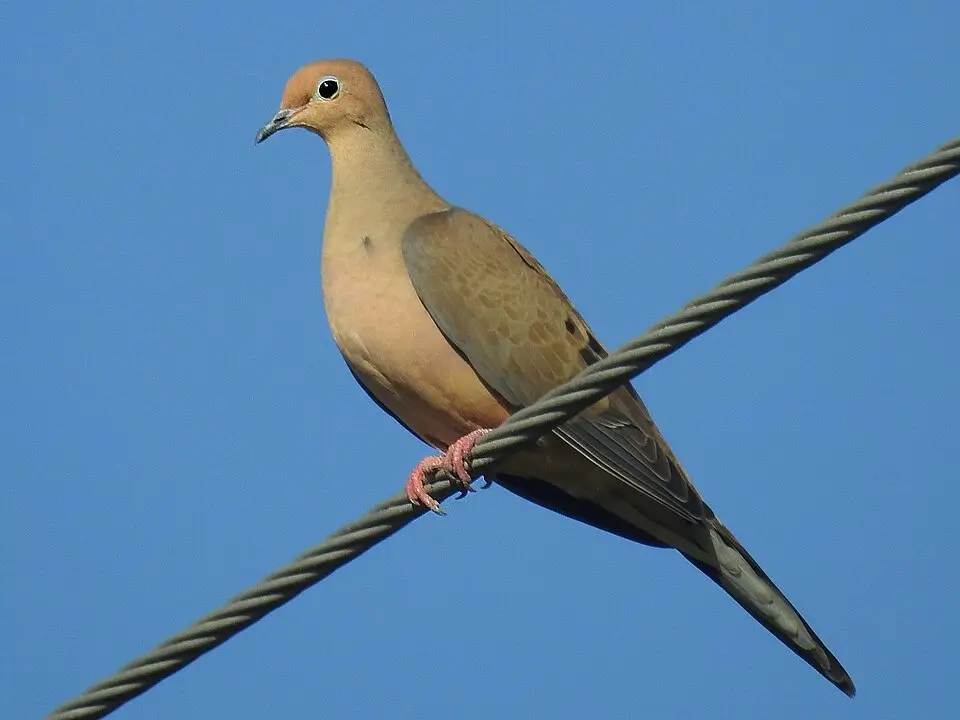
Few birds are as recognizable — or as deeply woven into the fabric of North American outdoor culture — as the mourning dove. With its soft, mournful cooing drifting across fields and fence lines at dawn, this graceful bird has captured the attention of birdwatchers, wildlife enthusiasts, and hunters alike for generations. Known scientifically as Zenaida macroura, the mourning dove is one of the most abundant and widely distributed birds on the continent, and it holds the distinction of being the most hunted migratory bird in North America. Whether you encounter one perched quietly on a telephone wire or watch a flock burst from a harvested grain field, the mourning dove is a species that commands respect and admiration.
In a state as vast and diverse as Montana — the fourth-largest state by area in the United States — the mourning dove finds a welcoming landscape of open fields, river valleys, rangeland, and agricultural terrain. Montana's sweeping geography, stretching from the Rocky Mountain ranges in the west to the rolling prairies of the east, provides an ideal seasonal home for this migratory species. For hunters and wildlife watchers alike, understanding the biology, behavior, and habitat requirements of the mourning dove enriches every encounter with this elegant bird.
Biological Traits
The mourning dove (Zenaida macroura) belongs to the family Columbidae, which includes all pigeons and doves. It is a medium-sized bird, slender and streamlined, with a small rounded head, a short bill, and a long, tapered tail that gives it an aerodynamic silhouette unlike most other birds in its range. The plumage is soft and understated — a warm pinkish-brown on the breast transitioning to gray-brown on the wings and back, with a subtle iridescent sheen on the neck feathers. Black spots are often visible on the wings, and in good light, a pale blue orbital ring can be seen around the eye.
One of the mourning dove's most distinctive features is its flight. These birds are exceptionally fast and agile in the air, capable of reaching speeds that challenge even experienced wingshooters in the field. Their wings produce a characteristic whistling sound during takeoff and flight, a trait that serves both as a communication signal and an alarm mechanism when predators are near.
Mourning doves are prolific breeders. They are known to nest multiple times throughout a single breeding season, which stretches from spring well into fall across much of their range. The nest itself is a loosely constructed platform of twigs, typically placed in a tree, shrub, or even on the ground in areas with low human disturbance. Both parents share incubation duties, and the young — called squabs — hatch after approximately two weeks. Unlike most other bird species, mourning dove parents produce "crop milk," a nutritious secretion from the lining of the crop that is fed to the young squabs in the early days of life. This adaptation allows the parents to feed their offspring independently of whatever food sources are locally available.
Mourning doves are granivorous, meaning their diet consists almost entirely of seeds. They are ground feeders by habit, foraging in open areas for seeds from grasses, weeds, agricultural crops, and native plants. Their digestive system is well adapted to processing hard seeds, and they routinely consume grit — small stones and sand — to aid in grinding food in their muscular gizzards. This diet makes them closely associated with agricultural landscapes and areas where seed-bearing plants are abundant.
The species is sexually dimorphic, though subtly so. Males tend to have a slightly more vibrant coloration on the head and neck, with a bluish-gray crown and a pinkish blush on the breast. Females are generally more muted and brownish overall. Juveniles can be distinguished by scaled or spotted feather patterns that differ from the smooth, clean appearance of adults.
Habitat & Range
The mourning dove is one of the most adaptable birds in North America. Its range spans the entirety of the continental United States and extends into southern Canada, Mexico, Central America, and the Caribbean. It occupies a remarkable diversity of habitats, from arid desert scrublands and open grasslands to suburban backyards, agricultural fields, and open woodlands. What unites these environments is a common set of features: open ground for foraging, some degree of overhead cover or perch sites, and access to water.
Mourning doves are migratory, though their migration patterns are complex and not uniform across all populations. Birds in the northern portions of the range, including those that summer in Montana, tend to move south as fall progresses and temperatures drop, while populations in the southern United States may remain year-round residents. In Montana, mourning doves typically arrive in spring as the landscape begins to warm and seed sources become available. They spread across the state's diverse terrain, taking advantage of river bottoms, agricultural valleys, rangeland edges, and open shrublands.
Montana's geography plays a significant role in dove distribution within the state. The western portion of Montana, dominated by mountain ranges and forested valleys, offers different habitat characteristics than the expansive eastern prairies. Doves are found throughout both regions but tend to be more numerous in agricultural valleys and grain-producing areas where food is abundant and open habitat is plentiful. Irrigation canals, stock ponds, and rivers also serve as critical watering sites, and doves can be observed in large numbers at these locations, particularly during warm weather.
Hunting Information
The mourning dove is the most popular migratory game bird in the United States, attracting millions of hunters each season. It is a challenging and rewarding quarry — its fast, erratic flight, small size, and keen awareness make it one of the more demanding targets for wingshooters. Dove hunting is often a social activity, with groups gathering at fields, water sources, or flyways to enjoy the camaraderie of the sport alongside the challenge of the hunt.
In Montana, mourning dove hunting is regulated by both state and federal authorities, as doves are a migratory species protected under the Migratory Bird Treaty Act. This means that hunters must comply with federal frameworks as well as state-specific regulations. However, the source data available for this article does not include specific current season dates, bag limits, or licensing requirements for Montana. Hunters planning to pursue mourning doves in Montana are strongly encouraged to consult the Montana Fish, Wildlife & Parks (FWF) website or contact the agency directly for the most current and accurate regulatory information prior to the season.
What can be said generally is that mourning dove seasons in the United States typically occur in the fall, following the federal framework established by the U.S. Fish & Wildlife Service, which divides the country into management units — the Eastern, Central, and Western Management Units — each with its own season parameters. Montana falls within the Western Management Unit. Hunters are required to possess a valid hunting license as well as a federal Harvest Information Program (HIP) certification when hunting migratory birds, including mourning doves. A federal duck stamp is not required for dove hunting, but HIP registration is mandatory in most states.
In terms of equipment and technique, mourning dove hunting is typically conducted with a shotgun, using small shot sizes appropriate for the bird's relatively light body. Pass shooting along known flight corridors, hunting near water sources, and decoying birds over harvested grain fields are all effective strategies. Many hunters consider dove hunting an excellent way to introduce new and young hunters to the sport, as it combines accessible terrain with exciting shooting opportunities.
Conservation
Despite their abundance, mourning doves are carefully managed by wildlife agencies across North America. Their status as a migratory species brings them under federal protection, and annual population surveys — including the Breeding Bird Survey and dedicated dove call counts — provide wildlife managers with critical data to set sustainable harvest levels each year.
The mourning dove's adaptability has served it well in a changing landscape. Its ability to thrive in agricultural settings and suburban environments has allowed populations to remain robust even as habitats shift. That said, land use changes, loss of native seed-bearing plants, and urban development do present long-term habitat considerations for wildlife managers to monitor.
Hunters play a meaningful role in mourning dove conservation through the purchase of licenses and through participation in HIP surveys, which generate data used to estimate harvest totals and population trends nationwide. Conservation organizations, state agencies, and federal partners work collaboratively to ensure that dove populations remain healthy and sustainable for future generations of wildlife enthusiasts and hunters.
In Montana, as in other states, responsible hunting practices — including accurate harvest reporting and adherence to bag limits — contribute directly to the long-term health of the mourning dove population. The species' resilience is a testament to the effectiveness of science-based wildlife management, and it remains one of the most beloved game birds on the continent.