Overview
Few wildlife encounters in North America carry the same sense of awe and wonder as coming face to face with a moose. Standing taller than a horse, draped in dark, shaggy fur, and crowned with a spectacular spread of palmated antlers, the moose (Alces alces) is an animal that commands respect and admiration in equal measure. Across the boreal forests, mountain meadows, and riparian corridors of the Northern Hemisphere, the moose reigns as the undisputed monarch of the deer family. In Montana, this magnificent creature finds a landscape that suits it perfectly — a vast, wild state where rugged terrain, pristine waterways, and dense conifer forests provide everything this remarkable animal needs to thrive.
The moose is not merely a symbol of wilderness. It is an ecological keystone, a coveted game animal, and one of the most recognizable wildlife species on the planet. Whether you are a hunter hoping to pursue one of North America's most challenging big game trophies, a wildlife photographer seeking that perfect shot at dawn, or simply a nature enthusiast eager to understand the living world more deeply, the story of the moose is one worth telling in full.
Biological Traits
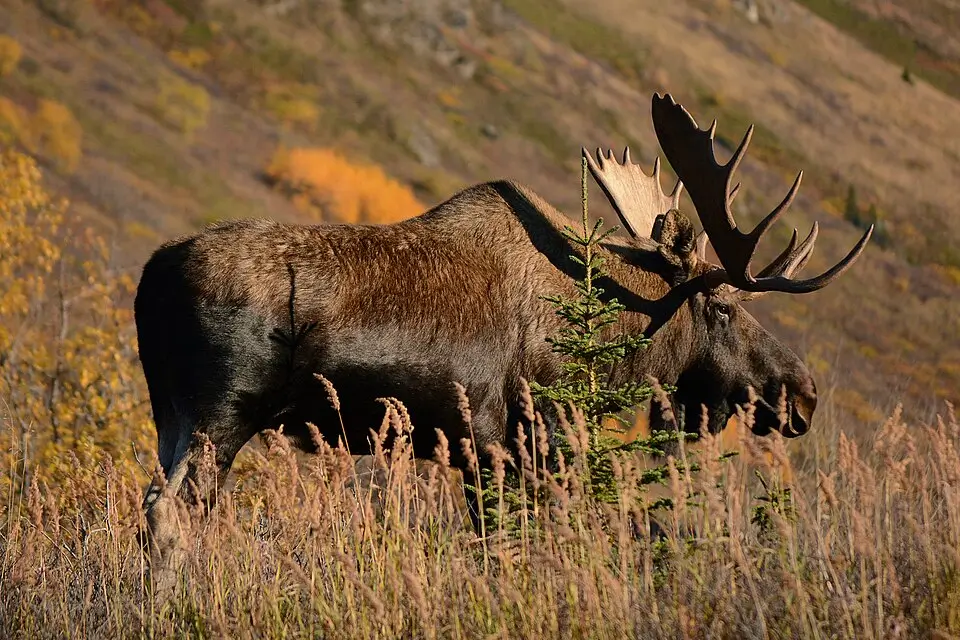
The moose (Alces alces) belongs to the family Cervidae — the deer family — and holds the distinction of being the largest member of that family anywhere in the world. Adult bull moose are truly massive animals. They stand well over six feet tall at the shoulder and can weigh anywhere from around 800 to well over 1,500 pounds depending on geography, available forage, and individual genetics. Cows, while smaller than bulls, are still imposing animals in their own right, often exceeding 800 pounds in prime condition.
One of the most iconic features of the bull moose is its antlers. Unlike the rounded tines found on elk or white-tailed deer, moose antlers are broadly palmated — meaning they spread out like an open hand — and can achieve a total spread of more than five feet in mature, healthy bulls. These antlers are shed each winter after the breeding season and regrow each spring, making them among the fastest-growing biological structures in the animal kingdom. During the velvet phase of growth, the antlers are covered in a soft, vascular skin that supplies nutrients to the developing bone. By late summer, the velvet dries and is rubbed away, revealing the hardened antler beneath.
The moose's body is uniquely adapted for life in cold, northern environments. Its long legs allow it to wade through deep snow and navigate boggy terrain with surprising ease. Its large, bulbous nose is a marvel of biological engineering, warming cold air before it reaches the lungs and housing a highly sensitive olfactory system. The distinctive dewlap — a flap of skin hanging beneath the throat, sometimes called a "bell" — is another characteristic moose feature, though its precise biological function continues to be a subject of scientific interest.
Moose are herbivores with wide-ranging dietary preferences that shift with the seasons. In summer, they are frequently observed wading into ponds and lakes to consume aquatic vegetation such as water lilies and pondweed, which provide both nutrition and vital minerals like sodium. In winter, they rely heavily on the twigs, bark, and buds of willows, aspens, and other browse species. A mature moose must consume an enormous quantity of food each day to maintain its body mass through cold northern winters.
The rut, or breeding season, typically occurs in autumn — generally from September through October — and is one of the most dramatic spectacles in North American wildlife. Bull moose become highly active and vocal during this period, producing deep, resonant bellows that can carry for miles through still morning air. Cows respond with their own calls, and bulls may engage in fierce battles involving their massive antlers as they compete for breeding rights. After a gestation period of approximately eight months, cows give birth — most commonly to a single calf, though twins are not uncommon in areas with abundant forage. Calves are born in late spring or early summer and grow with extraordinary speed during their first months of life.
Moose are generally solitary animals outside of the rut and the cow-calf bond. They are not particularly fast runners in a straight line compared to some other ungulates, but they are powerful swimmers and are fully capable of crossing wide rivers and lakes with ease. Their senses of smell and hearing are excellent, though their eyesight, while functional, is considered their weakest sensory faculty.
Habitat and Range
The moose has one of the widest distributions of any large mammal in the Northern Hemisphere. Its range spans from Scandinavia and Russia across the entire breadth of the boreal forest zone, and in North America it extends from Alaska and Canada south into portions of the northern contiguous United States. Key strongholds in the Lower 48 include Maine, Minnesota, Wyoming, Idaho, and Montana.
Montana, as the fourth-largest state in the nation and a place defined by geographic extremes, offers exceptional moose habitat across much of its western half. The western portion of the state is dominated by the Rocky Mountains, with towering peaks, glacier-carved valleys, dense lodgepole pine and spruce-fir forests, and an abundance of rivers, streams, and wetlands. This landscape is essentially tailor-made for moose.
Moose in Montana are most concentrated in the northwest and southwest portions of the state, particularly in areas adjacent to national forests, wilderness areas, and river corridors. The Bitterroot, Flathead, and Gallatin river systems, among others, provide willow-choked riparian corridors that are prime moose habitat. Glacier National Park and the Bob Marshall Wilderness Complex also support healthy moose populations within their boundaries.
Moose show a strong affinity for early successional forest — areas where logging, fire, or other disturbance has allowed dense young growth to flourish. These young forests produce an abundance of willows, alders, and other browsable shrubs that serve as critical food sources. As Montana's forests continue to be shaped by wildfire and land management practices, new patches of suitable moose habitat are constantly being created.
Hunting Information
Moose hunting in Montana is a deeply coveted experience. Because moose populations, while healthy in suitable habitat areas, do not support the same harvest pressure as more abundant big game species like elk or white-tailed deer, moose tags in Montana are issued through a limited entry drawing system. This means that obtaining a moose license is a rare and genuinely special privilege — one that many hunters apply for over the course of many years before being drawn.
It is important for any hunter interested in pursuing moose in Montana to consult the Montana Fish, Wildlife & Parks (FWP) agency directly for the most current and accurate information regarding season dates, license application deadlines, legal hunting units, and any applicable regulations. Hunting regulations are subject to change from year to year, and the official FWP publications represent the only authoritative source for this information. Specific season dates, tag fees, and quotas were not available in the source data consulted for this article and should not be assumed.
What is well established is that moose hunting demands patience, physical fitness, and a thorough understanding of the animal's behavior and habitat preferences. Hunters who successfully draw a moose tag in Montana typically invest significant time in scouting prior to the season, locating sign such as rubs, wallows, tracks, and fresh browse. Calling during the rut can be an extraordinarily effective technique, with skilled callers able to bring bulls into close range using cow calls or bull grunts. Still-hunting along willow-lined creek bottoms and glassing open burns and meadow edges at dawn and dusk are also proven strategies.
Because of the moose's sheer size, successful hunters must also be prepared for an enormous amount of field work after the shot. Packing out a mature bull moose from backcountry terrain is an undertaking that typically requires multiple trips, a solid system, and ideally additional help from hunting partners.
Conservation
The moose occupies a stable position in most parts of its North American range, and in Montana, proactive wildlife management has helped ensure that populations remain healthy. The species is classified as Alces alces and is recognized globally as a species of least concern in terms of extinction risk, though regional populations face a variety of challenges including habitat change, predation pressure from wolves and bears, and climate-related factors that can affect winter tick loads and forage availability.
Montana's hunting heritage and conservation ethic are deeply intertwined. The revenue generated by hunting licenses and tags — including the highly sought-after moose licenses — contributes directly to wildlife management, habitat conservation, and research programs administered by Montana Fish, Wildlife & Parks. This model of conservation through regulated harvest has been a cornerstone of North American wildlife management for over a century and continues to deliver real, measurable benefits for species like the moose.
Hunters, hikers, wildlife photographers, and conservationists alike share a common interest in ensuring that Montana's moose populations remain robust for generations to come. Reporting moose sightings and harvest data, respecting habitat closures, and practicing ethical hunting and outdoor recreation are all meaningful ways that individuals can contribute to that shared goal.