Overview
Among the many fascinating wildlife species that inhabit North America, the gray fox (Urocyon cinereoargenteus) stands in a class of its own. This remarkable canid is one of the most distinctive members of the dog family, celebrated not only for its beautiful salt-and-pepper coat but also for an extraordinary ability that sets it apart from nearly every other member of the Canidae family: the ability to climb trees. Whether navigating the dense forests of the eastern United States, the shrubby chaparral of the Southwest, or the varied landscapes of states like Montana, the gray fox is a resilient and adaptable predator that has captured the imagination of wildlife enthusiasts, hunters, and naturalists for generations.
The gray fox occupies a unique place in North American wildlife heritage. It is one of the oldest members of the genus Urocyon, a lineage that diverged from other canids millions of years ago, making it one of the most evolutionarily distinct foxes on the continent. Understanding this animal — its biology, its habits, and its role in the ecosystem — is essential for anyone who appreciates the richness of North American wildlife.
Biological Traits
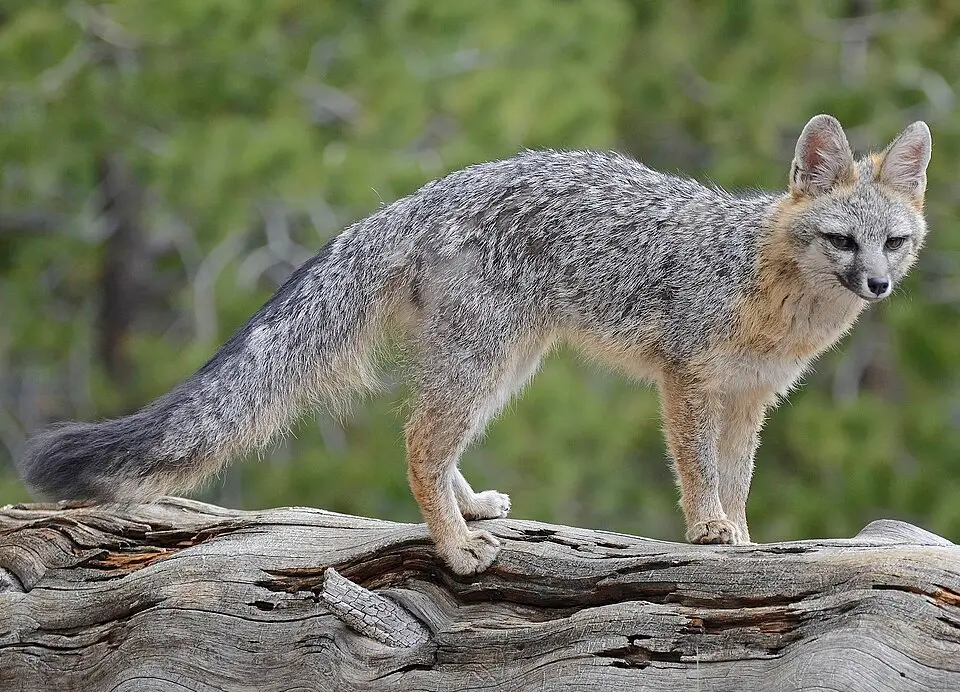
The gray fox is a medium-sized canid, unmistakable in appearance once you know what to look for. Its coat is a grizzled mix of gray and black along the back and sides, giving it that classic "salt-and-pepper" appearance from which its common name is derived. The flanks, legs, and undersides often display warm rufous or reddish-brown tones, providing a striking contrast to the gray dorsal surface. The tail is long and bushy, typically featuring a distinctive black stripe running along its length and ending in a black tip — a useful field identification mark that distinguishes it from the red fox, which typically has a white-tipped tail.
The face of the gray fox is expressive and finely marked, with a black muzzle, large amber or brown eyes, and moderately sized ears that are well-suited to detecting the sounds of prey. Adults typically weigh between 7 and 13 pounds, though this can vary depending on geography and food availability. The body length of an adult gray fox usually falls between 31 and 44 inches, including the tail, making it a relatively compact but well-proportioned predator.
One of the most remarkable biological features of the gray fox is its arboreal ability. Unlike most members of the dog family, the gray fox possesses semi-retractable claws and rotating forearms that allow it to grip and climb trees with surprising agility. This climbing behavior serves multiple purposes: it enables the fox to escape terrestrial predators, access bird nests and fruit in the tree canopy, and even den in hollow trees or elevated cavities. Observers have reported gray foxes ascending trees to heights of 60 feet or more, a feat that continues to astonish wildlife biologists and casual observers alike.
Gray foxes are omnivores with a highly flexible diet. They consume a wide variety of prey, including small mammals such as rabbits, mice, and voles, as well as birds, insects, reptiles, and amphibians. They also consume significant quantities of plant material, including fruits, berries, nuts, and seeds, particularly during autumn when such resources are abundant. This dietary flexibility is one of the key reasons the gray fox has remained successful across such a wide range of habitats.
Breeding season for the gray fox typically occurs in late winter, from January through March. After a gestation period of approximately 53 days, the vixen gives birth to a litter of typically two to seven kits. Both parents are involved in raising the young, with the male providing food for the female and kits during the early weeks after birth. The kits develop rapidly and are usually independent by late summer or early autumn of their first year. Gray foxes are generally monogamous within a breeding season, and pairs may maintain long-term bonds.
The lifespan of a gray fox in the wild is typically six to eight years, though individuals in captivity have been known to live longer. Like all wild canids, they are susceptible to diseases such as rabies and canine distemper, as well as parasites including mange mites and various internal parasites. Despite these challenges, healthy gray fox populations demonstrate considerable resilience.
Habitat & Range
The gray fox has one of the broadest geographic ranges of any canid in the Americas. Its range extends from southern Canada through most of the continental United States, southward through Mexico and Central America, and into parts of northern South America. This makes Urocyon cinereoargenteus one of the most widely distributed fox species in the Western Hemisphere.
Within the United States, gray foxes favor a variety of wooded and brushy habitats. They are most commonly associated with mixed hardwood forests, riparian corridors with dense understory vegetation, chaparral scrublands, and the transitional zones between forest and open land. They tend to prefer areas with adequate cover for denning and foraging, often utilizing rocky outcroppings, hollow logs, brush piles, and tree cavities as dens.
In Montana, the gray fox reaches the northwestern fringes of its range. Montana is the fourth-largest state by area in the contiguous United States, encompassing vast and varied landscapes that include the Rocky Mountain ranges of the west, rolling plains in the east, and extensive river systems throughout. While gray foxes are less commonly encountered in Montana compared to the red fox or coyote, their presence in the state reflects the species' adaptability. The state's western portions, with their wooded foothills and dense riparian areas, provide habitat conditions that can support gray fox populations.
Montana's diverse geography — from the Continental Divide to the Great Plains — makes it home to an impressive array of wildlife, and the gray fox represents one of the more elusive and often overlooked members of this community. Sightings in Montana are more commonly reported in the southwestern and western parts of the state, where forest cover and brushy terrain better approximate the habitat preferences of this species.
Hunting Information
The gray fox has a long and respected tradition in North American hunting culture. Its beautiful pelt has been valued by trappers and hunters for centuries, and its crafty, elusive nature makes it a challenging and rewarding pursuit. Gray fox hunting and trapping are practiced across much of the species' range, typically during autumn and winter seasons when pelts are at their prime.
Hunters pursuing gray fox often rely on calling techniques, using electronic or mouth-blown calls that mimic the distress sounds of prey animals such as rabbits or mice. The gray fox's curiosity and hunting instincts make it responsive to such calls, and stand hunting with a predator call is a popular and effective method across many states. Dogs are also traditionally used in gray fox hunting in some regions, with the fox's tree-climbing behavior adding an exciting dimension to this style of pursuit.
Trapping is another traditional method, with foothold traps, cage traps, and dog-proof traps all used effectively for gray fox. Trappers often set near travel corridors, den sites, or areas with abundant sign such as tracks and scat.
In Montana, anyone interested in pursuing gray fox should consult Montana Fish, Wildlife & Parks (FWF) for the most current and accurate season dates, licensing requirements, and regulations. Hunting regulations can change from year to year, and it is the responsibility of every hunter and trapper to be fully informed of and compliant with all applicable laws before taking to the field. As specific season dates and license requirements for gray fox in Montana were not available in the source data consulted for this article, prospective hunters are strongly encouraged to visit the official Montana FWF website or contact a local FWF office directly for up-to-date information.
Conservation
The gray fox is currently listed as a species of Least Concern by the International Union for Conservation of Nature (IUCN), reflecting its broad range and generally stable populations across most of its habitat. This status is a testament to the species' adaptability and resilience in the face of habitat change and human activity.
Like many wildlife species, gray foxes face a range of pressures in the modern landscape. Habitat fragmentation caused by urban development, road mortality, and the expansion of coyote populations (which may competitively suppress gray fox numbers in some areas) are all factors that wildlife managers monitor. Disease, particularly rabies and canine distemper, can cause localized population declines, though overall populations typically recover.
Conservation of the gray fox is best served through the maintenance of healthy, connected woodland and shrubland habitats, responsible hunting and trapping practices that adhere to scientifically established sustainable harvest levels, and ongoing population monitoring by state and federal wildlife agencies. In states like Montana, where the gray fox exists at the edge of its natural range, conservation attention ensures that this remarkable species continues to be a part of the region's wildlife community for generations to come.
Hunters and trappers have historically played a significant role in gray fox conservation by funding wildlife management programs through license fees and excise taxes on sporting goods — a model established under the North American Model of Wildlife Conservation. This funding supports the scientific research, habitat work, and population monitoring that keeps species like the gray fox thriving.