Overview
Few wild animals are as instantly recognizable to Americans as the Eastern gray squirrel (Sciurus carolinensis). Whether darting across a city park, leaping between the branches of a backyard oak, or foraging along the edge of a hardwood forest, this nimble, bushy-tailed rodent has woven itself into the everyday fabric of life across much of North America. For generations of hunters, the Eastern gray squirrel has also served as a beloved quarry — a species that rewards patience, sharpens marksmanship skills, and puts tasty, lean wild game on the table.
More than just a backyard curiosity, the Eastern gray squirrel is a fascinating animal with a complex biology, a remarkable ecological role, and a hunting tradition that stretches back to the earliest days of American frontier life. From the dense hardwood forests of the East to suburban green spaces across the continent, this adaptable creature continues to thrive. For outdoor enthusiasts and wildlife observers alike, understanding the Eastern gray squirrel — its behavior, its biology, its relationship to the land — enriches every encounter with this charismatic species.
Biological Traits
The Eastern gray squirrel belongs to the family Sciuridae, the large and diverse family of rodents that includes other squirrels, chipmunks, marmots, and prairie dogs. Within that family, it sits in the genus Sciurus, which encompasses many of the world's familiar tree squirrels. The species name carolinensis reflects its early scientific description from specimens collected in the Carolinas region of North America.
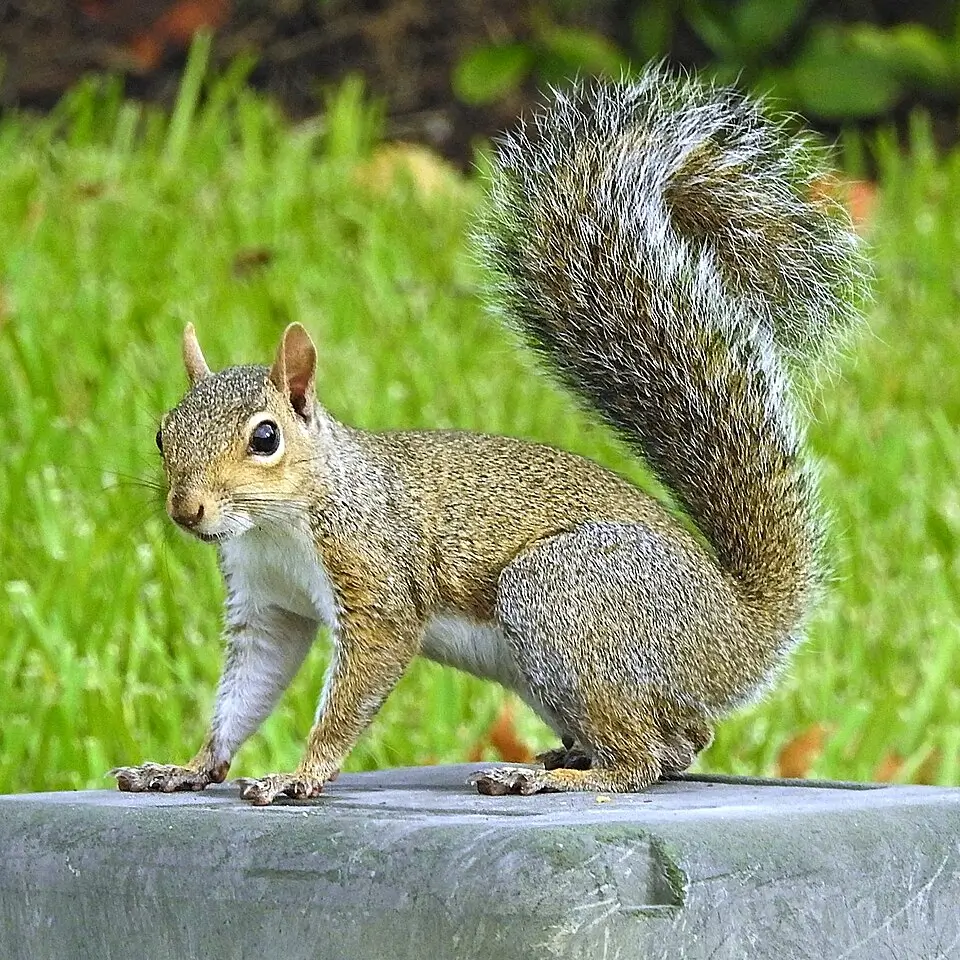
As its name suggests, the Eastern gray squirrel is predominantly gray in coloration, typically displaying a silvery-gray coat along the back and sides, with a pale or white underside. The large, bushy tail — one of the animal's most distinctive features — is often tipped with white or silver hairs that give it a frosted appearance. Some individuals display a warm brownish or rusty tinge along the face, legs, and back, particularly during summer months when their coat is shorter and less dense. Melanistic (all-black) individuals are also known to occur in certain populations, a genetic variation that can be locally common in some areas.
Beyond coat color, the Eastern gray squirrel is built for life in the trees. Its strong, curved claws allow it to grip bark with remarkable precision, and its hind feet can rotate nearly 180 degrees at the ankle — an adaptation that lets the animal descend trees headfirst with ease. The bushy tail serves multiple functions: it acts as a counterbalance during acrobatic leaps between branches, as a signaling device during social interactions, and even as a makeshift blanket during cold weather when the squirrel wraps it around its body.
The Eastern gray squirrel is well known for its food-caching behavior, a strategy called scatter hoarding. Throughout autumn, individuals gather and bury thousands of nuts and seeds individually across a wide area, creating a distributed larder that sustains them through winter. Interestingly, squirrels do not always recover every cache they create — and the forgotten seeds frequently germinate and grow into new trees, making the Eastern gray squirrel a significant agent of forest regeneration. The squirrel's role in dispersing acorns, hickory nuts, and other mast crops has earned it recognition as a keystone species in many eastern forest ecosystems.
Eastern gray squirrels are diurnal, meaning they are most active during daylight hours, particularly in the early morning and late afternoon. They do not hibernate, remaining active year-round even in cold climates, though they may spend extended periods in their nests during periods of severe cold or inclement weather. Nests, called dreys, are constructed of leaves, twigs, and bark and are typically located high in the forks of trees. Gray squirrels also make use of natural tree cavities for shelter, especially during winter months.
Reproduction in Eastern gray squirrels typically occurs twice a year, with breeding seasons generally occurring in mid-winter and again in midsummer. Litters usually consist of two to four young, which are born blind and hairless. Young squirrels grow quickly and are typically weaned and beginning to forage independently within a few months.
Habitat & Range
The Eastern gray squirrel's native range encompasses much of the eastern half of North America, stretching from southern Canada through the eastern United States and south into parts of Mexico. The species is most closely associated with mature deciduous and mixed forests, where the presence of mast-producing trees — oaks, hickories, beeches, and walnuts — provides the rich food resources on which it depends. Riparian corridors, forest edges, and suburban green spaces also support healthy populations, and the Eastern gray squirrel has proven remarkably adept at living in close proximity to human development.
In the western United States, including states like Montana, the Eastern gray squirrel is not a native species. Montana's native squirrel fauna includes species such as the red squirrel (Tamiasciurus hudsonicus) and various ground squirrels adapted to the state's diverse landscapes, which range from the rugged Rocky Mountain ranges of the western half to the expansive prairies and badlands of the east. Montana is the fourth-largest state by area and encompasses an extraordinary diversity of habitats, from dense conifer forests and alpine meadows to river corridors and grasslands — environments shaped more for native western wildlife than for the hardwood-dependent Eastern gray squirrel.
Where Eastern gray squirrels have been introduced outside their native range — including parts of western North America, Europe, and elsewhere — they have sometimes established robust populations, occasionally at the expense of native squirrel species. Within their native range, however, they remain an integral and ecologically valuable component of healthy forest ecosystems.
Hunting Information
Squirrel hunting occupies a cherished place in American outdoor tradition. For many hunters, pursuing Eastern gray squirrels in the autumn woods was their very first hunting experience — an accessible, affordable, and deeply rewarding introduction to the skills and ethics of the hunt. Squirrel hunting develops woodsmanship, patience, and accuracy, and it provides an excellent opportunity for hunters of all ages and experience levels to engage meaningfully with the natural world.
Eastern gray squirrels are typically pursued with small-caliber rifles (particularly .22 LR), shotguns loaded with small shot, or even traditional archery equipment. Still-hunting along forest edges or sitting quietly beneath productive mast-bearing trees are both effective strategies. The peak of fall mast season, when squirrels are most actively foraging and caching food, is often considered prime time for squirrel hunting across their native range.
Regarding hunting in Montana specifically, it is important for hunters to note that the Eastern gray squirrel is not native to Montana and does not represent a traditional or established hunting quarry in the state. Montana's official hunting regulations for this species were not available in the source data reviewed for this article. Hunters interested in pursuing squirrels in Montana — whether Eastern gray squirrels or native species — should consult Montana Fish, Wildlife & Parks (FWF) directly for current, accurate information on seasons, licensing requirements, and any applicable regulations. Regulations can change from year to year, and obtaining up-to-date guidance from the state agency is always the responsible approach.
For hunters traveling to the Eastern gray squirrel's native range — the forests of the Midwest, South, and East — abundant opportunities exist. Many states offer generous squirrel seasons that extend through much of autumn and even into winter, reflecting the species' healthy population status across its native territory.
Conservation
The Eastern gray squirrel is currently classified as a species of least concern by wildlife conservation organizations, reflecting its robust and widespread populations across its native range. Its adaptability to a wide variety of habitats, including human-modified landscapes, has allowed it to maintain strong numbers even as forests have been fragmented and altered over centuries of development.
The species' ecological contributions extend well beyond what is immediately visible. Through its scatter-hoarding behavior, the Eastern gray squirrel actively promotes forest regeneration by planting far more seeds than it ultimately retrieves. In this way, generations of squirrels have helped shape the composition and distribution of eastern North American forests, contributing to the biodiversity and resilience of ecosystems that countless other species — and human communities — depend upon.
Conservation of healthy squirrel populations is best supported through the preservation and sustainable management of mature forest habitats, particularly forests with diverse assemblages of mast-producing hardwoods. Maintaining forest corridors that connect fragmented habitat patches also supports healthy, genetically diverse squirrel populations. Hunting, where conducted within regulated frameworks, has long served as a sustainable and culturally significant way for humans to engage with squirrel populations, and regulated harvest does not pose a conservation concern for this resilient species.