Overview
Few animals are as deeply woven into the fabric of North American outdoor culture as the cottontail rabbit. Whether you're a seasoned hunter who grew up chasing bunnies through frost-covered fields, a naturalist fascinated by wildlife behavior, or simply someone who has spotted one of these charming creatures nibbling clover at the edge of a garden, the cottontail rabbit holds a special place in the hearts of people across the continent. Belonging to the genus Sylvilagus, cottontail rabbits represent one of the most widespread and ecologically significant small mammals in the Western Hemisphere, ranging from the dense forests of the East to the sweeping prairies and mountain valleys of the West, including the rugged and scenic landscapes of Montana.
The cottontail is more than just a familiar backyard visitor. It is a cornerstone prey species, a popular target for hunters of all ages and skill levels, and a fascinating subject for wildlife biologists and naturalists alike. In this comprehensive guide, we'll explore the biology, habitat, hunting traditions, and conservation status of the cottontail rabbit, with a particular focus on what hunters and wildlife enthusiasts can expect when pursuing this species in Montana and the broader Mountain West region.
Biological Traits
The cottontail rabbit belongs to the genus Sylvilagus, which is part of the family Leporidae — the same family that includes hares and the domestic rabbit. The genus Sylvilagus encompasses numerous species distributed across North and South America, making it one of the most diverse rabbit genera on the planet. Some of the most well-known species within this genus include the Eastern cottontail (Sylvilagus floridanus), the Mountain cottontail (Sylvilagus nuttallii), the Desert cottontail (Sylvilagus audubonii), and the New England cottontail (Sylvilagus transitionalis).
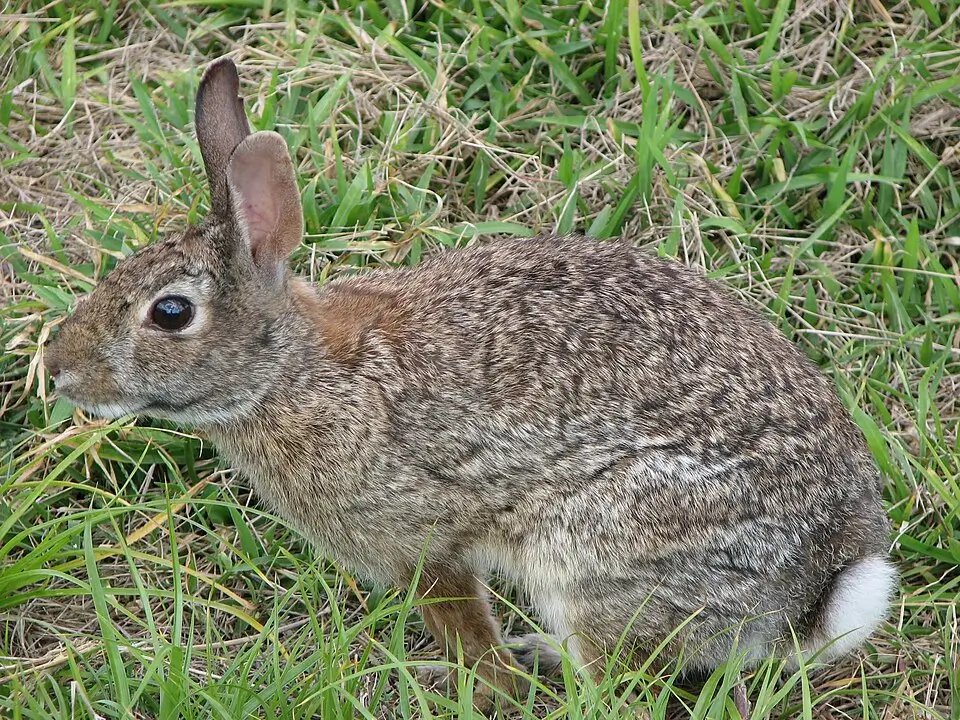
The name "cottontail" is instantly recognizable to anyone who has seen one of these animals in the wild. It refers to the distinctive fluffy, white underside of the tail, which flashes conspicuously as the rabbit bounds away from a perceived threat — a trait that has made the species iconic in popular culture and literature.
Cottontail rabbits are relatively compact animals, typically weighing between two and four pounds, though size varies by species. Their fur is generally a mix of brown, gray, and tawny hues that provide excellent camouflage in brushy, weedy, or grassy environments. Their long ears serve a dual purpose: acute hearing that helps detect predators from great distances, and thermoregulation, allowing the animals to manage body temperature in varying climates.
One of the most remarkable biological traits of the cottontail is its reproductive capacity. Like many prey species, cottontails have evolved to reproduce rapidly in response to high predation pressure. A single female can produce multiple litters per year, with each litter containing several young, known as kittens. This remarkable reproductive rate allows cottontail populations to recover quickly from seasonal losses, making them a sustainable and resilient species throughout their range.
Cottontails are primarily crepuscular and nocturnal animals, meaning they are most active during the twilight hours of dawn and dusk, as well as throughout the night. However, they can often be observed feeding during the day, particularly in cooler weather or in areas where human activity is minimal. Their diet is herbivorous, consisting primarily of grasses, forbs, leaves, bark, and agricultural crops, though their food preferences shift seasonally depending on availability.
Unlike hares, cottontail rabbits do not typically dig extensive burrow systems. Instead, they rely on natural cover — brush piles, dense grass, rock outcroppings, and the abandoned burrows of other animals — to shelter from predators and harsh weather. Their primary defense strategy is remaining motionless (a behavior known as "freezing") until a threat passes, then exploding into rapid, zigzagging flight when closely pressed.
Habitat & Range
The genus Sylvilagus is remarkably adaptable, inhabiting a sweeping variety of ecosystems across the Americas. Cottontail rabbits can be found in deciduous forests, shrubby meadows, agricultural fields, riparian corridors, sagebrush flats, semi-arid deserts, and mountain foothills. This adaptability is one of the key reasons why cottontails are among the most abundant and widely distributed mammals in North America.
In Montana — the fourth-largest state by area and a land of extraordinary geographic diversity — cottontail rabbits are a native part of the wildlife community. Montana's landscape ranges from the rugged Rocky Mountain ranges of the west to the vast rolling prairies of the east, and cottontail rabbits can be found across much of this spectrum. The Mountain cottontail (Sylvilagus nuttallii), in particular, is well-suited to the sagebrush-steppe habitats, rocky hillsides, and riparian brush zones that characterize much of Montana's terrain.
Montana's position as a landlocked state in the Mountain West subregion, bordered by Idaho to the west, Wyoming to the south, and the Dakotas to the east, places it at a fascinating ecological crossroads. The eastern portions of the state, characterized by grasslands and agricultural lands, provide prime cottontail habitat, while the western half — dominated by mountain ranges and forested valleys — supports populations in brushy transition zones between forest and open country.
Key habitat features for cottontails in Montana and similar western states include dense shrub cover such as sagebrush and rabbitbrush, brushy riparian areas along streams and rivers, rocky outcrops that provide escape cover, and the brushy edges between agricultural fields and natural vegetation. Hunters and wildlife watchers who understand these habitat preferences will have far greater success locating cottontails in the field.
Hunting Information
Cottontail rabbit hunting holds a cherished place in the traditions of American hunting culture. For many hunters, the pursuit of cottontails was their very first hunting experience — a rite of passage shared across generations. The sport is accessible, low-cost, and extraordinarily rewarding, requiring minimal equipment while offering genuine challenge and excitement.
Hunting cottontails can be enjoyed with a variety of methods and equipment. Shotguns are perhaps the most traditional choice, particularly when hunting with dogs, as the flushed rabbit presents a fast-moving, unpredictable target that rewards sharp reflexes and instinctive shooting. Small-caliber rifles, such as the iconic .22 LR, are also popular for cottontail hunting, particularly for hunters who prefer a slower, more deliberate approach — still-hunting through likely cover or waiting near feeding areas.
Beagles are the dog breed most classically associated with cottontail hunting. These small, keen-nosed hounds excel at tracking cottontails through dense cover, following the rabbit's circular running pattern and pushing it back toward waiting hunters. Hunting with beagles is a deeply traditional practice with roots stretching back centuries, and it remains enormously popular today.
In Montana, hunters interested in pursuing cottontail rabbits should consult Montana Fish, Wildlife & Parks (FWF) for the most current and accurate information regarding seasons, licensing requirements, and any applicable regulations. Hunting regulations can change from year to year, and it is always the responsibility of the individual hunter to verify current rules before heading afield. Montana's vast public land holdings — including millions of acres of Bureau of Land Management (BLM) land, national forests, and state wildlife management areas — provide excellent access for cottontail hunters willing to explore.
The best times to hunt cottontails are generally the early morning and late afternoon hours when the animals are naturally most active. Cold, sunny mornings following overnight frosts are often particularly productive, as rabbits will seek sunny, south-facing slopes and brushy edges to warm themselves. After the first hard frosts of autumn, vegetation thins out, making it significantly easier to spot rabbits and watch their movements through cover.
Cottontail rabbit is also genuinely excellent table fare. The meat is mild, lean, and versatile — well-suited to frying, braising, stewing, and grilling. Rabbit hunting thus offers the full outdoor experience: time in beautiful country, a genuine sporting challenge, and a delicious, sustainable harvest.
Conservation
The cottontail rabbit, as a genus, is not currently considered a species of significant conservation concern across most of its range. The majority of Sylvilagus species benefit from their extraordinary reproductive capacity, broad habitat adaptability, and wide geographic distribution. Healthy cottontail populations are considered an indicator of productive, well-managed habitat, and wildlife managers generally view sustainable hunting as a tool that complements — rather than conflicts with — healthy population dynamics.
That said, habitat quality is the single most important factor determining cottontail abundance in any given area. Degradation of brushy edge habitat through intensive agriculture, urban development, or fire suppression can reduce the carrying capacity of the land for cottontails. Conservation practices that maintain shrubby cover, native grasslands, and diverse vegetation structure benefit cottontail populations enormously.
It is worth noting that the New England cottontail (Sylvilagus transitionalis), one species within the genus, has experienced population declines in parts of its range and has received targeted conservation attention in the northeastern United States. This example underscores the importance of habitat-focused conservation efforts for the genus as a whole.
Hunters, wildlife managers, and land stewards all play important roles in the conservation of cottontail rabbits. Ethical hunting practices, support for habitat conservation programs, and engagement with state wildlife agencies help ensure that healthy cottontail populations persist for generations to come.