Overview
Few birds capture the imagination of hunters and wildlife enthusiasts quite like the Common pheasant. With its dazzling plumage, explosive flush, and challenging sporting qualities, Phasianus colchicus has earned a place of honor in the traditions of upland bird hunting across the globe. Whether you encounter one bursting from a hedgerow in rural England, strutting along a roadside ditch in the American Midwest, or gliding low over the golden grasslands of Montana, the Common pheasant is a bird that commands attention and respect.
Originally native to Asia, the Common pheasant has been introduced to and successfully established itself across much of Europe, North America, Australia, and beyond. It is widely considered one of the most successful introduced game birds in world history, and its adaptability, hardiness, and sheer beauty have made it a cornerstone of upland hunting culture wherever it has taken root. In states like Montana — with its sprawling agricultural fields, river bottoms, and expansive grasslands — the pheasant holds a cherished place in the hearts of sportsmen and sportswomen who look forward each year to the crack of autumn air and the thunder of wings.
This article explores the biology, habitat, hunting traditions, and conservation considerations surrounding one of the world's most iconic game birds.
Biological Traits
The Common pheasant, Phasianus colchicus, belongs to the family Phasianidae, which also includes turkeys, grouse, quail, and peacocks. It is a large, ground-dwelling bird exhibiting pronounced sexual dimorphism — meaning males and females look strikingly different from one another.
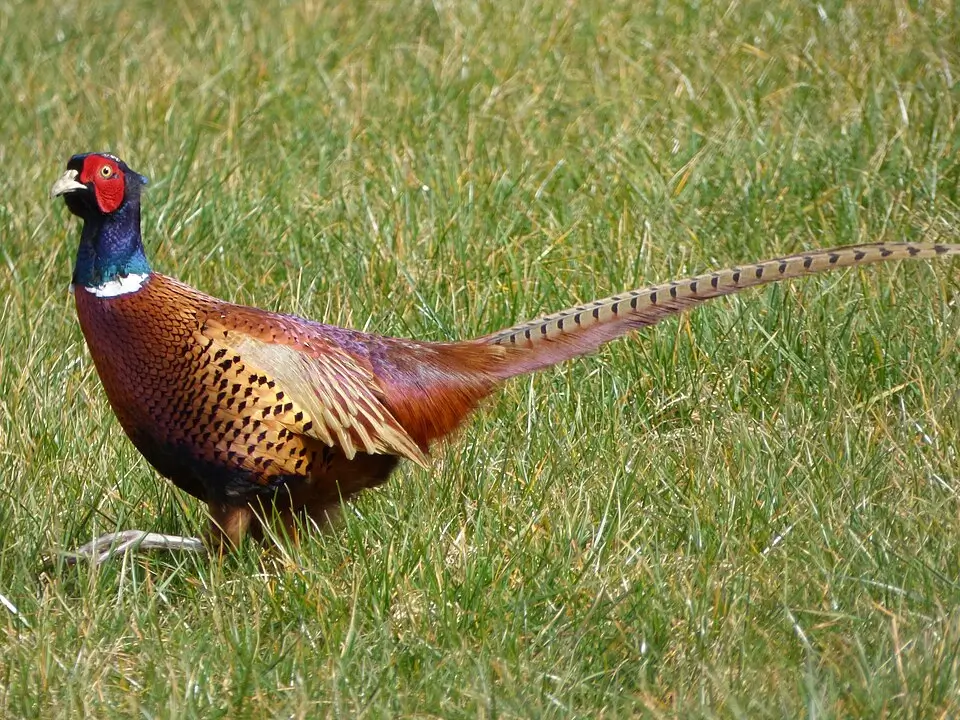
Male pheasants, known as roosters or cocks, are among the most visually striking birds in the world. They are adorned with iridescent copper, gold, and chestnut feathers across their body, a deep green or blue-green head, and a distinctive red facial wattle. Many males display a white neck ring, a feature that has become almost synonymous with the species in North America, though this characteristic is more associated with certain subspecies introduced from China. The male's long, barred tail feathers can account for much of his total body length, making him an unmistakable figure in open fields. Roosters are also known for their loud, harsh crowing calls — a two-note proclamation that echoes across fields and farmland, especially during the breeding season.
Female pheasants, called hens, are far more subdued in coloration. Their mottled brown, buff, and black feathering provides excellent camouflage in grassy or brushy terrain, an evolutionary advantage that helps protect them during the nesting season. Hens are smaller than roosters and lack the long ornamental tail feathers.
Pheasants are omnivores, consuming a wide variety of foods depending on the season. Their diet typically includes seeds, grains, insects, berries, leaves, and small invertebrates. This dietary flexibility is one of the reasons they thrive in agricultural landscapes, where waste grain from harvested corn, wheat, and sorghum fields provides a reliable food source, particularly during the winter months.
The breeding season for Common pheasants typically occurs in spring. Roosters are polygynous, meaning a single male may mate with several hens. Males establish and defend territories, performing elaborate displays to attract females. After mating, hens build ground nests — often well-concealed among dense grasses or shrubs — where they lay clutches of anywhere from 8 to 15 eggs on average. Incubation is handled entirely by the hen and lasts approximately 23 to 26 days. Chicks are precocial, meaning they are mobile and capable of following the hen almost immediately after hatching. This early independence is critical for survival in a world full of predators.
Pheasants are capable of short, powerful bursts of flight, reaching impressive speeds when flushed. However, they generally prefer to run when threatened, using their strong legs to cover ground quickly through vegetation. This behavior makes hunting with well-trained pointing or flushing dogs particularly effective and enjoyable.
The scientific name Phasianus colchicus is derived from the Phasis River in the ancient region of Colchis — modern-day Georgia in the Caucasus — which is considered part of the bird's original native range. According to Greek mythology, the Argonauts may have brought these birds back to Greece from Colchis, giving rise to the species' long association with human civilization.
Habitat & Range
The Common pheasant is native to a broad swath of Asia, ranging from the Caucasus region and parts of western Asia through China, Korea, and into the Russian Far East. Over the centuries, it has been introduced to Europe, North America, New Zealand, Australia, and numerous other regions, where it has established wild and semi-wild populations.
In North America, pheasants thrive in agricultural and mixed-use landscapes. They favor areas that offer a combination of open fields for foraging, dense grassy or shrubby cover for nesting and escape, and brushy windbreaks or woodlot edges for shelter. Wetland margins, cattail sloughs, and overgrown field borders also provide important habitat, particularly during harsh winters when pheasants must find refuge from deep snow and biting cold.
Montana, one of the premier pheasant hunting destinations in the American West, offers a variety of landscapes that can support pheasant populations. The eastern portion of the state — a region characterized by rolling plains, grain farms, river corridors, and native prairie — provides some of the most productive pheasant country in the Northern Rockies region. River bottoms lined with dense brush and cottonwood stands offer critical winter cover, while the surrounding agricultural fields supply the food resources pheasants depend on throughout the year. Montana's vast size and relatively low human population density mean that large tracts of suitable habitat remain accessible to hunters and wildlife alike.
Pheasants are notably resilient birds, but they are sensitive to severe winter conditions. Deep snow and prolonged cold snaps can significantly impact populations, making access to adequate winter cover a critical factor in determining year-to-year numbers. Conservation programs that focus on maintaining and enhancing native grasses, shrubby cover, and food plots play an important role in supporting pheasant populations across the Northern Plains.
Hunting Information
Hunting the Common pheasant is a tradition that spans continents and centuries. In Montana, as in much of the American West, pheasant hunting is deeply woven into the fabric of rural sporting culture. The pursuit of roosters — typically the only pheasants legal to harvest in North American hunting regulations, as hens are generally protected to preserve breeding populations — demands a combination of patience, fieldcraft, and often a well-trained bird dog.
Hunters in Montana pursue pheasants across a wide variety of terrain, from the agricultural lowlands of the Yellowstone and Missouri River valleys to the rolling coulees and brushy draws of the eastern plains. Permission from private landowners is often necessary to access prime pheasant habitat, though Montana also offers public land opportunities through Wildlife Management Areas and other accessible properties.
Popular hunting methods include working fields and cover with flushing dogs such as Labrador Retrievers or Springer Spaniels, and using pointing breeds like German Shorthaired Pointers or English Setters to locate and hold birds before the flush. Walking hunters without dogs can also find success by pushing through dense cover and working edges where pheasants tend to loiter. Team hunting — with some members walking as drivers and others posted as blockers at the end of a field — is a classic and effective strategy for moving birds toward waiting gunners.
Prospective hunters in Montana should consult the Montana Fish, Wildlife & Parks (FWF) for current season dates, licensing requirements, bag limits, and any special regulations that may apply to specific areas or wildlife management units. Regulations can change from year to year based on population surveys and habitat conditions, so checking official state sources before heading afield is always the responsible course of action.
Conservation
The Common pheasant occupies a unique position in the conservation landscape. As a non-native species in North America, it does not receive the same native wildlife protections as indigenous species, yet its presence supports a multi-million dollar hunting economy that, in turn, funds wildlife conservation broadly. Hunting license fees, equipment taxes, and the activities of sportsmen's organizations collectively generate enormous resources for habitat preservation and wildlife management programs.
Organizations such as Pheasants Forever have been instrumental in restoring and creating upland habitat across the pheasant range in the United States, working with landowners and government agencies to plant native grasses, install shelterbelts, and implement farming practices that benefit pheasants and dozens of other wildlife species simultaneously. These habitat improvements benefit not only pheasants but also native grassland birds, pollinators, white-tailed deer, and countless other species that depend on diverse, healthy landscapes.
In Montana, the health of pheasant populations is tied closely to agricultural land use, weather patterns, and the availability of conservation programs that incentivize landowners to maintain or restore upland cover. Conservation-minded hunters, wildlife managers, and agricultural producers working together represent the most effective path forward for sustaining robust pheasant populations for future generations to enjoy.