Overview
Few birds capture the spirit of the American West quite like the sage-grouse, the iconic upland game bird belonging to the genus Centrocercus. These large, charismatic members of the grouse family (Phasianidae) are intrinsically tied to the vast sagebrush ecosystems that define much of the interior West, from the rolling plains of Montana to the high desert plateaus of Nevada and beyond. With their dramatic courtship displays, striking physical appearances, and deep ecological relationships with sagebrush landscapes, birds in the genus Centrocercus represent one of North America's most fascinating and culturally significant wildlife stories.
For hunters, naturalists, wildlife biologists, and anyone with a love of wide-open spaces, understanding the sage-grouse means understanding the pulse of the Western sagebrush sea. These birds are not simply game animals — they are ecological indicators, cultural touchstones, and living symbols of a landscape that has shaped the identity of states like Montana for centuries. Whether you are an upland hunter planning a fall adventure or a wildlife enthusiast hoping to witness one of nature's most spectacular mating rituals, the sage-grouse of the genus Centrocercus deserves your full attention.
Biological Traits
The genus Centrocercus is comprised of two recognized species: the Greater Sage-Grouse (Centrocercus urophasianus) and the Gunnison Sage-Grouse (Centrocercus minimus). Together, these two species represent the only members of this genus, and both are exclusively native to North America. While the Gunnison Sage-Grouse is restricted to a small region in southwestern Colorado and southeastern Utah, the Greater Sage-Grouse commands a much broader range across the interior West, making it the species most commonly encountered by hunters and outdoor enthusiasts across states like Montana.
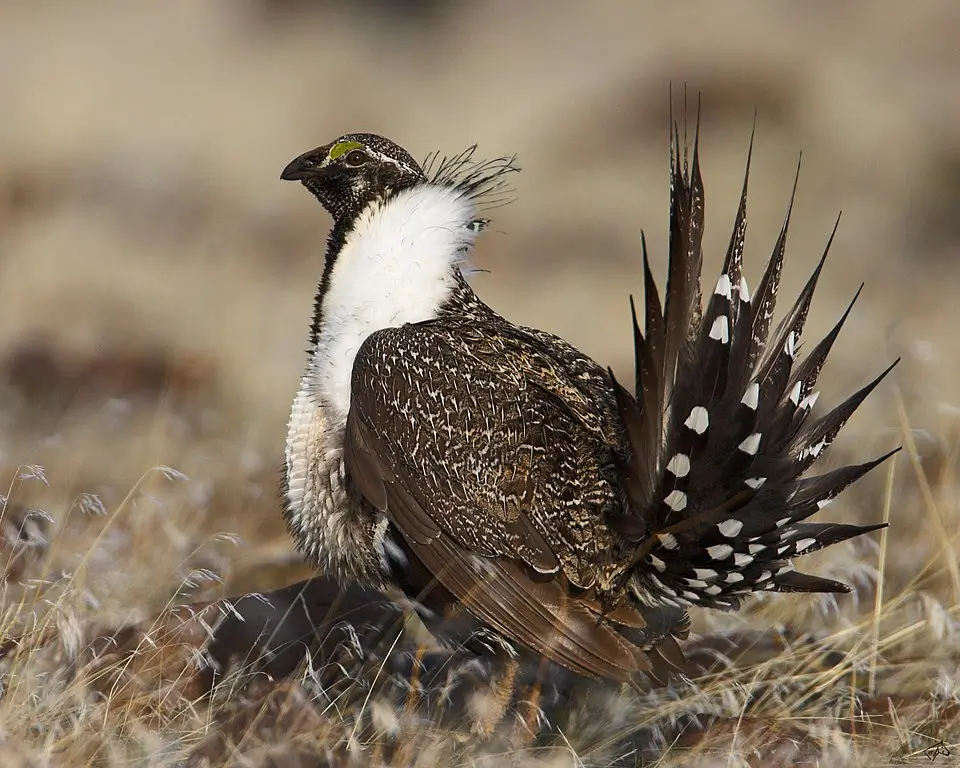
The Greater Sage-Grouse is the largest grouse species in North America and, by many measures, one of the most visually impressive upland birds on the continent. Adult males are substantial birds, with a body structure built for life on the ground and in low flight across open landscapes. They possess a highly distinctive appearance, characterized by a mottled brown-and-gray plumage that provides exceptional camouflage against the dull silver-green backdrop of sagebrush country. Males display a striking white chest ruff and two large, yellowish-green air sacs on their breast, which they inflate during elaborate courtship performances. Their spiky, pointed tail feathers are fanned dramatically during these displays, giving the males an almost prehistoric, theatrical appearance.
Female sage-grouse, as is common among grouse species, are considerably smaller and more cryptically colored than males. Their understated brown and buff plumage allows them to blend almost seamlessly into the sagebrush habitat, providing critical camouflage during nesting season. This sexual dimorphism — the difference in appearance between males and females — is among the most pronounced of any North American grouse species.
One of the most remarkable biological traits of Centrocercus species is their near-total dietary dependence on sagebrush (Artemisia spp.), particularly during the winter months. While young birds and breeding adults may consume insects and forbs during warmer seasons, sagebrush leaves form the backbone of their diet throughout the year. This dietary specialization is so profound that sage-grouse lack the muscular gizzard that most other grouse species use to grind hard seeds — they simply do not need it, as sagebrush leaves require no such processing. This intimate dietary relationship with sagebrush makes Centrocercus species uniquely vulnerable to changes in sagebrush availability and health.
Perhaps the most celebrated biological behavior of the sage-grouse is the lekking ritual performed by males each spring. Leks are traditional communal display grounds, often used year after year across generations of birds, where males gather before dawn to compete for the attention of watching females. On a lek at first light, the sight and sound of dozens of male sage-grouse strutting, fanning their tail feathers, and producing the extraordinary bubbling, popping vocalizations created by their inflating air sacs is one of the great wildlife spectacles of North America. Dominant males, typically those holding central positions on the lek, secure the vast majority of matings, while subordinate males display around the periphery.
Habitat and Range
The distribution of Centrocercus species is defined almost entirely by the presence and quality of sagebrush ecosystems. The Greater Sage-Grouse, in particular, occupies a broad geographic range across the sagebrush sea of the American West, spanning portions of eleven states and two Canadian provinces. This range encompasses a diverse array of landscapes, from the high elevation mountain sagebrush meadows of Wyoming and Colorado to the low desert shrub-steppe of Nevada and Idaho.
Montana is one of the most important states in the entire range of the Greater Sage-Grouse. As the fourth-largest state by area, Montana provides an enormous expanse of sagebrush habitat across its eastern plains and high intermountain valleys. The vast, rolling sagebrush landscapes of eastern and central Montana support some of the most robust sage-grouse populations remaining in the species' range. The wide, thinly populated grasslands and shrub-steppe country of this region — part of what makes Montana the third-least densely populated state in the nation — provide the kind of undisturbed, expansive habitat that sage-grouse require to thrive.
Sage-grouse are known to be year-round residents of their habitat, though they do undertake seasonal movements between breeding, nesting, brood-rearing, and wintering areas. They tend to move to lower elevations with denser sagebrush cover during the winter months, when sagebrush leaves become the near-exclusive food source. Spring finds them returning to traditional lek sites, often the same patches of open ground used by their parents and grandparents. Nesting habitat typically includes areas of moderately tall, dense sagebrush interspersed with grasses and forbs that provide both cover and food for hens and chicks.
The health and extent of sagebrush habitat are therefore the single most critical factors governing sage-grouse population dynamics across their range. Sagebrush ecosystems support not only Centrocercus species but an entire community of wildlife — from pronghorn antelope to mule deer, ferruginous hawks to sage thrashers — making sage-grouse a true umbrella species for one of North America's most biodiverse but underappreciated ecosystems.
Hunting Information
Sage-grouse have a long and storied history as upland game birds across the American West. Their large size makes them an impressive quarry for upland hunters, and pursuing them across the open sagebrush flats of states like Montana is an experience unlike any other in North American wing shooting. Hunters typically work pointing dogs or flushing dogs through sagebrush draws and flats, covering wide expanses of country in search of birds.
Because sage-grouse occupy such open terrain, early morning and late afternoon hunts near watering sources, green vegetation patches, and dense sagebrush stands can be particularly productive. The birds tend to roost and loaf in sagebrush during the heat of the day and move to feeding and watering areas during cooler periods. Hunters pursuing Centrocercus in Montana should be prepared for long walks across challenging terrain and wide-open landscapes that are as visually stunning as they are physically demanding.
It is important for any hunter planning to pursue sage-grouse in Montana to consult the official hunting regulations published by Montana Fish, Wildlife & Parks prior to any season. Specific season dates, bag limits, license requirements, and any applicable zone restrictions are subject to change and are established by wildlife managers based on population assessments conducted each year. As no specific current season dates or license details were available in the source data for this article, hunters are strongly encouraged to visit the Montana Fish, Wildlife & Parks website directly for the most up-to-date and accurate regulatory information before purchasing licenses or heading afield.
Conservation
The conservation of Centrocercus species has become one of the defining wildlife management challenges of the American West in the 21st century. Both the Greater Sage-Grouse and the Gunnison Sage-Grouse have experienced significant population declines over the past century, driven primarily by the loss, fragmentation, and degradation of sagebrush habitat. The Gunnison Sage-Grouse, restricted to a small and isolated range, is listed as a threatened species under the Endangered Species Act, reflecting the precarious state of this rare bird.
The Greater Sage-Grouse, while far more numerous than its Gunnison cousin, has nonetheless experienced range-wide population declines that prompted an extensive federal review for Endangered Species Act listing in 2015. While the species was ultimately not listed at that time, the review process spurred the development of numerous federal, state, and private conservation plans designed to protect and restore sagebrush habitat across the species' range.
In Montana, sage-grouse conservation efforts involve collaboration among state wildlife agencies, federal land management agencies, ranchers, hunters, and conservation organizations. Programs aimed at maintaining and improving sagebrush habitat quality, reducing invasive species encroachment, minimizing energy development impacts, and protecting key lek sites are all part of the broader conservation toolkit being deployed on behalf of these iconic birds. Hunters play an important role in this conservation framework, both through license and tag fees that fund wildlife management and through their advocacy for the protection of the wild landscapes that sage-grouse — and so many other species — depend upon.
The story of Centrocercus is ultimately a story about the health of the American West itself. Protecting these birds means protecting the sagebrush sea, and protecting the sagebrush sea means preserving one of the most distinctive and irreplaceable ecosystems on the North American continent.