Overview
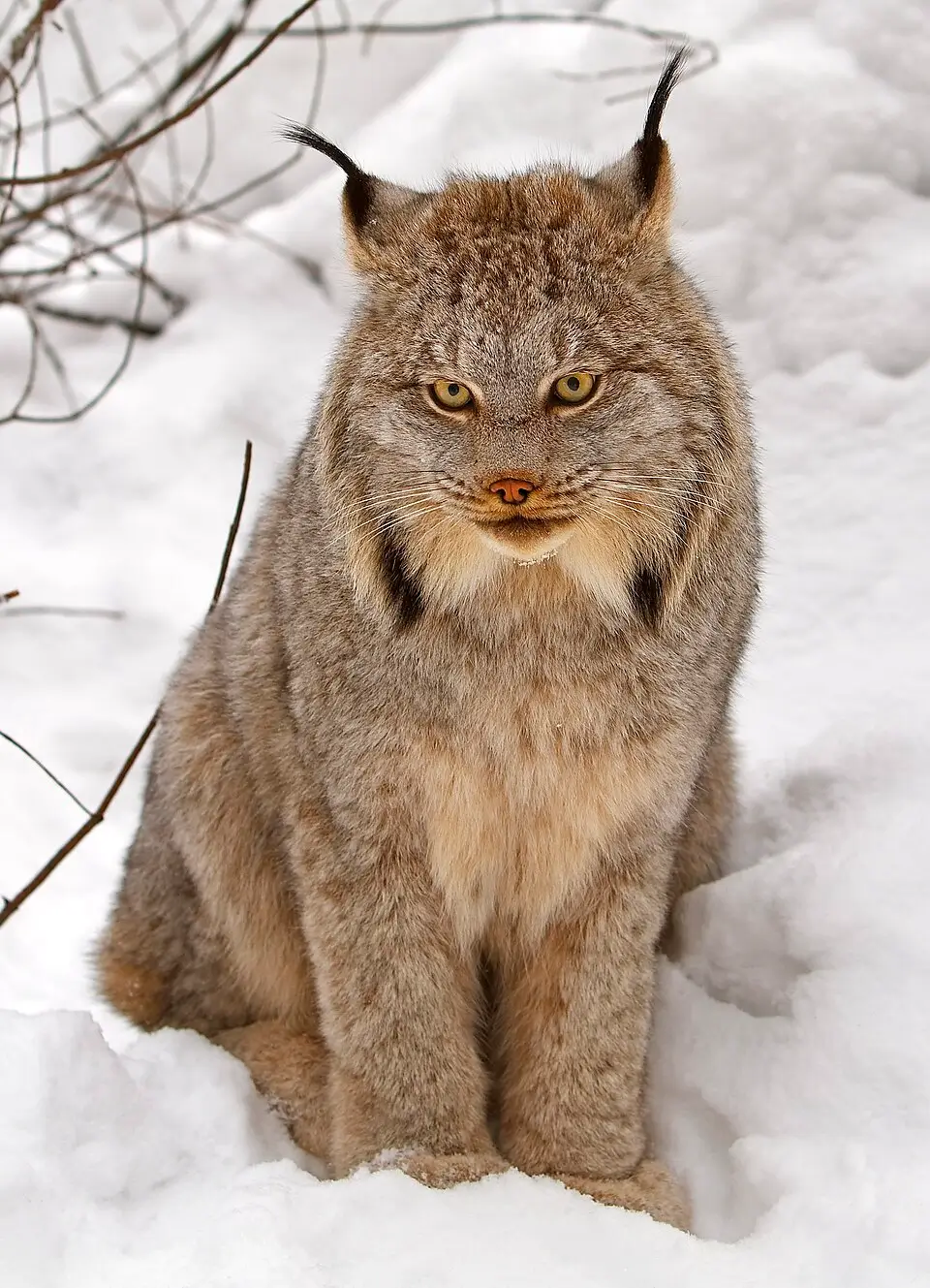
Few creatures capture the imagination of wildlife enthusiasts and outdoor adventurers quite like the Canada lynx (Lynx canadensis). Elusive, silent, and supremely adapted to life in snow-blanketed forests, this medium-sized wild cat is one of North America's most fascinating predators. With its distinctive tufted ears, oversized paws, and piercing golden eyes, the Canada lynx embodies the untamed spirit of the northern wilderness. Whether you're a wildlife watcher hoping to catch a glimpse of this secretive feline or simply someone drawn to the natural world, understanding the Canada lynx is a journey into one of nature's most elegant survival stories.
In states like Montana — a vast, rugged landscape that borders Canada and encompasses millions of acres of wild, mountainous terrain — the Canada lynx occupies a special place in the ecological fabric. Montana's western half in particular, with its dense conifer forests, deep snowpack, and remote wilderness areas, provides some of the most suitable lynx habitat remaining in the contiguous United States. The story of the Canada lynx in Montana and across its broader North American range is one of remarkable biological specialization, ecological interdependence, and ongoing conservation significance.
Biological Traits
The Canada lynx (Lynx canadensis) belongs to the family Felidae and is one of four species within the genus Lynx, which also includes the Eurasian lynx (Lynx lynx), the Iberian lynx (Lynx pardinus), and the bobcat (Lynx rufus). While the Canada lynx and bobcat are often confused due to their similar size and overlapping range in some regions, the two species are distinct in several important ways.
The Canada lynx is a medium-sized cat, generally weighing between 18 and 30 pounds, though individuals can occasionally exceed this range. Males tend to be larger than females, a trait common across many felid species. The body is compact and muscular, built for agility and explosive bursts of speed rather than long-distance endurance. The legs are relatively long in proportion to the body, and the hind legs are notably longer than the forelegs, giving the lynx a characteristic rump-high posture when standing or walking.
Perhaps the most iconic feature of the Canada lynx is its enormous, snowshoe-like paws. These broad, heavily furred feet act as natural snowshoes, distributing the animal's weight across a wider surface area and allowing it to move with surprising ease across deep, powdery snow — terrain that would exhaust or bog down many other predators and prey animals. This adaptation is central to the lynx's predatory success in boreal environments.
The fur of the Canada lynx is dense and soft, typically appearing silver-gray to grayish-brown, often with faint spotting that may be more pronounced in younger animals. The coat thickens considerably in winter, providing essential insulation against the brutal cold of northern winters. The short tail is tipped with a solid black band, and the ears are adorned with long, prominent black tufts — a defining characteristic that distinguishes lynx from most other wild cats. The face features distinctive facial ruffs of longer fur framing the cheeks, giving the animal an almost regal appearance.
The Canada lynx is a specialist predator, and its relationship with the snowshoe hare (Lepus americanus) is one of the most well-documented predator-prey dynamics in the animal kingdom. Snowshoe hares make up the overwhelming majority of the lynx's diet across much of its range, and the populations of the two species are tightly linked in a classic boom-and-bust cycle. When hare populations are high, lynx thrive, reproduce successfully, and their numbers climb. When hare populations crash — as they do roughly every 8 to 11 years in a well-studied population cycle — lynx numbers follow suit, often declining sharply. During these lean periods, lynx may expand their range in search of food, occasionally turning to alternative prey such as red squirrels, grouse, voles, and other small mammals. In some areas, lynx have been documented preying on deer, particularly young or weakened individuals, though this is considered supplementary rather than a dietary staple.
Lynx are solitary animals outside of the breeding season, which typically occurs in late winter or early spring. After a gestation period of approximately 63 to 70 days, females give birth to litters of one to six kittens, with litter sizes often reflecting the availability of prey. Kittens remain with their mother for nearly a year, learning the hunting skills they will need to survive independently. Home range sizes vary considerably depending on prey availability and habitat quality, but adult lynx may patrol territories covering dozens to hundreds of square miles.
Habitat & Range
The Canada lynx is primarily a boreal and subalpine forest specialist. Across its broad North American range — which spans from Alaska and Canada southward into portions of the northern contiguous United States — the lynx gravitates toward dense, mature conifer forests characterized by heavy snowfall, abundant understory cover, and robust populations of snowshoe hares. Spruce-fir forests, mixed boreal woodlands, and high-elevation conifer zones are all favored habitats.
In the contiguous United States, the Canada lynx reaches the southern edge of its range in select mountainous states, including Montana, Idaho, Washington, Colorado, Minnesota, and a few others. Montana, given its geographic position adjacent to Canada and its vast expanse of relatively undisturbed montane forest, supports one of the more significant lynx populations south of the Canadian border. The western portions of the state, with their rugged mountain ranges, deep winter snows, and extensive federal wilderness and forest lands, provide conditions that closely mirror the boreal habitats the lynx prefers.
Connectivity between habitat patches is critically important for lynx, as these cats are wide-ranging and require the ability to move between areas of suitable forest and prey availability. Geographic features such as mountain passes and contiguous forested corridors allow individual animals to travel great distances — a behavior that supports genetic diversity and population resilience.
Hunting Information
The Canada lynx holds a unique and carefully considered status under wildlife management frameworks in the United States. In 2000, the U.S. Fish and Wildlife Service listed the contiguous United States population of the Canada lynx as a threatened species under the Endangered Species Act. This federal listing has significant implications for how the species is managed across its range in the lower 48 states.
In Montana specifically, no open hunting season exists for Canada lynx, and the species cannot be legally hunted or trapped in the state. The source data consulted for this article confirms that no season dates or licenses are available for this species in Montana, consistent with its threatened status under federal law. Hunters and trappers operating in Montana should be fully aware of these protections and exercise care when setting traps intended for other furbearers, as incidental take of Canada lynx is a serious concern that wildlife managers actively work to minimize.
It is worth noting that in Canada, where lynx populations are generally more robust and not subject to the same federal protections that apply in the contiguous United States, regulated trapping seasons do exist in some provinces and territories. However, those regulations fall outside the scope of Montana-specific guidance and vary considerably by jurisdiction.
Anyone who encounters a Canada lynx in the field — whether while hunting other species, hiking, or trapping — should consider documenting the sighting and reporting it to Montana Fish, Wildlife & Parks (FWP). Citizen science observations play a meaningful role in ongoing monitoring and conservation efforts for this species.
Conservation
The conservation story of the Canada lynx in the contiguous United States is an important chapter in modern wildlife management. The 2000 threatened listing under the Endangered Species Act prompted significant research, habitat assessment, and management planning across lynx-occupied states. Recovery efforts have focused on protecting and maintaining high-quality lynx habitat, managing forests with lynx needs in mind, and reducing incidental mortality from trapping and vehicle collisions.
Habitat management is particularly critical because Canada lynx depend not only on the presence of mature boreal and subalpine forests but also on the dense young forest regeneration that follows disturbances — areas where snowshoe hare habitat flourishes. Wildfire, insect outbreaks, and selective timber harvesting, when managed appropriately, can create a mosaic of forest ages and structures that supports both lynx and their primary prey.
Climate change represents one of the most significant long-term concerns for Canada lynx conservation, particularly at the southern edges of the species' range. Warming temperatures and reduced snowpack could diminish the competitive advantage that the lynx's specialized paws provide over prey and competing predators like the bobcat. Research into how lynx populations will respond to shifting climate conditions is an active area of scientific inquiry.
The Canada lynx serves as an important indicator species for the health of boreal and subalpine forest ecosystems. Its presence signals an intact, functioning wilderness — one with sufficient prey, cover, and cold-season conditions to sustain one of nature's most specialized predators.