Overview
Few birds are as instantly recognizable across North America as the Canada goose. With its distinctive black head and neck, bold white chinstrap patch, and resonant honking call, Branta canadensis has become one of the most iconic waterfowl species on the continent. Whether you're a seasoned waterfowl hunter scanning a Montana grain field at dawn, a wildlife photographer crouched along a river bank, or simply a nature lover watching a V-formation pass overhead against a big sky backdrop, the Canada goose commands attention and respect.
The Canada goose holds a unique cultural and ecological place in North American life. It is one of the most widely distributed waterfowl species on the continent, found from Alaska to Mexico and from the Pacific to the Atlantic coasts. In Montana — a state celebrated for its vast landscapes, sprawling wetlands, and rich hunting heritage — Canada geese represent a cherished part of both the natural ecosystem and the outdoor recreation tradition. Montana's geographic diversity, from its glacier-carved western valleys to its eastern plains and river corridors, provides exceptional habitat for these birds during migration and nesting seasons alike.
This guide covers everything you need to know about the Canada goose: its biology, behavior, habitat preferences, hunting traditions, and conservation status. Whether you're planning your first goose hunt in Montana or simply want to deepen your appreciation for this remarkable bird, read on for a comprehensive look at one of North America's most beloved waterfowl.
Biological Traits
The Canada goose (Branta canadensis) belongs to the family Anatidae, which encompasses all ducks, geese, and swans. The genus Branta includes several species of so-called "black geese," characterized by their dark plumage patterns and preference for cooler climates.
Appearance
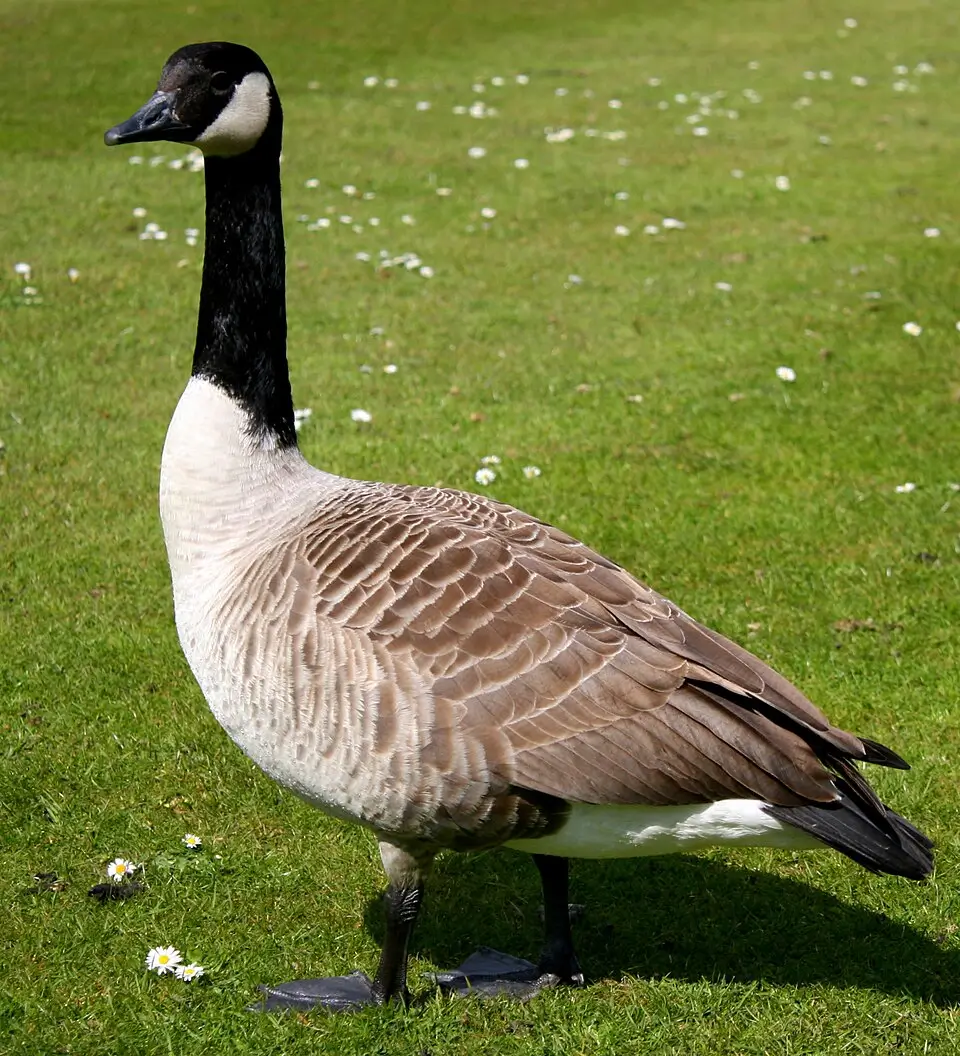
The Canada goose is immediately identifiable by its striking coloration. Adults display a black head and neck contrasted sharply by a white chinstrap or cheek patch that extends from the throat toward the back of the head. The body is typically brown to tan on the back and sides, with a lighter, often whitish breast and belly. The tail is black, and the rump is white. Both males (ganders) and females (hens) share this plumage pattern, making the sexes difficult to distinguish visually — a characteristic somewhat unusual in the waterfowl world, where males of many species display vibrant breeding plumage.
Canada geese are notably large birds. They are among the largest waterfowl in North America, with wingspans that can stretch impressively wide, allowing for powerful, sustained flight. Their size varies considerably across the many recognized subspecies, with some populations being substantially smaller — sometimes referred to colloquially as "cackling geese" — while others are large, heavy-bodied birds well-suited to cold climates.
Subspecies
Branta canadensis is one of the most subspecies-rich waterfowl in the world. Taxonomists have recognized multiple subspecies over the years, and debates about classification continue in the scientific community. The cackling goose (Branta hutchinsii) was once considered a subspecies of the Canada goose but is now recognized as a separate species. The diversity within the Canada goose complex reflects the species' remarkable adaptability to different climates and geographic conditions across the continent.
Behavior and Social Structure
Canada geese are highly social animals. They form strong pair bonds that typically last for life, and family groups remain cohesive through migration and into the wintering grounds. Geese are known for their loud, resonant honking calls, which serve as communication during flight, alarm signals, and territorial displays. Their famous V-formation flight is not merely an aesthetic phenomenon — it is an aerodynamic adaptation that allows birds drafting behind the leader to conserve energy, with the lead bird rotating periodically so no single individual bears the full burden of breaking wind resistance.
Reproduction
Canada geese typically nest in the spring, with females selecting nest sites near water. The female constructs a nest using plant material and lines it with down feathers plucked from her own body. Clutch sizes typically range from two to eight eggs, and the female incubates them for roughly a month. Goslings are precocial — meaning they are covered in down and capable of walking and swimming within hours of hatching. Both parents are highly protective of their young, and ganders are known for their bold defensive behavior when a nest or brood is threatened.
Diet
Canada geese are primarily herbivores. They graze extensively on grasses, sedges, and other vegetation, and they are well-known for feeding in agricultural fields on grain crops such as corn, wheat, and barley. This feeding behavior makes harvested grain fields and open pastures key foraging habitats, especially during fall migration — a detail of considerable relevance to hunters.
Habitat & Range
The Canada goose has one of the broadest ranges of any waterfowl species in North America. It breeds across a vast swath of the continent, from the Arctic tundra of northern Canada and Alaska all the way south through the contiguous United States. During winter, populations move to milder climates, though some resident populations have established themselves year-round in parks, golf courses, agricultural areas, and urban wetlands throughout much of the United States.
Montana's Role in the Canada Goose Story
Montana is an important state for Canada geese, both as a breeding ground and as a migrational corridor. The state's fourth-largest geographic footprint in the nation provides an enormous variety of habitats suitable for these birds. In western Montana, river valleys, mountain lakes, and wetlands associated with systems like the Clark Fork and Flathead Rivers offer nesting habitat and stopover points during migration. In eastern Montana, the Missouri River and its tributaries, prairie potholes, reservoirs, and vast grain fields provide critical resources for migrating and staging flocks.
Montana is bordered to the north by the Canadian provinces of Alberta, British Columbia, and Saskatchewan — provinces that serve as major breeding grounds for many Canada goose populations. This geographic reality means that Montana sits squarely in the migration path of birds moving south from Canada each fall, making the state a natural gathering point for impressive concentrations of geese as seasons change.
The state's agricultural landscapes are especially attractive to geese during fall migration. Harvested fields of wheat, barley, and other grains offer abundant, calorie-rich food resources that allow geese to build fat reserves for continued migration or winter survival. Hunters in eastern Montana are particularly familiar with the sight of large flocks working harvested grain fields in the early morning light.
Hunting Information
Waterfowl hunting, including Canada goose hunting, is a deeply rooted tradition in Montana. The state's combination of productive agricultural land, extensive river systems, reservoirs, and proximity to major Canadian breeding grounds creates excellent conditions for goose hunting throughout the fall and early winter seasons.
General Approach
Canada goose hunting typically involves decoy spreads set up in fields or along water, combined with calling to attract birds within range. Field hunting over harvested grain is among the most popular methods in Montana, where geese often concentrate in agricultural areas to feed before roosting on nearby water. Layout blinds, pit blinds, or natural vegetation concealment are commonly used to hide hunters from the sharp eyes of incoming geese. Effective calling is a critical skill, and experienced hunters invest considerable time learning to replicate the clucks, moans, and honks that geese use to communicate.
Regulations in Montana
Waterfowl hunting in Montana is regulated jointly by the Montana Fish, Wildlife & Parks (FWP) agency and the U.S. Fish & Wildlife Service, as migratory birds fall under federal jurisdiction through the Migratory Bird Treaty Act. Hunters are required to hold both a valid Montana hunting license and a Federal Duck Stamp, which applies to all migratory waterfowl including geese. Specific season dates, bag limits, and zone boundaries are established annually and may vary from year to year. Hunters are strongly encouraged to consult the most current Montana Waterfowl Hunting Regulations available through Montana FWP before heading afield, as regulations can change to reflect population dynamics and conservation goals.
Gear and Preparation
Successful Canada goose hunting requires preparation. A quality spread of full-body or shell decoys, a reliable shotgun chambered for steel or other non-toxic shot (required for waterfowl hunting federally), appropriate camouflage, and a good selection of goose calls are all part of the essential toolkit. Montana's fall and early winter weather can be demanding, and hunters should be prepared for cold temperatures, wind, and precipitation.
Conservation
The Canada goose is a conservation success story in many respects. Through much of the early to mid-twentieth century, some populations experienced significant declines due to habitat loss, market hunting, and other pressures. The passage of the Migratory Bird Treaty Act of 1918 provided foundational federal protection for migratory birds, including Canada geese, and helped stabilize and eventually rebuild populations.
Today, Canada goose populations across North America are generally healthy and robust. In fact, some resident populations in urban and suburban areas have grown to the point where they are managed to balance human coexistence concerns with ecological health. The regulated hunting season serves as one important tool in this population management framework, providing both recreational opportunity and a mechanism for maintaining sustainable population levels.
Conservation of wetlands, riparian corridors, and agricultural landscapes remains essential for the long-term health of Canada goose populations. Organizations working on wetland conservation, as well as hunters participating in programs like the Federal Duck Stamp — proceeds from which fund wetland acquisition and protection — play a meaningful role in ensuring that Canada geese continue to thrive across their range, including in Montana.