Overview
Few animals in the natural world command the same mixture of awe, respect, and fascination as the wolf (Canis lupus). As one of the most widely recognized and studied carnivores on the planet, the wolf holds a unique place in both ecological systems and human culture. From the dense boreal forests of Canada to the rugged wilderness of the American Midwest, wolves have shaped ecosystems, inspired legends, and driven conservation conversations for centuries. In states like Michigan — with its vast stretches of wilderness in the Upper Peninsula, its Great Lakes shorelines, and its rich mosaic of forests and wetlands — the wolf is not merely a symbol of wild nature but a living, breathing presence that continues to influence the landscape in profound ways.
Understanding the wolf means grappling with a creature that is simultaneously familiar and mysterious. As the ancestor of the domestic dog, Canis lupus is deeply intertwined with human history. Yet wolves remain distinctly wild, operating on their own terms within complex social structures that have fascinated biologists and wildlife enthusiasts for generations. This article offers a comprehensive look at the wolf — its biology, its habitat, its relationship to hunting culture in Michigan, and the conservation efforts that have shaped its modern story.
Biological Traits
The wolf (Canis lupus) belongs to the family Canidae, the same family that includes domestic dogs, coyotes, foxes, and jackals. It is the largest wild member of this family, a distinction that reflects the wolf's evolutionary success as a top-level predator.
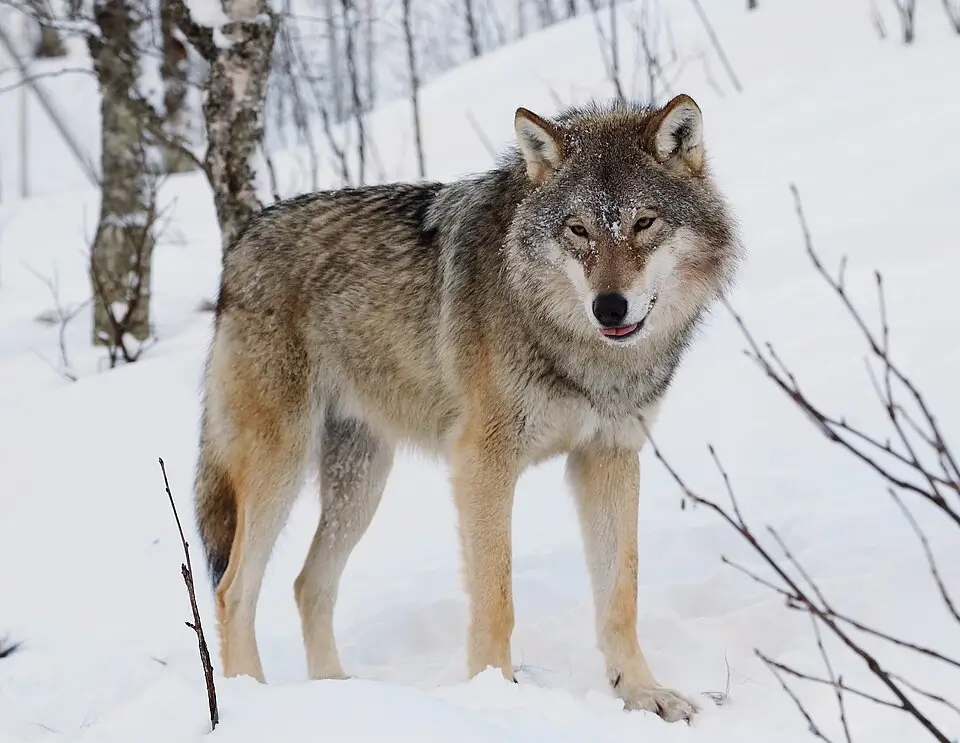
Wolves are built for endurance and pursuit. They possess a deep chest housing large lungs and a powerful heart, long legs adapted for covering ground efficiently, and large paws that help distribute weight on soft terrain like snow. Their jaws are exceptionally strong, capable of exerting significant pressure — an adaptation suited for taking down large prey and processing bones. The skull is broad, and the muzzle is elongated, housing an extraordinary sense of smell that far surpasses human capability.
Coat coloration in wolves varies considerably, ranging from pure white in Arctic populations to jet black, with a wide spectrum of grays, browns, and tawny shades in between. This variation is not merely aesthetic — it reflects the genetic diversity and geographic spread of the species. In the Great Lakes region, including Michigan, wolves typically display coats in gray and brown tones, blending naturally into the forested landscapes they inhabit.
One of the most striking and scientifically important aspects of wolf biology is their social structure. Wolves are pack animals, living and hunting cooperatively in family groups. A pack is typically composed of a breeding pair — often referred to as the alpha male and alpha female — along with their offspring from one or more litters. Pack sizes can vary considerably depending on prey availability and habitat conditions, but groups of five to ten individuals are commonly observed in North American wolf populations.
Communication within the pack is sophisticated and multifaceted. Wolves communicate through vocalizations — most famously the howl — as well as through body language, facial expressions, and scent marking. Howling serves multiple purposes: it helps pack members locate one another across distances, it reinforces social bonds, and it communicates territorial claims to neighboring packs. Scent marking, accomplished through urine and scat deposited at key locations, similarly advertises territory and communicates information about individuals.
Wolves are carnivores, and in North America, their diet centers primarily on large ungulates such as white-tailed deer, moose, elk, and caribou. They are opportunistic hunters that also consume smaller mammals, beavers, and, in lean times, carrion. Their hunting strategy relies on cooperative pursuit — pack members work together to test, chase, and ultimately bring down prey. This cooperative hunting ability is one reason wolves are capable of taking animals many times their own size.
Reproduction in wolves is seasonal. Breeding typically occurs in late winter, with pups born in spring after a gestation period of approximately 63 days. Litter sizes average four to six pups, though larger litters are possible. The entire pack participates in raising pups, with adults regurgitating food for young wolves and providing protection at the den site.
Habitat & Range
The wolf is one of the most wide-ranging land mammals on Earth. Historically, Canis lupus occupied an enormous territory spanning much of the Northern Hemisphere — from the forests of North America and Europe to the steppes of Asia and the deserts of the Middle East. While human expansion significantly reduced this range over the past several centuries, wolf populations have shown resilience and, in some regions, recovery.
In North America, wolves are found across large portions of Canada and Alaska, with recovering populations in the northern Rocky Mountains, the Pacific Northwest, and the Great Lakes region. Wolves thrive in areas with abundant prey, low human density, and large contiguous tracts of wild land. They occupy a wide variety of habitat types, including boreal forests, temperate deciduous forests, tundra, grasslands, and mountainous terrain.
Michigan presents a particularly interesting case study in wolf habitat. The state's Upper Peninsula, with its dense forests, wetlands, and relatively low human population density, provides conditions that wolves find suitable. The region's abundant white-tailed deer and moose populations offer consistent prey, while the large blocks of public land and wilderness areas reduce pressure from human development. Michigan's position in the Great Lakes region means the state is part of a broader Great Lakes wolf population that also includes animals in Wisconsin and Minnesota — the latter hosting the largest wolf population in the contiguous United States.
Wolves are highly mobile animals, capable of traveling dozens of miles in a single day while patrolling their territories. Pack territories can encompass hundreds of square miles, with boundaries defined and maintained through scent marking and, occasionally, direct encounters with neighboring packs. This mobility means that individual wolves may cross state and even international boundaries over the course of their lives.
Hunting Information
Wolf hunting in Michigan is a subject that resides at the intersection of wildlife management, legal frameworks, and deeply held values among hunters, conservationists, and the general public. It is important for anyone interested in this topic to approach it with both an appreciation for the complexity involved and a commitment to current, accurate information.
As of the time of this writing, no current hunting season dates or specific license information for wolf hunting in Michigan are available from official state sources in our reference data. The legal status of wolf hunting in Michigan has shifted multiple times over the years, tied closely to the wolf's listing status under the federal Endangered Species Act. Wolves in the Great Lakes region have cycled between federal protections and state management authority, and this has directly impacted whether hunting seasons could be legally established.
Michigan hunters and outdoor enthusiasts who are interested in the current legal status of wolf hunting in the state are strongly encouraged to consult the Michigan Department of Natural Resources (MDNR) directly. The MDNR is the authoritative source for up-to-date information on seasons, licensing requirements, bag limits, and any applicable regulations. Regulations in this area can change, and acting on outdated information is never advisable.
What is clear is that wolf management — whether through regulated hunting or other tools — is an active and ongoing conversation in Michigan and across the Great Lakes region. Many hunters view the wolf as both a formidable quarry and an important component of the wilderness experience, while wildlife managers weigh population data, prey dynamics, and livestock impacts when crafting management strategies.
Conservation
The story of the wolf in North America is, in many ways, one of the most dramatic wildlife conservation narratives of the twentieth century. By the mid-twentieth century, wolves had been extirpated from most of the contiguous United States as a result of unregulated hunting, trapping, and poisoning campaigns driven by fears over livestock predation. The passage of the Endangered Species Act in 1973 provided a critical legal framework for protection and recovery efforts.
In the Great Lakes region, wolf recovery has been a notable success story. Beginning from small remnant populations in Minnesota, wolves recolonized parts of Wisconsin and Michigan's Upper Peninsula over subsequent decades. This recovery was facilitated by federal protections, habitat availability, and the natural dispersal behavior of wolves themselves. Today, the Great Lakes wolf population represents one of the most significant wolf recovery achievements in the lower 48 states.
Conservation efforts for wolves involve a wide range of stakeholders, including federal and state wildlife agencies, tribal nations, conservation organizations, agricultural communities, and hunters. Balancing the needs and perspectives of these groups remains a central challenge in wolf management. The role of wolves as a keystone species — their ability to influence prey populations and, through what ecologists call a "trophic cascade," affect vegetation, water systems, and the abundance of other species — continues to generate important scientific research and public interest.
Michigan, as part of the Great Lakes region, will likely continue to be a key arena for wolf conservation and management discussions for years to come. The state's wilderness character, its robust deer and moose populations, and its engaged community of hunters and conservationists all contribute to an environment where thoughtful, science-based wolf management can be pursued.