Overview
Few creatures embody the spirit of the American wilderness quite like the wild turkey (Meleagris gallopavo). Bold, wary, and undeniably impressive, this large, native bird has captivated hunters, wildlife enthusiasts, and naturalists for centuries. From its role in the cultural fabric of North American history to its remarkable comeback story as a conservation success, the wild turkey stands as a testament to what thoughtful wildlife management and passionate stewardship can achieve. Today, wild turkeys thrive across a vast range of North American habitats, including the forests, fields, and wetland edges of Michigan — a state whose diverse landscape provides ideal conditions for this magnificent bird to flourish.
Whether you are a seasoned hunter who has spent countless spring mornings calling in a longbeard, a birdwatcher captivated by a flock feeding in a snow-dusted woodland clearing, or simply someone who appreciates the richness of North American wildlife, the wild turkey offers something extraordinary. It is a bird of intelligence, adaptability, and remarkable biological complexity — one that rewards careful study and respectful observation in equal measure.
Biological Traits
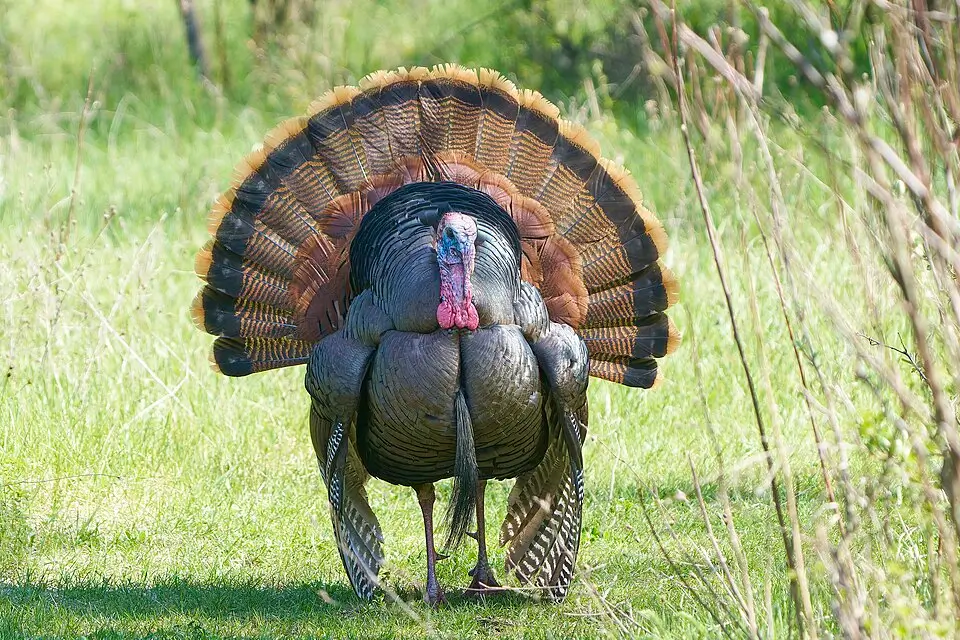
The wild turkey (Meleagris gallopavo) is the heaviest member of the order Galliformes found in North America. Adult males, known as toms or gobblers, are among the most visually striking birds on the continent. They typically weigh between 11 and 24 pounds, though exceptionally large individuals can exceed this range. Their plumage is a spectacular mosaic of iridescent bronze, green, copper, and gold feathers that seem to shimmer and shift in the sunlight. The bare skin of the head and neck cycles through vivid shades of red, white, and blue — a display that becomes especially intense during the breeding season.
One of the most recognizable features of the male wild turkey is the beard — a tuft of coarse, hair-like feathers that protrudes from the chest. Beards can grow to lengths of ten inches or more in older birds, and they serve as a widely used indicator of age and maturity among hunters and wildlife biologists alike. Males also possess sharp, curved spurs on the backs of their legs, which they use in combat with rival males during the spring breeding season. Spur length, like beard length, is often used to gauge the age of a harvested bird.
Female wild turkeys, called hens, are considerably smaller and more subtly colored than their male counterparts. Their plumage tends toward muted browns and tans, providing excellent camouflage while nesting. Hens typically weigh between 5 and 12 pounds. Occasionally, hens can grow beards, though this is relatively uncommon.
Wild turkeys are highly vocal animals. The male's resonant gobble is one of the most iconic sounds of the North American spring landscape and can carry over a mile under favorable conditions. Beyond the gobble, turkeys communicate through a rich vocabulary of clucks, purrs, yelps, cackles, and putts — each carrying specific social information within the flock. This complex vocal behavior is one of the reasons turkey hunting is considered one of the most challenging and rewarding pursuits in the outdoor world.
Turkeys are omnivores with a broad diet that shifts seasonally. In spring and summer, insects, berries, and tender green vegetation form an important part of their diet. As autumn arrives, hard mast — particularly acorns, beechnuts, and hickory nuts — becomes a dietary staple and a critical energy source heading into winter. Seeds, grains, and agricultural crops round out their menu throughout the year. Their ability to exploit a wide range of food sources is a key factor in their adaptability across diverse environments.
Wild turkeys have keen eyesight that is widely considered to be among the best of any North American game bird. They are capable of detecting movement at great distances and possess a wide field of vision. Their hearing is also acute. These sensory capabilities make them notoriously difficult to approach, a fact that any turkey hunter can readily confirm.
The breeding season, known as the rut among turkey hunters, typically unfolds in spring. Dominant toms establish territories, strut dramatically with fanned tails and puffed feathers, and gobble persistently to attract hens and intimidate rivals. Hens nest on the ground, typically laying a clutch of 10 to 14 eggs in a shallow depression lined with leaves and vegetation. Incubation lasts approximately 28 days. The young, called poults, are precocial — meaning they hatch with their eyes open and are capable of walking and feeding within hours of emerging from the egg. Despite this early independence, poult mortality in the first few weeks of life can be significant, driven by weather, predation, and habitat conditions.
Habitat & Range
Wild turkeys are highly adaptable birds capable of thriving in a wide variety of habitats. They are most strongly associated with mixed hardwood and coniferous forests interspersed with open areas such as fields, meadows, agricultural land, and forest edges. This mosaic of woodland and open country provides the combination of food resources, cover, and nesting habitat that turkeys require across all seasons.
The species is native to North America and was historically found across much of the eastern United States, as well as parts of the Midwest, Southwest, and Mexico. Following dramatic population declines in the 19th and early 20th centuries due to unregulated hunting and widespread habitat loss, ambitious restoration efforts by state wildlife agencies and organizations like the National Wild Turkey Federation (NWTF) resulted in successful reintroductions across the continent. Today, wild turkeys can be found in every U.S. state except Alaska, as well as in parts of Canada and Hawaii.
In Michigan, wild turkeys are well-established residents of both the Lower and Upper Peninsulas. Michigan's landscape — characterized by extensive hardwood and mixed forests, abundant agricultural areas, river corridors, and varied terrain — provides excellent year-round habitat for turkeys. The birds are particularly abundant in the southern and central portions of the Lower Peninsula, where a blend of farmland and woodland edge creates prime habitat, but robust populations also exist throughout much of the Upper Peninsula.
Michigan's Great Lakes geography and its mosaic of forest types, including oak, beech-maple, and aspen-dominated stands, provide turkeys with reliable mast crops, roosting trees, and the structural diversity they need to survive Michigan's sometimes challenging winters. Turkeys roost in trees overnight — a behavior that protects them from ground-based predators — and the mature timber found throughout Michigan's forests provides ample roosting opportunities.
Hunting Information
The wild turkey is one of the most popular and beloved game birds in North America, and Michigan is no exception. Turkey hunting in Michigan is a deeply rooted tradition, attracting hunters from across the state and beyond each spring and fall season. The spring turkey season, which typically aligns with the peak of the gobbling and breeding activity, is particularly celebrated. Calling in a wary gobbler through the awakening spring woods is widely regarded as one of the most thrilling and skill-intensive experiences in all of hunting.
Turkey hunting rewards patience, woodsmanship, and a mastery of calling techniques. Hunters typically set up before dawn near known roosting areas and use a variety of calls — box calls, slate calls, mouth diaphragm calls, and others — to mimic the sounds of receptive hens and lure gobblers within range. The sport demands knowledge of turkey behavior, habitat, and movement patterns, and the challenge of consistently outsmarting a wild turkey's sharp senses is one that keeps hunters coming back year after year.
Michigan's Department of Natural Resources (DNR) manages wild turkey populations across the state and provides specific seasons, licensing requirements, and regulations. Hunters interested in pursuing wild turkeys in Michigan are strongly encouraged to visit the Michigan DNR's official website for the most current and accurate information regarding season dates, licensing requirements, bag limits, and any zone-specific regulations. Regulations can change from year to year, and consulting the official source ensures full compliance with state law.
Michigan offers both spring and fall turkey hunting seasons, with the spring season drawing the greatest participation. Both residents and non-residents may participate in Michigan's turkey seasons, subject to the appropriate licensing. As with all hunting in Michigan, ethical and lawful conduct in the field reflects the best traditions of the sporting community and contributes directly to the continued health of the state's turkey population.
Conservation
The wild turkey's conservation story is one of the great wildlife recovery successes in North American history. By the early 20th century, overhunting and the widespread clearing of forests had reduced wild turkey populations to alarmingly low numbers. It is estimated that populations crashed to perhaps as few as 30,000 birds continent-wide at their lowest point — a shadow of the millions that once roamed North America's forests.
The recovery began in earnest through the combined efforts of state and federal wildlife agencies, which implemented regulated hunting seasons and habitat protections. The trap-and-transfer program — in which wild-caught turkeys were relocated to suitable but unoccupied habitat — proved enormously successful. The founding of the National Wild Turkey Federation in 1973 galvanized private conservation support on a massive scale, channeling funding and volunteer effort into habitat restoration and wild turkey management programs across the country.
Today, wild turkey populations across North America number in the millions, and the species is considered a conservation success by any measure. In Michigan, the wild turkey population has expanded significantly from its restored foundation, now supporting healthy harvests and sustained population growth across the state.
Hunters play a direct and meaningful role in this ongoing conservation story. License fees and excise taxes on sporting equipment — collected under the framework of the Federal Aid in Wildlife Restoration Act (Pittman-Robertson Act) — fund state wildlife management programs, including the habitat work and population monitoring that keep Michigan's turkey population thriving. The partnership between hunters, conservation organizations, and wildlife agencies remains the cornerstone of wild turkey conservation to this day.