Overview
Few sights in the natural world rival the breathtaking spectacle of thousands of Tundra swans (Cygnus columbianus) sweeping across a steel-gray autumn sky, their resonant calls echoing over marshes and open water. These magnificent birds are among the largest waterfowl in North America, and their annual migrations represent one of the continent's most awe-inspiring wildlife events. For birders, wildlife enthusiasts, and hunters alike, the Tundra swan commands respect and admiration in equal measure. Across their vast range — from the remote Arctic tundra where they breed to the temperate coastal and inland wintering grounds where they gather in impressive numbers — Tundra swans serve as a powerful symbol of wilderness and seasonal change.
Michigan, with its extraordinary Great Lakes geography, sprawling wetlands, and abundant inland lakes, lies directly in the path of Tundra swan migration. Each spring and fall, these birds pause along Michigan's shorelines and wetland complexes, offering remarkable wildlife viewing opportunities and, where regulated seasons exist, carefully managed hunting experiences. Understanding the biology, behavior, and conservation status of the Tundra swan helps hunters and wildlife lovers alike appreciate just how special every encounter with this species truly is.
Biological Traits
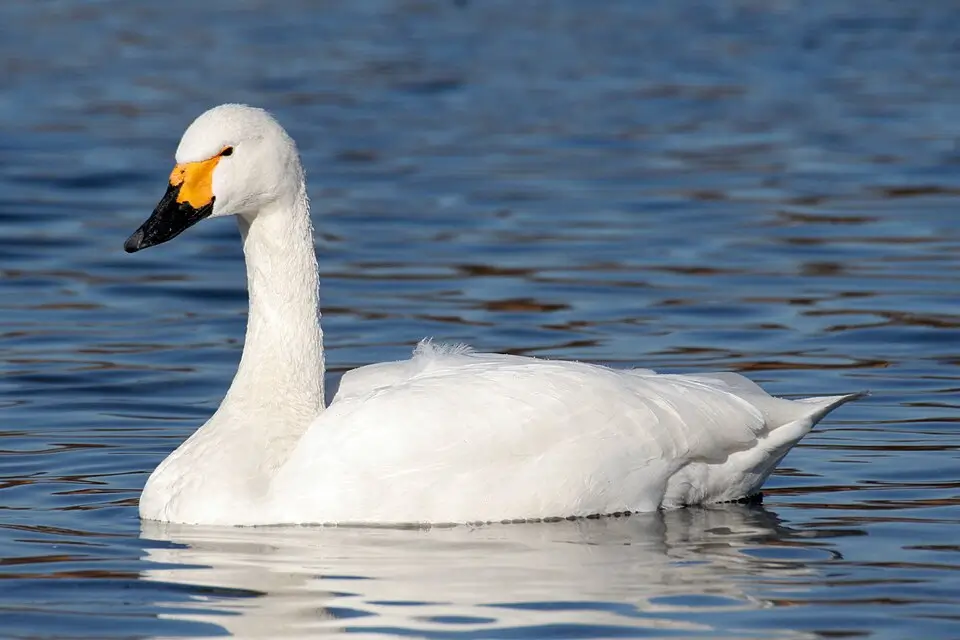
The Tundra swan (Cygnus columbianus) belongs to the family Anatidae, which encompasses all ducks, geese, and swans. Within the genus Cygnus, the Tundra swan is closely related to the Whooper swan (Cygnus cygnus) of Eurasia, and the two are sometimes considered sister species. The Tundra swan itself comprises two recognized subspecies: the Whistling swan (Cygnus columbianus columbianus), which breeds across North America, and Bewick's swan (Cygnus columbianus bewickii), which breeds across northern Eurasia.
As one of the largest birds in North America, the Tundra swan is an imposing presence on any body of water. Adult birds are entirely white in plumage, with jet-black bills and feet — a stark, elegant contrast that makes them unmistakable in the field. The bill typically features a small yellow patch near the eye, though this varies among individuals and is often less pronounced in the North American subspecies compared to the Eurasian Bewick's swan. Juveniles display a soft grayish-brown plumage that gradually transitions to pure white over their first year of life.
Tundra swans are powerful fliers, capable of sustained flight over long distances during their biannual migrations. They fly in characteristic V-formations or loose diagonal lines, and their wingbeats produce a distinctive whistling sound — a trait that earned the North American subspecies its common name, the Whistling swan. Their vocalizations are varied and far-carrying, ranging from low, melodic honking calls to higher-pitched, bugling notes that fill the air above migration stopovers. When large flocks are gathered on staging areas, the collective sound can be heard from remarkable distances, creating an unforgettable sensory experience.
These birds are long-lived and form strong pair bonds that typically last for life. Pairs begin forming on wintering grounds and during migration, often before the birds have reached reproductive maturity. Tundra swans generally begin breeding at three to four years of age, though some individuals may not breed until they are five or six years old. Nesting pairs are highly territorial, defending substantial areas of tundra wetland habitat around their nest sites.
Tundra swans are primarily herbivorous, feeding on aquatic vegetation, grasses, grains, and the roots and tubers of wetland plants. During migration, they frequently forage in agricultural fields, gleaning waste grain from harvested corn, soybean, and other crop fields — a behavior that has helped them adapt to changing landscapes along their migratory corridors.
Habitat and Range
The breeding range of the Tundra swan spans the entire northern edge of North America, from Alaska across northern Canada to Baffin Island. These birds are quintessential creatures of the Arctic and sub-Arctic tundra, nesting on low-lying wetlands, pond edges, and river deltas where vegetation is lush during the brief northern summer. The shallow, productive wetlands of the tundra provide abundant food resources for nesting adults and rapidly growing cygnets.
As autumn shortens the days and Arctic cold sets in, Tundra swans begin their southward migration in large, noisy flocks. The North American population splits broadly into two migratory flyways: a western population that winters primarily in California's Central Valley and other Pacific Coast wetlands, and an eastern population that migrates to wintering grounds along the Atlantic Coast, particularly in the Chesapeake Bay region and North Carolina's coastal sounds.
Michigan sits at a strategic crossroads along the eastern migration corridor. The state's unique geography — shaped by the Great Lakes and a dense network of inland lakes, rivers, and wetland complexes — makes it an important stopover and staging area for Tundra swans during both spring and fall migration. Large concentrations of swans can be observed at well-known sites across the state, particularly along the Lake Erie shoreline, Saginaw Bay, and various inland marshes in the Lower Peninsula.
Spring migration typically brings Tundra swans northward through Michigan as they race to reach Arctic breeding grounds before the snow fully retreats. Fall migration, which is often more leisurely and spread over a longer period, sees the birds moving south in response to freezing conditions on their breeding grounds and staging areas. Michigan's open Great Lakes waters often remain ice-free longer than inland wetlands, allowing swans to linger well into late autumn before pushing on to their wintering destinations.
Hunting Information
The Tundra swan occupies a unique and carefully managed position in North American waterfowl hunting. Unlike most migratory waterfowl, swans are not hunted in all states and provinces where they occur; their management requires specific consideration of population dynamics, public interest, and regulatory frameworks established under the Migratory Bird Treaty Act.
In states where Tundra swan hunting is permitted, it is conducted under strict federal and state oversight, with limited permit systems designed to ensure that harvest levels remain well within sustainable limits. Hunters who pursue Tundra swans often describe it as among the most challenging and rewarding waterfowl hunting experiences available in North America, owing to the birds' keen wariness, impressive size, and the spectacular settings in which hunts take place.
For Michigan specifically, hunting regulations for Tundra swans are subject to change and must be verified with the Michigan Department of Natural Resources (MDNR) prior to any season. Based on available source data at the time of this article's writing, specific season dates, license requirements, and permit structures for Michigan Tundra swan hunting were not confirmed. Prospective hunters are strongly encouraged to consult the official MDNR website and current Michigan Waterfowl Hunting Guide for the most accurate and up-to-date regulatory information before planning any swan hunting activity.
What is universally consistent across swan hunting regulations wherever they apply is the importance of positive identification. Given that Trumpeter swans (Cygnus buccinator) — a federally protected species experiencing active population recovery across the Great Lakes region — may occur in similar habitats and alongside Tundra swans, hunters must exercise exceptional care in identifying their target species. Field identification skills, including recognition of body size differences, bill markings, and call characteristics, are essential components of ethical and legal swan hunting.
Conservation
The conservation story of the Tundra swan is largely a positive one. The North American population of the Whistling swan subspecies is generally considered to be stable and healthy, with hundreds of thousands of birds making the annual migration between Arctic breeding grounds and temperate wintering areas. Their adaptability in using agricultural landscapes during migration has helped buffer them against some of the habitat losses that have impacted other wetland-dependent species.
Nevertheless, Tundra swans face ongoing challenges. Like all migratory waterbirds, they depend on the integrity of wetland habitats at multiple points along their flyways — breeding grounds, migration stopovers, and wintering areas must all remain functional and food-rich to sustain healthy populations. Climate change poses a long-term concern, as Arctic ecosystems are experiencing rapid and profound transformation that may affect the availability and quality of tundra breeding habitat in coming decades.
Lead poisoning from ingestion of spent lead shot and fishing sinkers in wetland environments has been documented as a source of mortality in swans and other waterfowl. Continued transition to non-toxic ammunition and tackle, supported by hunter and angler education, is an important conservation measure that benefits Tundra swans and many other species.
In Michigan, the broader wetland conservation work carried out by state and federal agencies, as well as private organizations and sportsmen's groups, directly supports Tundra swans during their migration stopovers. Preservation of Great Lakes coastal wetlands, inland marshes, and shoreline habitats ensures that these iconic birds continue to have productive resting and feeding areas as they travel between their Arctic and southern homes.
For wildlife enthusiasts in Michigan, the annual passage of Tundra swans remains one of the most extraordinary natural events the state has to offer — a reminder of the vast, wild landscapes that sustain these birds, and of the responsibility that all of us share in protecting the flyways that connect the Arctic to the Great Lakes and beyond.