Overview
Few wild animals capture the imagination quite like the red fox (Vulpes vulpes). With its flame-colored coat, sharp intelligence, and remarkable adaptability, the red fox is one of the most widely recognized and beloved members of the canid family. Found across an immense geographic range that spans much of the Northern Hemisphere, this resourceful predator has earned a place in folklore, literature, and the practical experience of hunters, trappers, and wildlife watchers alike.
For Michigan residents and visitors, the red fox is a familiar — though often elusive — neighbor. The Great Lakes State's varied landscape of mixed forests, agricultural fields, wetlands, and suburban edges provides excellent habitat for this versatile carnivore. Whether glimpsed darting across a country road at dusk or tracked carefully through a snowy woodlot by a seasoned hunter, Vulpes vulpes remains a defining presence in Michigan's wildlife heritage.
This article provides a comprehensive look at the red fox: its biology, its habitat, its place in the hunting tradition, and its ongoing conservation story. Readers are encouraged to consult the Michigan Department of Natural Resources (DNR) for current, official information on hunting seasons, licenses, and regulations.
Biological Traits
The red fox belongs to the family Canidae, the same family that includes wolves, coyotes, and domestic dogs. Within that family, the red fox is the largest member of the genus Vulpes, the "true foxes." Despite this distinction, it remains a relatively small predator — significantly smaller than a coyote and far slimmer than most dog breeds of comparable height.
Appearance
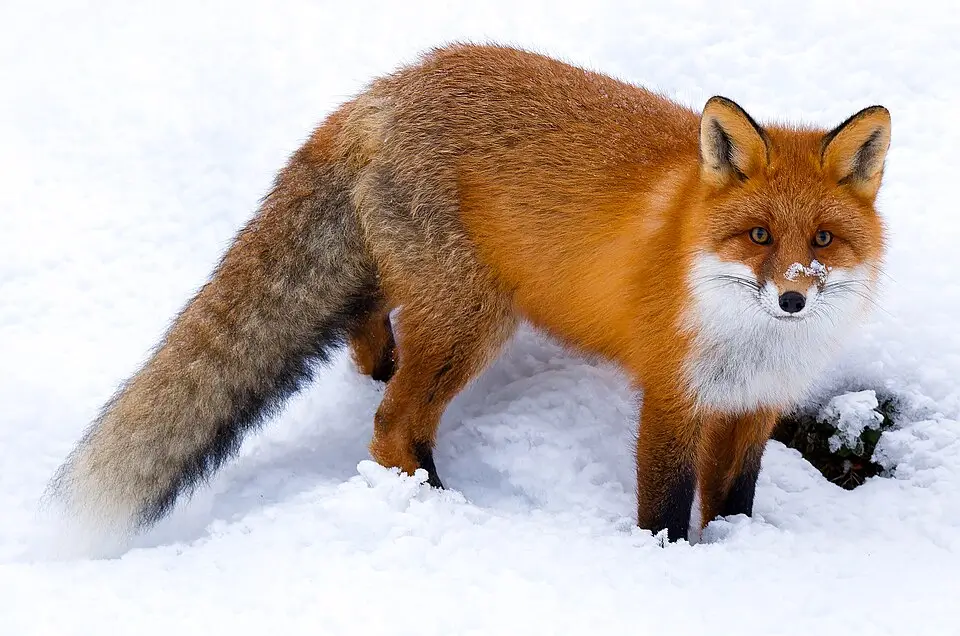
The red fox is best known for its rich, rusty-red coat, although coloration can vary considerably. Individuals may display shades ranging from pale yellow-red to deep reddish-brown. Color variants known as "cross foxes" (with a dark stripe running down the back and across the shoulders) and "silver foxes" (mostly black with silver-tipped guard hairs) are all genetic variations of the same species, Vulpes vulpes.
Key physical features include:
- A long, bushy tail — often called a "brush" — typically tipped in white. The tail aids in balance and provides warmth when the fox curls up to sleep.
- Black "stockings" on the lower legs and black markings behind the ears.
- Pointed, upright ears that grant the fox exceptional hearing, capable of detecting the rustle of a mouse under several inches of snow.
- A slender muzzle and sharp, intelligent eyes with vertically slit pupils, similar to those of a cat — an adaptation that enhances vision in low light.
Adult red foxes generally weigh between 8 and 15 pounds, with males (called "dog foxes") typically larger than females ("vixens"). Their light frame, dense winter coat, and long legs give them an appearance of being larger than they actually are.
Senses and Intelligence
Red foxes are renowned for their keen senses. Their hearing is so acute that they can pinpoint small prey moving beneath snow or vegetation by sound alone. Their sense of smell is highly developed, and their vision is well suited to crepuscular and nocturnal activity. Combined with a problem-solving intelligence that has impressed observers for centuries, these senses help explain why the fox is a symbol of cunning in cultures around the world.
Diet and Behavior
Red foxes are omnivorous opportunists. Their diet typically includes:
- Small mammals such as mice, voles, rabbits, and squirrels
- Birds and eggs
- Insects, earthworms, and amphibians
- Fruits, berries, and other plant material when available
- Carrion
Foxes often hunt using a distinctive "mousing pounce," leaping high into the air to come down on unsuspecting rodents with their front paws. They cache surplus food, burying it in shallow holes for later retrieval — a habit that highlights both their planning ability and their importance in seed dispersal and small-mammal control.
Red foxes are generally solitary outside of the breeding season, though family groups including a mated pair and their kits stay together through the spring and summer. Breeding typically occurs in late winter, with vixens giving birth to litters of usually four to six kits in a den. Both parents help raise the young, and kits begin emerging from the den at around four to five weeks of age.
Habitat & Range
Globally, the red fox enjoys one of the widest distributions of any wild land mammal, occurring naturally throughout much of Europe, Asia, North America, and parts of North Africa. It has also been introduced to Australia. Few mammals demonstrate such ecological flexibility.
General Habitat Preferences
Red foxes thrive in "edge" habitats — places where two habitat types meet, such as the border between woodland and field. They favor:
- Mixed forests interspersed with open ground
- Agricultural land with hedgerows and woodlots
- Wetland margins
- Grasslands and meadows
- Suburban and even urban environments
Their adaptability allows them to coexist near humans, finding food and shelter in parks, golf courses, cemeteries, and the brushy fringes of developed areas. A red fox's home range varies widely depending on food availability, from a few hundred acres in rich habitat to several square miles in leaner country.
Red Foxes in Michigan
Michigan, the tenth-largest state by population and the 11th-largest by area, offers an exceptional variety of habitats for the red fox. The state stretches across two peninsulas in the Great Lakes region, sharing borders with Minnesota, Wisconsin, Indiana, Illinois, and Ohio, as well as the Canadian province of Ontario. This vast and varied landscape — encompassing northern hardwood forests, conifer stands, agricultural lands, wetlands, and Great Lakes shoreline — supports robust populations of red fox throughout both the Upper and Lower Peninsulas.
Foxes in Michigan can be encountered in nearly every county, from remote backcountry to the green spaces of major metropolitan areas. They are most often spotted at dawn and dusk, traveling along field edges, fencerows, and old logging roads.
Hunting Information
The red fox has a long and storied tradition in North American hunting and trapping culture. In Michigan, both hunting and trapping seasons for fox have been established as part of the state's furbearer management program. Hunters pursue fox for their fur, for sport, for predator management, and to enjoy the challenge that comes with pursuing one of the wariest, most intelligent quarries in the woods.
Methods
Common methods used to pursue red fox include:
- Calling: Predator calls imitating distressed rabbits, rodents, or birds can draw curious or hungry foxes within range. Electronic and mouth-blown calls are both effective.
- Spot-and-stalk: Glassing open agricultural fields, especially in winter when foxes hunt voles beneath the snow.
- Hunting with hounds: A traditional method where trained dogs follow the fox's scent trail.
- Trapping: Foothold and body-grip traps, as well as cable restraints, are used by licensed trappers during designated furbearer seasons.
Successful fox hunters often emphasize the importance of wind direction, concealment, and patience. The red fox's exceptional senses make sloppy approaches almost certain to fail.
Michigan Regulations
Specific season dates, license requirements, bag limits, and method restrictions for hunting and trapping red fox in Michigan are set and updated by the Michigan Department of Natural Resources. Because regulations can change from year to year, hunters and trappers should always:
- Consult the current Michigan Hunting and Trapping Digest published by the Michigan DNR.
- Verify license requirements before heading afield.
- Confirm permitted methods, equipment, and any local restrictions.
- Report harvest data if and when required.
The information provided in this article is general in nature and is not a substitute for the official, current rules issued by the State of Michigan.
Ethics and Fair Chase
Modern fox hunters embrace the principles of fair chase, respect for the animal, and respect for landowners and other outdoor users. Proper shot placement, recovery of harvested animals, and the careful handling and use of pelts all reflect the values of an ethical hunting community.
Conservation
Globally, the red fox is classified as a species of Least Concern. Its enormous range, adaptability, and high reproductive rate have allowed it to thrive even as many other carnivores have declined. In North America, including Michigan, red fox populations are considered stable and well distributed.
Several factors contribute to the species' resilience:
- Dietary flexibility: Foxes can switch food sources as availability changes throughout the year.
- Reproductive capacity: Annual litters of multiple kits allow populations to rebound quickly.
- Behavioral adaptability: Foxes coexist with humans more readily than many large predators.
Regulated hunting and trapping play a role in modern furbearer management. Licensed harvest contributes to population monitoring, supports rural economies, helps balance predator-prey relationships, and connects people to the land through hands-on engagement with wildlife. Habitat conservation — particularly the maintenance of mixed agricultural and woodland edge habitat — benefits not only red foxes but the small mammals, birds, and insects that share their environment.
Foxes also play important ecological roles. As mid-level predators, they help control rodent populations and contribute to the health of grassland and forest ecosystems. Their leftover caches and scat support nutrient cycling, and they themselves serve as prey for larger predators such as coyotes, bobcats, and large raptors.
For Michigan residents, the red fox is more than just a furbearer or a game animal — it is a small but vivid reminder that wildness still threads its way through the state's farms, forests, and even its neighborhoods. Whether observed quietly from a back porch or pursued with skill across a snowy field, Vulpes vulpes remains one of the most rewarding species in Michigan's rich outdoor tradition.