Overview
Few animals command the attention and admiration of the natural world quite like the moose. Standing as the largest member of the deer family, the moose is an iconic symbol of wild, northern landscapes — a creature that evokes images of misty boreal forests, glacial lakes, and the quiet grandeur of untamed wilderness. Whether encountered on a remote hiking trail in the Upper Peninsula of Michigan or spotted along a fog-laden river in Canada, a moose sighting is something that leaves a lasting impression on anyone fortunate enough to witness it.
Known scientifically as Alces alces, the moose has captivated hunters, naturalists, wildlife photographers, and outdoor enthusiasts for centuries. It is a species defined by superlatives: the tallest, the heaviest, the most wide-ranging of all deer. Yet beyond the raw statistics, the moose is also a fascinating biological marvel — a perfectly adapted animal shaped by millennia of evolution in some of the harshest environments on earth.
This article takes a deep dive into the world of the moose, exploring its biological traits, natural habitat, range across North America, its significance to hunters and conservationists alike, and what those interested in moose hunting in Michigan should know before heading afield.
Biological Traits
The moose (Alces alces) belongs to the family Cervidae, which includes all deer species, and sits within the subfamily Capreolinae alongside caribou and white-tailed deer. Despite being a deer, the moose bears little visual resemblance to its more familiar relatives. Its body plan is uniquely its own — elongated, heavily muscled, and built for power rather than elegance.
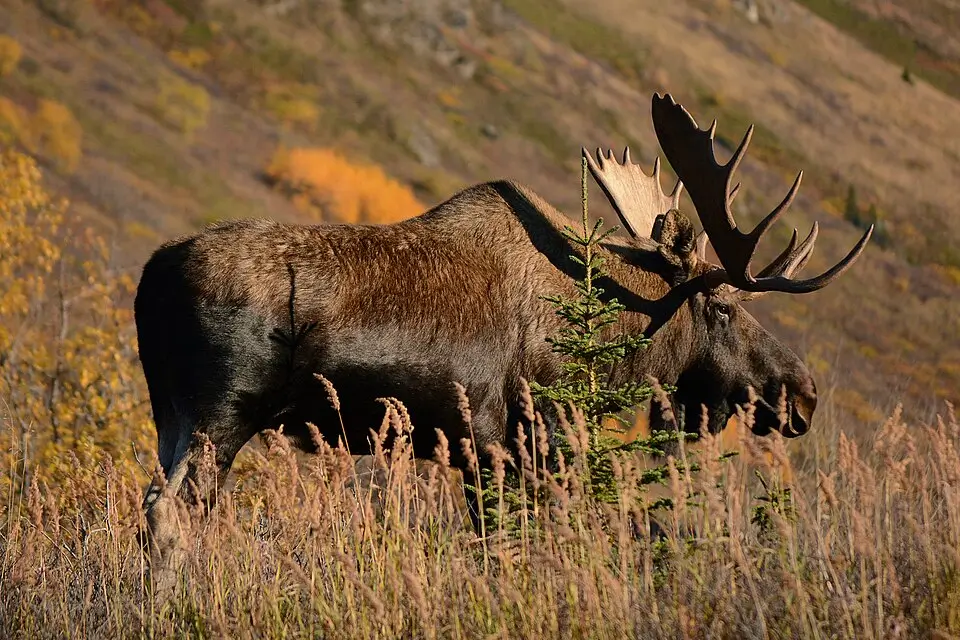
Adult male moose, known as bulls, are substantially larger than females, which are called cows. Bulls are famous for their enormous, palmate antlers, which can spread impressively wide and are shed and regrown each year. These antlers are not merely decorative — they serve as critical tools during the autumn rut, the moose's breeding season, when bulls engage in dramatic displays and physical contests to establish dominance and win mating rights. The antlers begin growing in the spring, covered in a soft, nutrient-rich tissue called velvet, and harden fully by early fall just in time for the rut.
The moose's body is adapted in remarkable ways to its environment. Its long legs allow it to wade through deep snow in winter and navigate marshy, waterlogged terrain in summer. Those same legs make the moose a deceptively fast runner, capable of reaching speeds that would surprise most observers. The animal's large, bulbous nose is not just distinctive in appearance — it houses a complex system of nasal passages that warms cold air before it reaches the lungs, a critical adaptation for surviving brutal northern winters.
Perhaps the most recognizable feature beyond the antlers is the moose's dewlap, sometimes called a "bell," which hangs beneath the throat. This flap of skin and hair serves as a communication tool during the rut, helping to spread scent and attract mates. The moose's coat is dark brown to black and consists of hollow guard hairs that provide exceptional insulation, trapping warm air close to the body even in sub-zero temperatures.
Moose are herbivores with a highly varied diet that shifts with the seasons. In summer, they are frequently observed wading into lakes and ponds to feed on aquatic vegetation such as water lilies and pondweed — plants that are rich in sodium and minerals. In winter, when aquatic plants are inaccessible, moose shift to browsing on the twigs, bark, and shoots of willows, birches, aspens, and other woody plants. Their elongated upper lip is highly mobile and prehensile, allowing them to strip leaves and bark with precision.
Moose are generally solitary animals, unlike many deer species that form herds. Cows raise their calves — typically one or two per birth — with fierce maternal dedication. Calves are born in late spring and grow rapidly, reaching substantial size within their first year. Despite their size, calves face threats from predators such as wolves and bears, making the protective behavior of mother moose essential to calf survival.
Habitat & Range
The moose is fundamentally a creature of the northern latitudes. Across North America, moose occupy a broad swath of boreal and mixed forest stretching from Alaska and Canada down through the northern contiguous United States, including parts of the Upper Midwest, New England, and the Rocky Mountain states. In Michigan, moose are most commonly associated with the Upper Peninsula, where the landscape of dense forests, wetlands, bogs, and numerous lakes provides ideal habitat.
Moose thrive in areas where forests are interspersed with wetlands and early-successional growth — the young, shrubby vegetation that springs up after logging, wildfire, or other disturbances. These transitional zones offer rich browsing opportunities and are among the most productive moose habitats anywhere in their range. Dense coniferous forests provide thermal cover during extreme cold, while open bogs and lake shorelines serve as summer feeding grounds.
Water is central to the moose's existence. They are remarkably strong swimmers and are known to cross large bodies of water without difficulty. This ability makes the numerous lakes and rivers of Michigan's Upper Peninsula particularly attractive moose habitat. In summer, moose rely heavily on aquatic environments not only for food but also as a means of thermoregulation — wading into cool water to escape the heat and insects that can cause significant stress.
Michigan's Upper Peninsula represents the southern fringe of the moose's primary range in the Great Lakes region. Neighboring states and the Canadian province of Ontario, which shares a border with Michigan to the northeast and north, support larger moose populations, underscoring the importance of cross-border conservation and wildlife management efforts in maintaining healthy moose numbers throughout the region.
Hunting Information
Moose hunting is a pursuit steeped in tradition across much of North America, particularly in Canada and Alaska where populations are robust and hunting opportunities are well-established. For hunters in Michigan, the moose occupies a special place in the outdoor imagination — a trophy animal of the highest order, representing the ultimate challenge of big-game hunting in the northern forest.
In Michigan, moose hunting is a tightly regulated and carefully managed activity. Because the moose population in Michigan — concentrated primarily in the Upper Peninsula — is relatively small compared to other states and provinces, hunting opportunities are extremely limited and competitive. Moose hunting in the state is governed by the Michigan Department of Natural Resources (DNR), which periodically makes hunting opportunities available through a restricted permit system.
It is important for prospective moose hunters in Michigan to consult directly with the Michigan DNR for the most current and accurate information regarding season dates, license and permit requirements, legal hunting zones, and application processes. Regulations can change from year to year based on population surveys and wildlife management objectives, and only official state sources can provide the reliable, up-to-date guidance that hunters need. As of the time of this writing, specific season dates and license details were not available in the source data used for this article, and hunters should verify all regulatory information through official Michigan DNR channels.
What is universally understood among moose hunters is that this pursuit demands preparation, patience, and deep respect for the animal and its habitat. Calling techniques — mimicking the vocalizations of cows or the grunts of rival bulls — are among the most effective and thrilling methods used during the rut. Still-hunting through dense forest, glassing open bogs at dawn and dusk, and setting up near known travel corridors are all time-honored approaches. Given the moose's large body size, hunters must also be prepared for the significant logistical challenge of field dressing and packing out an animal that can weigh hundreds of pounds.
The meat of the moose is widely regarded as some of the finest wild game available — lean, rich, and deeply flavorful. For many hunters, harvesting a moose represents not just a trophy but a year's supply of high-quality, ethically sourced protein for the family.
Conservation
The conservation of moose populations is an active and ongoing concern for wildlife managers across North America, including in Michigan. While moose are not currently listed as an endangered species globally, regional populations in the southern portions of their range have faced pressure from a variety of factors. Warming temperatures associated with climate change have been linked to increased stress on moose populations in some areas, as moose are physiologically adapted for cold climates and can suffer from heat stress during unusually warm summers and winters.
Parasites such as the winter tick (Dermacentor albipictus) pose a significant threat to moose in some regions, with heavy infestations causing severe hair loss, anemia, and death — particularly in calves. Changes in predator populations, habitat loss, and vehicle collisions are also factors that wildlife managers must account for when setting harvest quotas and management goals.
In Michigan, the state's wildlife management agencies work diligently to monitor moose populations through aerial surveys, GPS collar studies, and hunter-harvest data. These efforts provide the scientific foundation for responsible management decisions that balance hunting opportunity with the long-term health of the moose population.
Hunters themselves play a vital role in moose conservation. License fees, permit revenues, and excise taxes on firearms and ammunition — channeled through programs established under the Federal Aid in Wildlife Restoration Act — fund the habitat protection, research, and management programs that benefit moose and countless other species. The North American Model of Wildlife Conservation, which ensures that wildlife is managed as a public resource for the benefit of all citizens, has been instrumental in maintaining and rebuilding wildlife populations across the continent.
For those who care about the future of moose in Michigan and beyond, supporting conservation organizations, practicing ethical hunting, reporting harvest data accurately, and advocating for the protection of wild lands are all meaningful contributions to ensuring that Alces alces continues to roam the northern forests for generations to come.