Overview
Few waterfowl species are as widely recognized, deeply studied, or culturally significant as the Mallard (Anas platyrhynchos). With its iridescent green head, chestnut breast, and distinctive curled tail feathers, the drake Mallard is arguably the quintessential duck — the image that comes to mind for most people when they hear the word "duck." Found across much of the Northern Hemisphere, the Mallard has earned this iconic status not only through its striking appearance but also through its remarkable adaptability, abundance, and importance to both ecosystems and outdoor traditions.
For hunters, birdwatchers, biologists, and casual park visitors alike, the Mallard occupies a special place. It is the ancestor of most domestic duck breeds, a cornerstone of waterfowl management programs, and the most commonly harvested duck across North America. In states like Michigan, where wetlands, the Great Lakes, and countless inland lakes provide ideal habitat, the Mallard is a familiar and welcome sight throughout much of the year.
This article explores the Mallard in depth, covering its biology, habitat, hunting tradition, and conservation status, with particular reference to its relevance in Michigan.
Biological Traits
The Mallard belongs to the family Anatidae, which encompasses ducks, geese, and swans. Within that family, it is classified in the genus Anas, a group commonly known as "dabbling ducks." Dabbling ducks feed primarily at or near the water's surface, tipping forward to reach submerged vegetation rather than diving fully underwater like their cousins in the genus Aythya.
Appearance
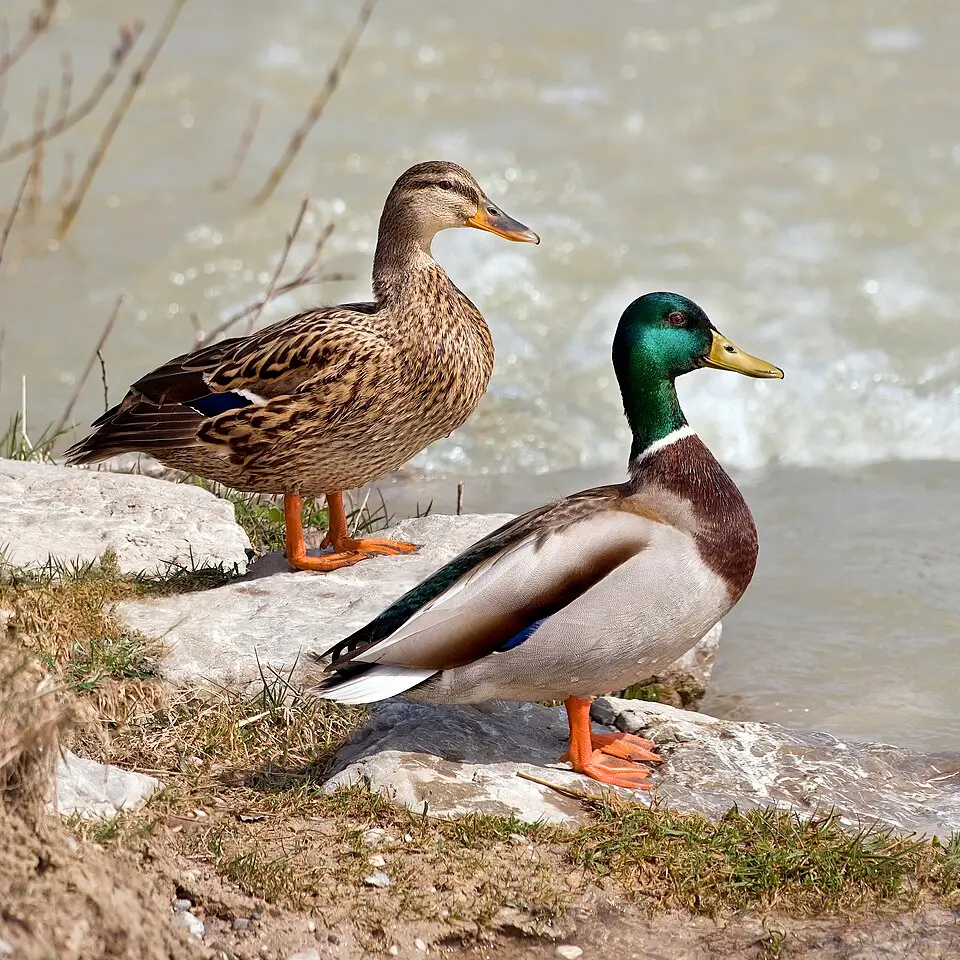
Mallards exhibit pronounced sexual dimorphism, meaning males and females differ markedly in appearance. The male, or drake, is unmistakable in breeding plumage: a glossy, iridescent green head and neck, separated from a rich chestnut-brown breast by a thin white collar. His body is predominantly gray, his rump and undertail coverts are black, and two distinctive curled black feathers adorn the upper tail. His bill is bright yellow, and his legs and feet are orange.
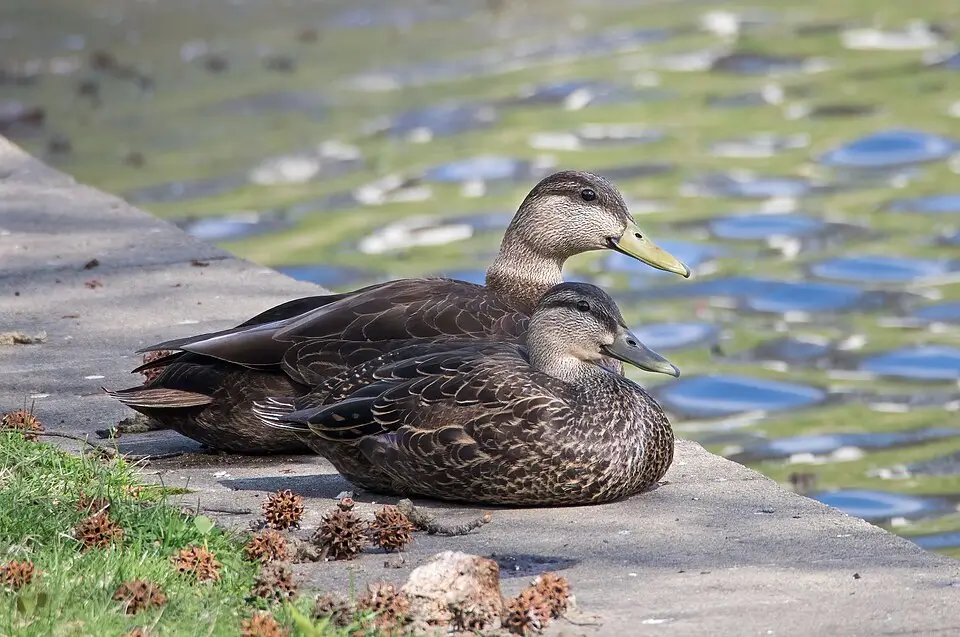
The female, or hen, is far more subdued, clothed in mottled brown plumage that provides excellent camouflage during the critical nesting period. Her bill is typically orange with dark patches. Both sexes share one of the Mallard's most reliable field marks: a brilliant blue or purplish-blue speculum — a patch of iridescent feathers on the secondary wing feathers — bordered with white on both sides.
During the late summer "eclipse" molt, drakes temporarily lose their bright breeding plumage and resemble hens. This vulnerability period, when birds cannot fly, helps explain why ducks often seek dense cover during late summer.
Size and Build
Mallards are medium-to-large dabbling ducks, generally weighing between two and three pounds, with males slightly heavier than females. They have a sturdy, broad-bodied build with a relatively short neck and rounded head. Their wings are powerful and capable of strong, direct flight, with audible whistling sounds produced by air rushing through the feathers.
Behavior and Vocalizations
The classic "quack" that most people associate with ducks is actually the call of the female Mallard. Drakes produce quieter, raspier sounds that are quite different from the hen's recognizable vocalization. This contrast is well known to waterfowl hunters, who often use hen-style calls to attract birds.
Mallards are highly social outside the breeding season, gathering in flocks that can number from a handful of birds to thousands during migration. They are also remarkably intelligent and adaptable, capable of learning to recognize food sources, threats, and even individual humans in urban park settings.
Diet
As omnivores, Mallards consume a wide variety of foods. Their diet includes aquatic vegetation, seeds, grains, acorns, aquatic invertebrates, small crustaceans, and insects. They are well known for feeding heavily in harvested agricultural fields, especially corn, where waste grain provides high-energy fuel for migration and winter survival.
Habitat & Range
The Mallard is one of the most widespread duck species in the world, with a natural range covering much of North America, Europe, Asia, and parts of North Africa. It has also been introduced to Australia and New Zealand, where it has established self-sustaining populations.
Preferred Habitat
Mallards thrive in an extraordinary variety of wetland environments. They use prairie potholes, marshes, swamps, river backwaters, beaver ponds, flooded timber, agricultural fields, reservoirs, urban park ponds, and coastal estuaries. Their tolerance for human-modified landscapes is one of the key reasons they remain so abundant. While many waterfowl species are highly specialized in their habitat needs, the Mallard is the consummate generalist.
In Michigan, Mallards find ideal conditions across the state. The Great Lakes coastline, the St. Clair Flats, Saginaw Bay, the wetlands of the Upper Peninsula, and countless inland lakes, rivers, and managed waterfowl areas all provide rich foraging and resting habitat. The state's diverse mix of agricultural lands and wetlands creates a particularly productive landscape for the species.
Migration
Mallards are partial migrants. Northern populations move south as freezing conditions limit access to open water and food, while populations in milder climates may remain year-round. The Mississippi Flyway and the Atlantic Flyway both funnel large numbers of Mallards through and over the Great Lakes region. Michigan sits at a strategic position where birds from breeding grounds in Canada and the northern United States pass through during fall migration.
Many Mallards winter as far south as the Gulf Coast, while others remain on open water in the Great Lakes region wherever springs, river outlets, or warm-water discharges keep water from freezing.
Breeding
Mallards typically pair up in late fall or winter, well before nesting begins. Hens build ground nests in concealed locations, often near water but sometimes surprisingly far from it. Clutches usually contain about 8 to 13 eggs. Ducklings are precocial, leaving the nest within a day of hatching and following the hen to water, where they begin feeding themselves almost immediately.
Hunting Information
The Mallard has long been the most economically and culturally important game duck in North America. Generations of waterfowl hunters have pursued them in flooded timber, prairie sloughs, coastal marshes, river bottoms, and harvested grain fields. Their willingness to decoy, responsiveness to calling, and excellent table quality make them prized quarry.
Hunting in Michigan
Michigan offers excellent waterfowl hunting opportunities, with Mallards typically forming a significant portion of the annual duck harvest. The state is divided into multiple waterfowl hunting zones, and seasons are set annually within federal frameworks established by the U.S. Fish and Wildlife Service in cooperation with the Mississippi Flyway Council.
Because specific season dates, bag limits, license requirements, and zone boundaries are set each year and can change, hunters should consult the Michigan Department of Natural Resources (DNR) for the most current regulations before heading afield. In general, waterfowl hunters in Michigan are required to possess a valid Michigan hunting license, a state waterfowl license or stamp, and a federal Migratory Bird Hunting and Conservation Stamp (commonly known as the "duck stamp"). Hunters must also complete Harvest Information Program (HIP) registration.
Methods and Tactics
Common Mallard hunting methods include:
- Decoying over water: Setting spreads of floating decoys on ponds, marshes, river edges, and sheltered bays, often with a jerk-cord or motion decoy to add realism.
- Field hunting: Targeting Mallards as they leave roosts to feed in harvested corn and grain fields using full-body or silhouette decoys and layout blinds.
- Pass shooting: Positioning along known flight corridors between roosting and feeding areas.
- Jump shooting: Stalking small waters or river bends to flush ducks at close range.
Calling is an art form in Mallard hunting. The classic feeding chuckle, hail call, comeback call, and lonesome hen quack are all part of the experienced caller's repertoire. Skilled use of these vocalizations, combined with realistic decoy spreads and well-concealed blinds, can produce memorable hunts.
Steel shot or other approved non-toxic ammunition is required for all waterfowl hunting in the United States, a regulation in place for decades to protect waterfowl and other wildlife from lead poisoning.
Conservation
The Mallard is currently classified as a species of Least Concern by the International Union for Conservation of Nature (IUCN), reflecting its enormous global range and robust population. North American Mallard populations have generally remained strong, supported by extensive habitat conservation efforts, regulated hunting frameworks, and the species' own remarkable adaptability.
Conservation of Mallards and other waterfowl in North America rests on a partnership-driven model. The North American Waterfowl Management Plan, signed in 1986, and organizations such as Ducks Unlimited and Delta Waterfowl have invested heavily in wetland restoration, breeding habitat preservation in the prairie pothole region, and research on waterfowl ecology. Funds generated through duck stamp sales, hunting license fees, and excise taxes on hunting equipment under the Pittman-Robertson Act have directly funded much of this work.
In Michigan, the state DNR works alongside federal agencies and conservation partners to manage state game areas, restore coastal and inland wetlands, and monitor waterfowl populations. These efforts benefit not only Mallards but a wide spectrum of wetland-dependent wildlife, from other ducks and geese to wading birds, amphibians, and fish.
The continued success of the Mallard stands as a conservation achievement worth celebrating — a testament to what science-based wildlife management, regulated hunting, and habitat investment can accomplish.