Overview
Few animals in North America capture the public imagination quite like the groundhog. Known scientifically as Marmota monax, this stout, industrious rodent holds a unique place in both the natural world and popular culture. Every February 2nd, the nation turns its eyes to Punxsutawney, Pennsylvania, where a groundhog named Phil supposedly predicts the arrival of spring based on whether he sees his shadow. But beyond this beloved cultural tradition lies a genuinely fascinating animal — a skilled excavator, a resourceful forager, and a hardy survivor that thrives across a wide swath of North America, including throughout the state of Michigan.
The groundhog goes by many names. Across different regions and communities, you might hear it called a woodchuck, a whistle-pig, a land beaver, or a thick-wood badger. Each of these nicknames hints at some aspect of the animal's behavior or appearance — its affinity for woodlands and meadow edges, its sharp, piercing alarm whistle, and its heavyset, low-slung build. Regardless of what you call it, Marmota monax is one of the most recognizable and widespread members of the squirrel family (Sciuridae) in eastern North America.
For hunters, landowners, farmers, and wildlife enthusiasts alike, understanding the groundhog — its biology, its habits, its ecological role, and its status as a huntable species — is both rewarding and practically useful. This guide covers everything you need to know about this remarkable animal.
Biological Traits
The groundhog is the largest member of the squirrel family found in the eastern United States and Canada. As a true member of the genus Marmota, it is closely related to other marmots found across the mountainous regions of North America and Eurasia, though it is uniquely adapted to the lowland forests, fields, and agricultural landscapes of the East.
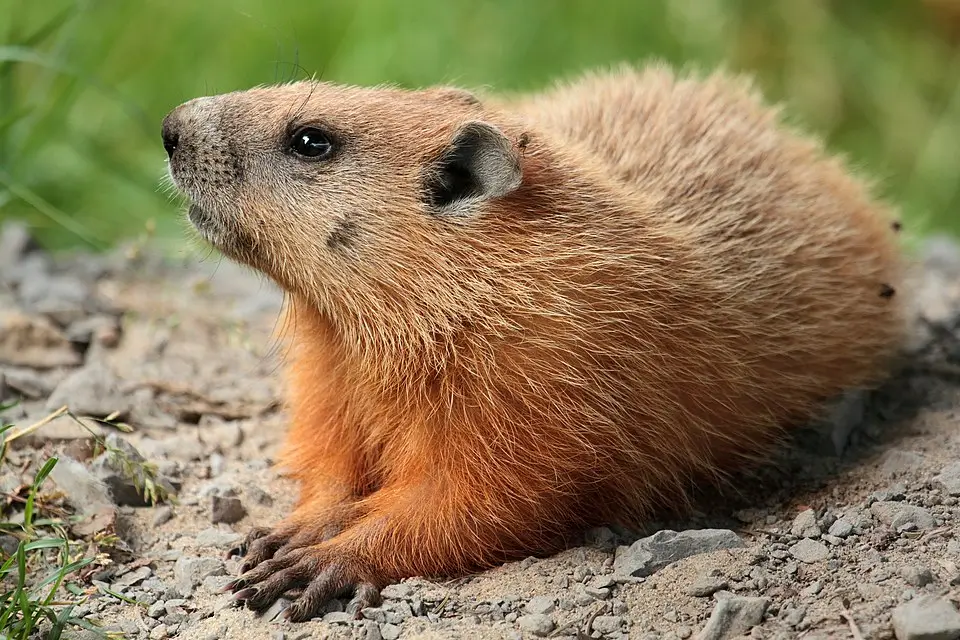
Groundhogs are powerfully built animals with broad, flat heads, short but muscular legs, and a medium-length bushy tail. Their fur is typically a grizzled brownish-gray on the back and sides, transitioning to a somewhat lighter or reddish-brown coloration on the belly. Their feet are dark brown to black, and their incisors — like those of all rodents — are large, continuously growing, and well-suited for gnawing through roots, stems, and woody vegetation.
One of the most remarkable biological traits of the groundhog is its status as a true hibernator. Unlike many mammals that enter a torpor-like sleep during cold months, groundhogs undergo genuine physiological hibernation. Their body temperature drops dramatically, their heart rate slows to just a few beats per minute, and their breathing becomes extremely shallow. This deep hibernation typically begins in late autumn and lasts until late winter or early spring, depending on geographic location and environmental conditions. During this period, the animal survives entirely on fat reserves built up through intensive late-summer and autumn feeding.
Groundhogs are also extraordinary diggers. Using their strong claws and compact bodies, they excavate elaborate burrow systems that can extend several feet underground and stretch for many yards in length. These burrows typically feature multiple entrances and exits, dedicated sleeping chambers, and even separate latrine areas — a level of structural complexity that rivals the engineering of much larger animals. The burrows often include a plunge hole — a nearly vertical entrance hidden in vegetation that the groundhog uses as a quick escape from predators.
Reproduction in groundhogs follows a relatively straightforward seasonal pattern. Mating typically occurs shortly after the animals emerge from hibernation in late winter or early spring. After a gestation period of approximately 31 to 32 days, the female gives birth to a litter of usually two to six young. The pups are born blind, hairless, and entirely dependent on their mother. They grow rapidly and are typically weaned and beginning to explore above ground by midsummer, at which point they will eventually disperse to establish their own burrow systems before the onset of winter.
Groundhogs are primarily herbivores, feeding on a wide variety of grasses, clovers, wildflowers, agricultural crops, and garden plants. They are particularly fond of alfalfa, soybeans, and various garden vegetables — a dietary preference that often puts them in direct conflict with farmers and home gardeners. They are also known to occasionally consume insects, snails, and other small invertebrates, though plant matter makes up the overwhelming majority of their diet.
Habitat & Range
Marmota monax is found across a broad geographic range that spans from Alaska and northern Canada in the north, southward through the eastern United States as far as Georgia and Alabama, and westward through the Midwest and Great Plains. The species shows a particular affinity for areas where open habitat — such as meadows, fields, pastures, and agricultural land — borders woodland or brushy cover, as these transitional zones offer both abundant food and ready escape routes.
The groundhog is wonderfully well-suited to the diverse landscapes of Michigan. The Great Lakes State offers an ideal mosaic of habitats: open farmland interspersed with woodlots, brushy fencerows, meadows, orchard edges, and the weedy margins of roads and railways. Both the Lower Peninsula and Upper Peninsula of Michigan support healthy groundhog populations, though the animals tend to be most abundant in agricultural and semi-rural areas where food is plentiful and burrow sites are available.
Michigan's geography — defined by its Great Lakes borders, its mix of deciduous and coniferous forests, and its extensive agricultural heartland — creates an environment that groundhogs exploit to great advantage. Fields of corn, soybeans, alfalfa, and clover are particularly attractive to these animals, which is why Michigan farmers are quite familiar with the species. Suburban and semi-urban areas also increasingly host groundhog populations, as these adaptable animals have proven capable of living in close proximity to human development.
Hunting Information
The groundhog is a popular small game target throughout its range, and Michigan is no exception. Groundhog hunting — sometimes called "varmint hunting" — is a tradition enjoyed by many Michigan hunters, particularly during the summer months when other big game seasons are closed. The sport provides an excellent opportunity to practice fieldcraft, shooting skills, and marksmanship at varying distances, often in open agricultural settings where long-range precision shots are possible.
Groundhog hunting is typically done from a prone or supported shooting position using flat-shooting centerfire rifles chambered in calibers like .22-250, .223 Remington, .243 Winchester, or similar rounds known for their accuracy and relatively flat trajectory. The challenge lies in spotting groundhogs at distance as they feed in open fields and then making a precise shot before the animal retreats to its burrow at the first sign of danger. Many hunters use spotting scopes or binoculars to locate animals before making a stalk or setting up for a shot.
The hunting can also be done at closer ranges with rimfire rifles or even pistols in brushier terrain. Calling techniques — mimicking the groundhog's alarm whistle — can occasionally be used to bring curious animals into range or to coax a retreating groundhog back into the open.
It is important to note that specific season dates, licensing requirements, and regulations for groundhog hunting in Michigan are subject to change and are managed by the Michigan Department of Natural Resources (DNR). Hunters are always strongly encouraged to consult the most current Michigan DNR Hunting Guide and relevant regulations before heading into the field, as rules can vary by location, land type, and season. Obtaining the appropriate licenses and permissions — including landowner permission when hunting on private agricultural land — is both a legal requirement and an ethical responsibility.
Landowners in Michigan may find groundhog hunting a practical tool for managing populations that cause damage to crops, pastures, and farm infrastructure. Groundhog burrows, while ecologically valuable in some contexts, can pose hazards to farm equipment and livestock when located in fields and pastures.
Conservation
The groundhog is currently classified as a species of Least Concern by wildlife conservation authorities, reflecting its wide distribution, high reproductive rate, and its demonstrated ability to adapt to human-modified landscapes. In many parts of its range, groundhog populations have remained stable or even increased as forest clearance and agricultural development have created more of the open-edge habitat that this species favors.
While the groundhog does not face significant conservation threats at the population level, it nonetheless plays an important role in the ecosystems it inhabits. Groundhog burrows provide shelter and nesting sites for a wide range of other wildlife species, including foxes, skunks, rabbits, opossums, and various reptiles and invertebrates. In this way, the groundhog functions as an important ecosystem engineer, creating habitat complexity that benefits many other animals.
Groundhogs also serve as a significant prey base for a variety of predators, including red foxes, coyotes, bobcats, black bears, large hawks, and great horned owls. Their presence in an ecosystem supports the health and diversity of predator populations and contributes to the overall balance of local food webs.
From a wildlife management perspective, the groundhog represents a species that is both self-sustaining and manageable through regulated hunting and population control measures where necessary. The combination of stable populations, ecological value, and hunting tradition makes the groundhog a meaningful part of Michigan's broader wildlife heritage.