Overview
Few wild animals capture the imagination quite like the gray fox (Urocyon cinereoargenteus), a sleek and secretive creature that has roamed North America for millennia. Unlike many of its canid relatives, the gray fox occupies a unique ecological niche that sets it apart from virtually every other member of the dog family. It is one of the only members of the family Canidae capable of climbing trees — a remarkable skill that has allowed it to thrive across a diverse range of environments, from dense hardwood forests to brushy desert edges.
In Michigan, a state celebrated for its rich wildlife heritage and sweeping natural landscapes, the gray fox is a fascinating and often elusive resident. Tucked within the sprawling forests of the Lower Peninsula and scattered across brushy woodland corridors, gray foxes live largely out of sight, moving quietly through the landscape at dusk and dawn. For hunters, naturalists, and wildlife watchers alike, encountering a gray fox is a special experience — a glimpse into one of North America's most adaptable and intriguing wild canids.
This article explores the biology, behavior, habitat preferences, and hunting traditions associated with the gray fox, with a particular focus on Michigan and the Great Lakes region.
Biological Traits
The gray fox is a medium-sized carnivore classified within the family Canidae. Its scientific name, Urocyon cinereoargenteus, is derived from Latin and Greek roots meaning "tailed dog" and "ashen silver," a fitting description for this beautifully marked animal. It belongs to the genus Urocyon, which is considered one of the most ancient lineages within the dog family, making the gray fox not just a survivor, but a living link to the deep evolutionary past of North American carnivores.
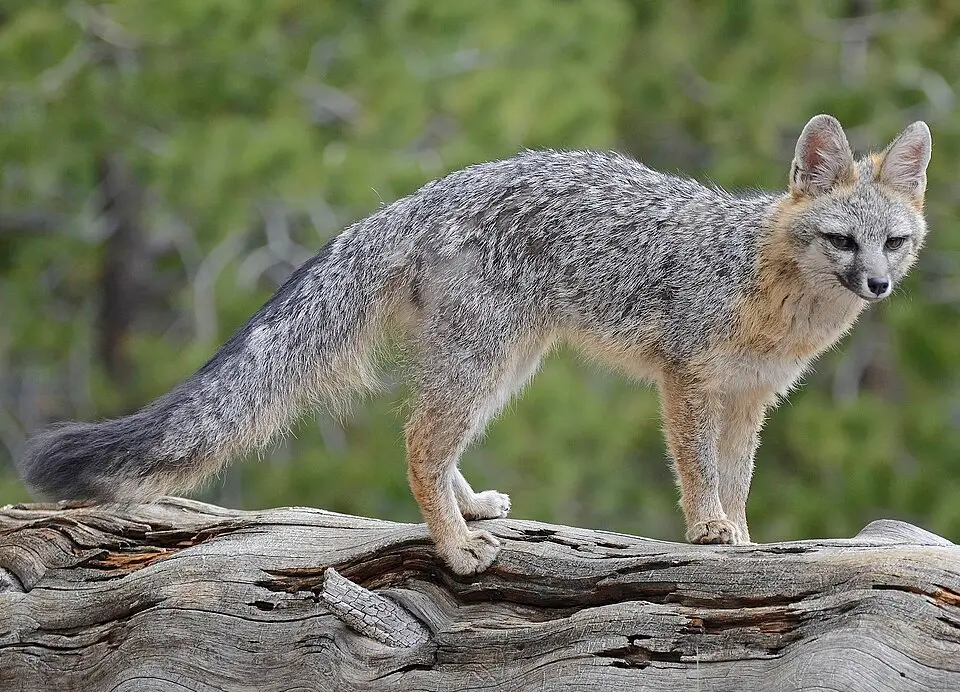
Physically, the gray fox is a compact and athletic animal. It sports a grizzled salt-and-pepper coat along its back and sides, with warm reddish-brown fur along the neck, chest, flanks, and legs. The belly is typically white or cream, and a bold black stripe runs along the length of the tail, which ends in a distinctive black tip. This combination of gray, rust, and white makes the gray fox one of the more colorful members of the fox family found in North America.
The face is sharp and expressive, with a narrow muzzle, large amber or brown eyes suited for low-light vision, and prominent, pointed ears that help the animal detect the faint sounds of prey moving through leaf litter or underground. Like other foxes, the gray fox possesses a keen sense of smell and is a highly opportunistic hunter and forager.
One of the most celebrated traits of the gray fox is its extraordinary climbing ability. Equipped with strong, hooked claws and remarkable rotational flexibility in its front legs, the gray fox can scale vertical tree trunks with surprising speed and agility. Once aloft, it can leap from branch to branch and has been documented resting and even denning in elevated locations. This tree-climbing behavior is essentially unmatched among canids in North America and serves multiple purposes — it allows the fox to escape predators such as coyotes, to access elevated food sources like berries and bird eggs, and to survey its territory from a safe vantage point.
Gray foxes are largely nocturnal and crepuscular, meaning they are most active during the hours of dawn, dusk, and nighttime. During the day, they typically rest in dense cover, rock piles, hollow logs, or tree cavities. Their vocalizations include a range of barks, yips, and a distinctive raspy scream, though they are generally quieter and more elusive than the red fox.
These animals are omnivores with a flexible and seasonally variable diet. Small mammals — particularly rabbits, voles, and mice — form the core of their prey base. They also consume birds, reptiles, amphibians, insects, and carrion. Importantly, fruits, berries, nuts, and agricultural crops can make up a substantial portion of the gray fox's diet during the fall and winter months, when soft mast is readily available. This dietary flexibility is a key reason for the species' widespread success.
Gray foxes are generally monogamous and pair bond during the breeding season, which typically occurs in late winter. Litters of pups — usually ranging from two to seven — are born in spring and are raised cooperatively by both parents. Pups grow quickly and are typically independent by early autumn.
Habitat & Range
The gray fox boasts one of the broadest geographic ranges of any North American carnivore. It is found from southern Canada through most of the contiguous United States, continuing through Central America and into parts of South America. This impressive range reflects the species' adaptability to a wide array of habitats.
Within the United States, the gray fox shows a preference for wooded and brushy environments. It gravitates toward areas with a mix of hardwood forest, dense shrubby undergrowth, rocky terrain, and forest-edge habitat. Unlike the red fox, which thrives in open agricultural landscapes and suburban areas, the gray fox tends to favor more structurally complex habitats where it can use cover for hunting, escape, and denning.
In Michigan, the gray fox is present primarily in the Lower Peninsula, where the landscape offers the wooded, brushy habitat this species prefers. Michigan's geography — shaped by glaciation and defined by its position as a peninsular state in the Great Lakes region — provides a mosaic of forests, wetlands, fields, and forest edges that collectively support a healthy variety of wildlife, including the gray fox. The state's hardwood and mixed forests, coupled with brushy old fields and riparian corridors, create ideal conditions for gray foxes to find food, shelter, and denning sites.
The gray fox's ability to climb trees makes forested areas particularly attractive, as the canopy layer provides both safety from ground predators and access to tree-dwelling prey and mast crops such as wild berries and soft fruits.
Hunting Information
The gray fox has a long tradition in North American hunting culture. It has historically been pursued through several methods, most notably fox hunting with hounds, trapping, and calling with predator calls that mimic the distress sounds of prey animals such as rabbits or mice. Hunters and trappers have long valued the gray fox for its beautiful, durable pelt, which has been used in the fur trade for centuries.
In many states, gray foxes are classified as furbearers or game animals, and hunters seeking to pursue them are generally required to follow state-specific regulations regarding seasons, licensing, and legal methods of take. These regulations are designed to maintain healthy and sustainable gray fox populations across the landscape.
For those interested in hunting gray fox in Michigan specifically, it is strongly recommended to consult the Michigan Department of Natural Resources (DNR) for the most current and accurate information regarding season dates, license requirements, bag limits, and legal methods of take. Regulations can change from year to year, and the Michigan DNR is the definitive authority on all matters related to hunting seasons and licensing within the state. Visiting the official Michigan DNR website or contacting a local DNR office directly will ensure that hunters have up-to-date and legally accurate information before heading afield.
Fox hunting and predator calling can be highly rewarding pursuits. Because gray foxes are most active at dawn, dusk, and nighttime, hunters who use electronic or mouth calls to simulate rabbit distress sounds or rodent squeaking can attract foxes within range, particularly during the fall and early winter months when foxes are actively expanding their territories and building fat reserves. Hunting over habitat edges — where dense brush meets open meadows or forest clearings — is often a productive strategy, as these transition zones are favored hunting grounds for gray foxes.
Trappers pursuing gray fox typically use foothold traps set along travel corridors, near denning areas, or at locations where fox sign such as tracks, scat, and scratch marks have been observed. Lure-based sets that incorporate curiosity lures, prey-based attractants, or urine-based scents can be particularly effective for gray fox.
Conservation
The gray fox is currently listed as a species of least concern by the International Union for Conservation of Nature (IUCN), a reflection of its wide distribution and generally stable populations across its range. While localized pressures such as habitat fragmentation, vehicle collisions, disease, and competition with coyotes can impact gray fox numbers in specific areas, the species as a whole remains resilient and widespread.
One area of ecological concern for the gray fox is the continued expansion of coyote populations across North America. Coyotes, which are larger and more aggressive, can displace gray foxes from preferred habitat through direct competition and predation. In areas where coyotes are abundant, gray fox populations may shift their habitat use toward more forested and structurally complex terrain — precisely the kind of cover that provides refuge from coyote encounters and where the gray fox's tree-climbing ability becomes a critical survival advantage.
Responsible hunting and trapping, conducted within the framework of scientifically managed wildlife programs, contributes to the long-term conservation of gray fox populations. Hunters and trappers serve as important citizen scientists, providing harvest data and population observations that wildlife managers use to set sustainable regulations. In Michigan, the DNR's wildlife management programs are designed to balance harvest opportunity with population sustainability, ensuring that future generations will continue to encounter this remarkable animal in the wild.
Habitat conservation also plays a critical role in supporting healthy gray fox populations. Protecting and maintaining forested lands, brushy transition zones, and riparian corridors benefits not only gray foxes but the broader community of wildlife species that depend on these habitats. Conservation organizations, state agencies, and private landowners all play important roles in preserving the landscapes that gray foxes call home.
Conclusion
The gray fox is a truly remarkable animal — ancient in lineage, versatile in diet and habitat use, and uniquely gifted among canids with the ability to take to the trees. In Michigan and across its vast North American range, the gray fox continues to thrive as a testament to the power of adaptability. Whether you encounter one slipping silently through the autumn woods, catch a glimpse of one scaling a mature oak, or pursue one with hounds or a call on a cold winter morning, the gray fox is an animal that commands respect and admiration.
For hunters, naturalists, and wildlife enthusiasts in Michigan, the gray fox represents one of the state's most intriguing wild residents — a secretive, beautiful, and ecologically important predator that has called these forests home for thousands of years.