Overview
Few wild animals are as universally recognized across North America as the Eastern gray squirrel (Sciurus carolinensis). Whether you spot one dashing across a suburban lawn, leaping between the branches of a towering oak in a state forest, or scrambling up a backyard feeder, this nimble and resourceful creature has earned a permanent place in the hearts and minds of outdoor enthusiasts, naturalists, and hunters alike. In Michigan — a state richly defined by its Great Lakes shoreline, dense hardwood forests, and vibrant outdoor culture — the Eastern gray squirrel is more than just a familiar face. It is a cornerstone of forest ecosystems, a beloved quarry for small game hunters, and a fascinating subject of wildlife study.
Michigan's unique geography makes it one of the most ideal habitats in the entire country for this species. Stretching across 96,716 square miles of diverse terrain, from the rolling hardwood forests of the Lower Peninsula to the remote woodlands of the Upper Peninsula, Michigan provides an extraordinary mosaic of habitat that supports robust and thriving squirrel populations year-round. For hunters, naturalists, and curious outdoor adventurers, understanding the biology, behavior, and ecology of Sciurus carolinensis is the first step toward truly appreciating one of North America's most dynamic small mammals.
This guide offers a thorough look at the Eastern gray squirrel — its physical characteristics, life history, habitat preferences, ecological importance, and its role in Michigan's rich hunting heritage.
Biological Traits
The Eastern gray squirrel belongs to the family Sciuridae, the large and diverse family of rodents that includes marmots, prairie dogs, chipmunks, and flying squirrels. Within this family, Sciurus carolinensis stands out as a medium-sized tree squirrel that has adapted remarkably well to a wide variety of environments, from dense wilderness to urban parks.
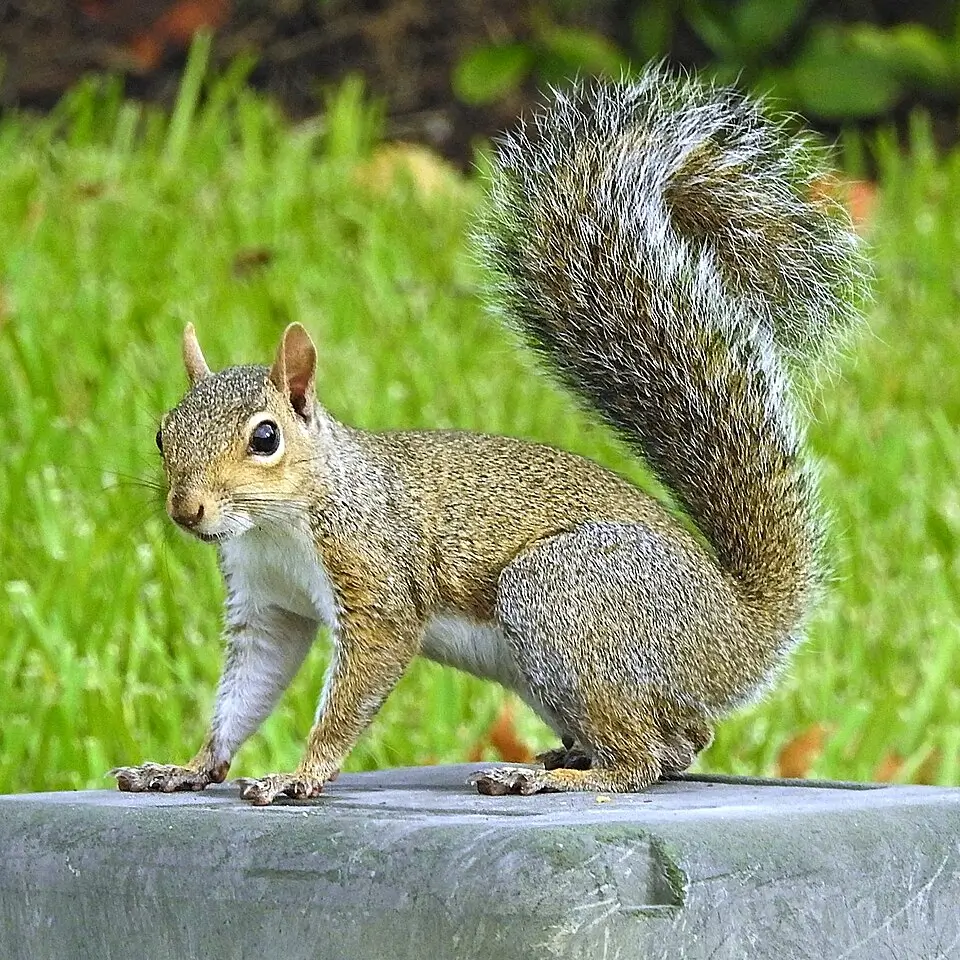
As its name suggests, the Eastern gray squirrel is predominantly gray in coloration, with a pale or whitish underbelly and a large, bushy tail that is typically edged with white-tipped hairs. This distinctive tail serves multiple functions in the animal's daily life — it acts as a counterbalance during acrobatic leaps through the forest canopy, provides warmth in cold weather, and serves as a signaling device for communication with other squirrels. Color variations do exist within the species; melanistic (black) individuals are not uncommon in certain populations, and albino squirrels, while rare, have been documented.
Adults typically weigh between 400 and 600 grams, though weights can vary seasonally, as squirrels tend to put on additional body fat in preparation for winter. Their body length, from nose to base of tail, generally ranges from about 23 to 30 centimeters, with the tail adding a similar length again. These dimensions make the Eastern gray squirrel noticeably larger than its close cousin, the red squirrel (Tamiasciurus hudsonicus), which shares much of Michigan's forested landscape.
One of the most celebrated aspects of Eastern gray squirrel biology is its remarkable relationship with food. Sciurus carolinensis is a scatter hoarder, meaning it buries thousands of individual food caches — primarily nuts and seeds — across its home range each autumn. Powered by a spatial memory that scientists have found to be genuinely impressive, squirrels are able to relocate the majority of these caches months later, even when the ground is buried under snow. Fascinatingly, research has shown that squirrels sometimes engage in "deceptive caching" — pretending to bury a nut while actually concealing it elsewhere — suggesting a level of cognitive sophistication that continues to surprise researchers.
The diet of the Eastern gray squirrel is broad and opportunistic. Acorns and other hard mast — including hickory nuts, walnuts, and beechnuts — form the nutritional backbone of their diet, particularly in the fall and winter months. During spring and summer, squirrels readily consume buds, flowers, fungi, berries, and even bird eggs or insects when available. This dietary flexibility is one of the key reasons the species has thrived across such a wide geographic range.
Reproduction in Sciurus carolinensis typically occurs twice per year: once in late winter or early spring, and again in midsummer. After a gestation period of approximately 44 days, females give birth to litters of two to four young, known as kittens or pups. Newborns are hairless, blind, and entirely dependent on their mother for the first several weeks of life. By around 10 to 12 weeks of age, young squirrels begin to venture out of the nest and explore their surroundings. They are generally weaned by 10 weeks and reach sexual maturity at roughly one year of age.
Nests, called dreys, are constructed in the forks and branches of trees using a sturdy outer shell of leaves and twigs, with a soft inner lining of shredded bark, grass, moss, and other fine materials. Squirrels may also den in natural tree cavities, which provide superior insulation during Michigan's cold winters. It is worth noting that Eastern gray squirrels do not hibernate. Instead, they remain active throughout the year, relying on their cached food supplies and accumulated body fat to survive periods of extreme cold or deep snow cover.
Habitat and Range
The Eastern gray squirrel is native to the eastern and midwestern portions of North America. Its natural range extends from southern Canada down through the eastern United States and into portions of the Midwest and South. Sciurus carolinensis has also been introduced to parts of western North America, Great Britain, Ireland, Italy, and South Africa, where it has established feral populations — a testament to just how adaptable this species truly is.
In Michigan, the Eastern gray squirrel is widespread and abundant across both the Lower and Upper Peninsulas. The species thrives wherever mature hardwood trees are present, and Michigan's forests — which include extensive stands of oak, hickory, beech, maple, and walnut — provide some of the finest squirrel habitat anywhere in the country. The Lower Peninsula, with its rich mosaic of agricultural land interspersed with woodlots, river bottoms, and large tracts of state and national forest, is particularly productive squirrel country.
The species shows a clear preference for mature deciduous and mixed forests with a well-developed canopy and a reliable annual production of hard mast. Large, old oak trees are especially important, as they produce the acorns that squirrels depend on so heavily for overwinter survival. Michigan's hardwood forests, particularly in the southern and central portions of the Lower Peninsula, regularly produce excellent mast crops that support high squirrel densities.
Urban and suburban environments are also heavily utilized by Eastern gray squirrels in Michigan. Cities such as Grand Rapids, Ann Arbor, Lansing, and Detroit are home to large squirrel populations that have adapted to life alongside humans, taking advantage of tree-lined streets, parks, and the ready availability of supplemental food. This adaptability has made the Eastern gray squirrel one of the most visible and familiar wild animals to Michigan residents regardless of whether they live in rural or urban settings.
Hunting Information
Squirrel hunting holds a special place in Michigan's outdoor tradition. For many Michigan hunters, pursuing fox squirrels and gray squirrels in October hardwoods represents their earliest and fondest memories of the hunting life — sitting quietly at the base of a big oak tree, watching the canopy for movement, and experiencing the patience and woodsmanship that all forms of hunting demand. Squirrel hunting is widely regarded as an excellent way to introduce new hunters — particularly young people — to the sport, as it requires relatively modest equipment, is broadly accessible across the state's many public lands, and provides fast-paced, engaging action.
The Eastern gray squirrel is a legal game animal in Michigan, and the state maintains a regulated hunting season for squirrels as part of its small game management program. Hunters interested in pursuing gray squirrels in Michigan should always consult the current Michigan Department of Natural Resources (DNR) Hunting and Trapping Digest for the most up-to-date information on season dates, bag limits, and licensing requirements, as regulations can change from year to year. As of the time of writing, specific season dates and licensing details were not available in the source data consulted for this article, so prospective hunters are strongly encouraged to verify all current rules directly through the Michigan DNR website or official publications.
From a practical standpoint, squirrel hunting in Michigan is most productive during the early season when leaves are still on the trees and squirrels are actively foraging for and caching mast. Small-bore rifles chambered in .22 LR and shotguns loaded with small shot — commonly No. 4, 5, or 6 — are the traditional tools of the squirrel hunter. Many hunters also enjoy pursuing squirrels with small-caliber air rifles, which are legal in certain contexts and offer a quieter, highly enjoyable hunting experience.
Patient still-hunting near productive mast trees — particularly large oaks — is perhaps the most effective and traditional strategy for gray squirrel hunting in Michigan. Arriving quietly at first light, settling in at the base of a promising tree, and waiting for squirrels to become active as the morning warms is a time-honored approach that rewards stillness and observation. Squirrels are most active in the early morning and again in the late afternoon, following a predictable daily pattern tied to feeding and caching behavior.
Conservation
The Eastern gray squirrel is currently listed as a species of least concern by the International Union for Conservation of Nature (IUCN), reflecting the fact that its populations are large, widespread, and generally stable across its native range. In Michigan, the species is considered abundant, and there are no significant conservation concerns specific to the state at this time.
Beyond its status as a game animal, the Eastern gray squirrel plays an ecologically vital role that deserves recognition. As a scatter hoarder of tree seeds and nuts, Sciurus carolinensis is one of the most important seed dispersers in eastern North American forests. Forgotten caches germinate into seedlings, contributing meaningfully to forest regeneration and the long-term health of hardwood ecosystems. In this respect, every gray squirrel is, in its small way, a forest planter — helping to shape the composition and structure of the landscapes that hunters and outdoor enthusiasts cherish.
Maintaining healthy, mature hardwood forests — particularly those with abundant mast-producing trees — is the single most important factor in supporting strong squirrel populations. Michigan's extensive system of state forests, state game areas, and national forests provides a vast and well-managed resource that benefits squirrels and the entire community of wildlife that depends on healthy woodland habitat.