Overview
Few animals embody the spirit of American wilderness quite like the coyote. Known scientifically as Canis latrans — a Latin phrase meaning "barking dog" — the coyote is one of North America's most adaptable, resilient, and fascinating wild canids. Whether you hear its haunting howl echoing across a moonlit field or catch a fleeting glimpse of its rust-colored coat disappearing into the tree line, encountering a coyote is an experience that reminds us just how vibrant and dynamic our natural world truly is.
In Michigan, coyotes are a well-established part of the ecosystem. From the vast forests of the Upper Peninsula to the agricultural patchwork of the Lower Peninsula, these intelligent animals have made themselves at home across the state's diverse landscapes. For hunters, wildlife watchers, and outdoor enthusiasts alike, understanding the coyote — its biology, behavior, habitat, and role in the environment — is the first step toward appreciating one of North America's most remarkable wild creatures.
This guide offers a comprehensive look at the coyote, with a particular focus on what hunters and wildlife enthusiasts in Michigan need to know.
Biological Traits
The coyote (Canis latrans) belongs to the family Canidae, placing it in the same broader taxonomic family as domestic dogs, wolves, and foxes. It is a medium-sized canid, typically weighing between 20 and 50 pounds, though size can vary considerably across its range. Animals in northern regions, including Michigan, tend to be larger than their counterparts in the southwestern United States — a biological phenomenon known as Bergmann's Rule, which holds that individuals of a species in colder climates tend to be larger in body mass.
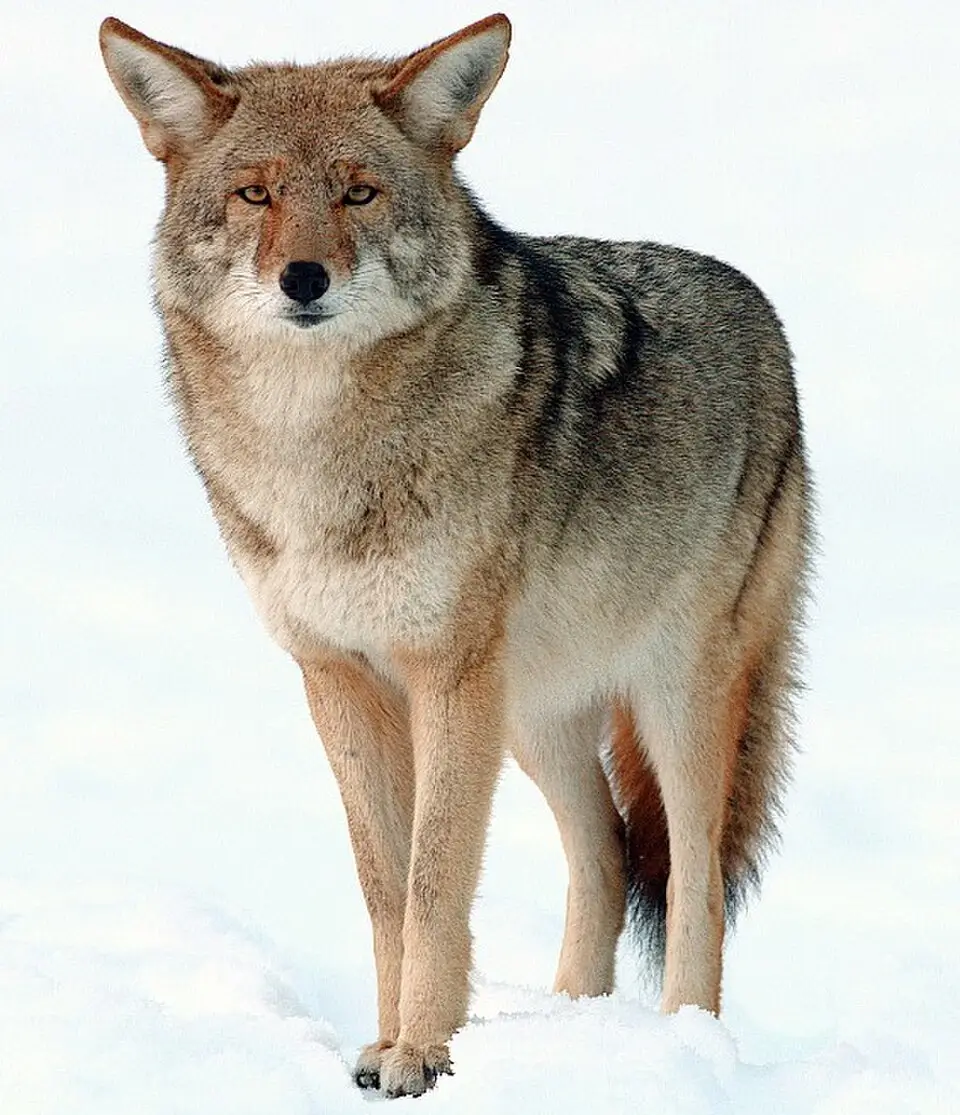
In terms of physical appearance, coyotes are lean, athletic animals with pointed muzzles, large ears that stand erect, and bushy tails that are typically held low while running — a key distinguishing feature from domestic dogs and wolves. Their coats vary in color from grayish-brown to reddish-yellow, often with lighter undersides and darker markings along the back and tail. This variable coloration allows them to blend effectively into a wide range of environments.
Coyotes are highly vocal animals. Their calls include howls, yips, barks, and whines, and they use these vocalizations to communicate territory, attract mates, and maintain social bonds within family groups. The coyote's iconic nocturnal chorus is one of the most recognizable sounds in the North American outdoors.
As omnivores, coyotes have an extraordinarily broad diet. They consume small mammals such as rabbits, mice, and squirrels, as well as birds, reptiles, insects, fruits, berries, and carrion. This dietary flexibility is a cornerstone of their success as a species, allowing them to thrive in environments ranging from remote wilderness to suburban neighborhoods.
Coyotes are also notable for their intelligence. Researchers and wildlife biologists consistently rate them among the most cognitively capable wild canids in North America. They are quick learners, highly observant, and capable of adjusting their behavior in response to human activity and hunting pressure — a quality that makes them both challenging quarry and fascinating subjects of study.
Reproductively, coyotes typically breed once per year, with mating occurring in late winter, generally between January and March. After a gestation period of approximately 63 days, females give birth to litters averaging four to seven pups. Pups are raised by both parents and often receive assistance from older siblings from previous years, demonstrating a relatively sophisticated social structure for a wild canid.
Habitat & Range
One of the most remarkable facts about the coyote is the sheer scope of its geographic range. Originally native to the open prairies and deserts of the central and western United States, the coyote has dramatically expanded its territory over the past century. Today, Canis latrans is found across virtually the entire North American continent, from Alaska and Canada in the north, throughout the continental United States, and southward through Central America.
This expansion has been facilitated in large part by the coyote's extraordinary habitat adaptability. Coyotes thrive in deserts, grasslands, scrublands, temperate forests, boreal forests, wetlands, and even densely populated urban and suburban areas. In fact, coyotes have established stable populations in virtually every major metropolitan area in the United States, including cities like Chicago, Los Angeles, New York, and Detroit.
In Michigan, coyotes are found statewide. The state's geography — which includes the rugged forests and wetlands of the Upper Peninsula, the agricultural fields, woodlots, and suburban sprawl of the Lower Peninsula, and the diverse Great Lakes shoreline — provides an ideal mosaic of habitats for coyotes. They are equally at home hunting field mice in an agricultural setting, patrolling deer trails through dense northern forests, or navigating the green spaces and parks of Michigan's cities and suburbs.
Coyotes are most active during dawn, dusk, and nighttime hours, though they are not strictly nocturnal. In areas with less human disturbance, they can frequently be observed during daylight hours as well. Their home ranges vary considerably based on food availability and habitat quality but can span anywhere from a few square miles in resource-rich environments to significantly larger territories in more sparse landscapes.
Hunting Information
Coyote hunting is a popular and long-standing tradition across Michigan and throughout North America. Hunters are drawn to coyote hunting for a variety of reasons: the challenge of pursuing a highly intelligent and wary animal, the opportunity to hunt during the winter months when other seasons have closed, and the role that hunters play in wildlife management.
Coyotes are typically hunted using a combination of calling techniques, stands, and strategic positioning. Electronic calls and mouth-blown calls that mimic the sounds of distressed rabbits, rodents, or even coyote vocalizations are widely used and highly effective. Coyotes are curious and responsive animals, and skilled calling can bring them in from remarkable distances. Hunters often set up in areas with good visibility — field edges, power line cuts, and open woodland clearings — to maximize their chances of spotting an incoming animal before it detects the hunter.
Popular firearms for coyote hunting include flat-shooting rifles in calibers such as .223 Remington and .243 Winchester, as well as shotguns loaded with heavy shot for close-range work. Many hunters also pursue coyotes with archery equipment, adding an additional layer of challenge to an already demanding pursuit.
In Michigan, coyote hunting is a recognized and legal activity, and hunters are encouraged to consult the Michigan Department of Natural Resources (DNR) for current, up-to-date regulations regarding seasons, licensing requirements, and any applicable rules. Because regulations can change from year to year, always verify the most current information directly with the Michigan DNR before heading afield. The official Michigan DNR website is the most reliable resource for accurate, current hunting regulations.
Predator hunting for coyotes is often conducted during the late fall and winter months, when foliage is down and coyotes are actively seeking food ahead of the breeding season. Night hunting, where permitted and regulated, is also a popular strategy for targeting coyotes, which tend to be more active after dark.
Conservation
From a conservation standpoint, the coyote (Canis latrans) is listed as a species of Least Concern by the International Union for Conservation of Nature (IUCN). Their populations are stable, widespread, and in many regions actively growing. Unlike many wildlife species that have struggled in the face of habitat loss and human expansion, coyotes have demonstrated a remarkable capacity to coexist with — and even benefit from — landscape changes caused by human activity.
This resilience is a testament to the coyote's adaptability and biological success. They fill an important ecological niche as mesopredators, helping to regulate populations of small mammals, rodents, and other prey species. In doing so, they contribute to the health and balance of ecosystems across their vast range, including Michigan's diverse natural landscapes.
Wildlife managers and biologists continue to study coyote populations, behavior, and their interactions with other species to better understand their ecological role. In Michigan, the DNR actively monitors wildlife populations and works to ensure that hunting regulations support sustainable wildlife management across all species, including coyotes.
For hunters, wildlife photographers, and nature enthusiasts, the coyote represents one of North America's most compelling wild animals — a survivor, an opportunist, and an enduring symbol of the wild heart of the American landscape.