Overview
Few birds are as instantly recognizable across North America as the Canada goose (Branta canadensis). With its sleek black head, contrasting white chinstrap, and powerful V-formation flights that herald the changing seasons, this large waterfowl species has carved out a special place in the landscape and culture of the continent. From the shores of the Great Lakes to the urban parks of major metropolitan areas, the Canada goose thrives in a remarkable variety of environments.
In Michigan—a state defined by water, with its two peninsulas surrounded by four of the five Great Lakes—the Canada goose holds particular significance. The state's abundant wetlands, agricultural fields, suburban green spaces, and inland lakes provide near-perfect habitat for this adaptable species. For hunters, birdwatchers, and outdoor enthusiasts alike, the Canada goose represents both a connection to wild traditions and a year-round presence in Michigan's natural heritage.
This article explores the biology, habitat, hunting traditions, and conservation history of the Canada goose, with a particular focus on what makes this species so successful in Michigan and across the broader Great Lakes region.
Biological Traits
The Canada goose, scientifically classified as Branta canadensis, belongs to the family Anatidae, which includes ducks, geese, and swans. The genus Branta contains the "black geese," distinguished from the "gray geese" of the genus Anser by their darker overall plumage and characteristic black necks and heads.
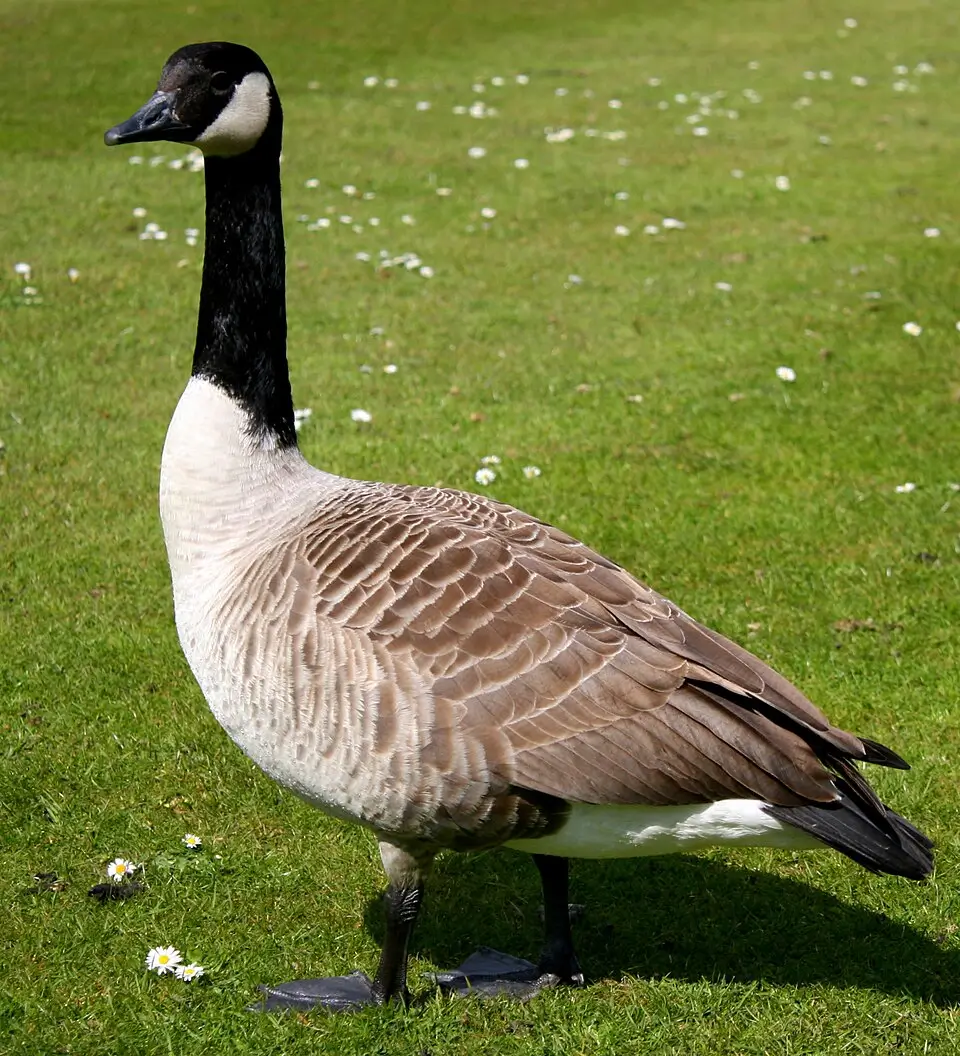
Canada geese are large waterfowl, and they are easily identified by several key features:
- Black head and long black neck, sharply contrasted by a distinctive white "chinstrap" patch that wraps from cheek to cheek under the throat
- Brown body plumage with a paler breast that varies from nearly white to a darker tan depending on the subspecies
- Black bill, legs, and feet, providing a stark contrast against the white undertail coverts
- Broad wings built for sustained, powerful flight
The species is known for its strong family bonds. Canada geese are typically monogamous, often pairing for life. Both parents participate in raising the young, called goslings, which hatch covered in yellow down and are capable of walking, swimming, and feeding themselves shortly after hatching. The family unit often remains intact through the gosling's first migration, with young geese learning migration routes directly from their parents.
Canada geese are herbivorous, feeding primarily on grasses, sedges, aquatic vegetation, grains, and agricultural crops. In suburban environments, they readily graze on manicured lawns, which has contributed to their success—and occasional unpopularity—in developed landscapes. During molting periods in summer, adults temporarily lose their flight feathers and become flightless for several weeks, a time when they tend to congregate near water for safety.
Vocally, Canada geese are highly communicative. Their familiar honking calls serve a range of purposes, from coordinating flight formations to warning of predators and maintaining contact with mates and goslings. Different call types convey different messages, and experienced waterfowl hunters often learn to imitate these vocalizations to attract birds within range.
Canada geese are also famous for their flight behavior. The iconic V-formation conserves energy by reducing wind resistance for trailing birds, with the lead position rotating during long flights. This efficient travel method allows the species to undertake remarkable seasonal migrations, although—as discussed below—not all Canada geese migrate today.
Habitat & Range
The Canada goose is native to North America, with a breeding range that historically extended across Canada and the northern United States, and a wintering range covering much of the southern United States and northern Mexico. Today, due to successful conservation efforts and the species' adaptability, Canada geese can be found across nearly all of North America at some point during the year.
Their preferred habitats include:
- Wetlands and marshes — vital for nesting and brood-rearing
- Lakes, ponds, and slow-moving rivers — for feeding, resting, and escaping predators
- Agricultural fields — particularly cornfields, wheat fields, and other grain-producing lands that provide abundant post-harvest food
- Grasslands and pastures — for grazing
- Urban and suburban parks, golf courses, and corporate campuses — increasingly important habitat for resident populations
Michigan provides an exceptional mix of these habitats. With more than 11,000 inland lakes, extensive wetland complexes, two Great Lakes coastlines, and abundant agricultural land in the southern Lower Peninsula, the state is ideally suited for both breeding and migratory Canada geese. The state's location along the Mississippi and Atlantic Flyways further enhances its importance as a stopover and wintering area for migrating birds traveling between northern breeding grounds and southern wintering areas.
One particularly interesting aspect of Canada goose ecology is the distinction between migratory and resident populations. Migratory Canada geese nest in northern regions, including subarctic Canada, and travel long distances to winter in temperate zones. Resident Canada geese, by contrast, nest within the same region where they winter and may travel only short distances seasonally. Resident populations have grown substantially in many parts of the United States, including Michigan, where they can be observed year-round on parks, golf courses, and suburban water features.
Hunting Information
Canada goose hunting is a long-standing tradition in Michigan and across the Great Lakes region. The species is one of the most pursued game birds in North America, valued for its size, its challenging behavior, and the rich table fare it provides. A successful goose hunt typically involves a combination of scouting, decoy spreads, blinds or layout setups, and skilled calling.
Hunting Canada geese in Michigan generally takes place during seasons established by the Michigan Department of Natural Resources (DNR) in coordination with federal migratory bird regulations administered by the U.S. Fish and Wildlife Service. Because Canada geese are migratory birds, their hunting is governed by the Migratory Bird Treaty Act, and seasons, bag limits, and zones are set annually based on population monitoring.
For accurate, up-to-date information on Canada goose hunting in Michigan, hunters should consult the Michigan DNR's current waterfowl hunting digest and regulations. This is important because:
- Season dates are typically split into early (often in September), regular, and late segments
- Bag limits and possession limits can vary by zone and by segment of the season
- Hunters must possess a valid Michigan hunting license, a base license, a waterfowl hunting license, and a federal duck stamp
- Hunters must also register with the Harvest Information Program (HIP)
- Use of non-toxic shot is required for waterfowl hunting
- Specific zones (North, Middle, and South Zones) in Michigan have their own season frameworks
Popular hunting methods include field hunting over decoys in harvested grain fields, pass shooting in flight corridors between roost and feeding areas, and water hunting near roosting lakes and ponds. Effective Canada goose hunting requires significant scouting to locate birds' feeding patterns, as geese are creatures of habit that often return to the same fields day after day.
Goose hunting is also a social activity, frequently shared among family members and friends, and is often credited with creating lifelong outdoor traditions in Michigan communities.
Conservation
The conservation story of the Canada goose is one of the great success stories in North American wildlife management. In the early twentieth century, market hunting, habitat loss, and egg collection had drastically reduced Canada goose populations, and some subspecies were even feared extinct.
Through a combination of protective legislation, habitat restoration, reintroduction programs, and regulated hunting seasons funded in large part by hunters themselves, Canada goose populations have rebounded dramatically. Today, the species is abundant across its range, and in many regions—including parts of Michigan—wildlife managers focus on balancing population levels with human land use.
Key conservation tools that have benefited Canada geese include:
- The Migratory Bird Treaty Act of 1918, which provided federal protection for the species
- The Federal Duck Stamp program, with proceeds funding wetland conservation
- State wildlife management programs funded through hunting license sales
- Wetland restoration and protection efforts through organizations such as Ducks Unlimited and Delta Waterfowl
- Habitat development on public lands, including state game areas and national wildlife refuges
In Michigan, conservation partnerships continue to support both Canada goose populations and the broader wetland ecosystems on which they depend. Hunters play an essential role in this system, contributing through license fees, stamp purchases, and direct participation in habitat projects.
The Canada goose stands as a testament to what sound, science-based wildlife management can accomplish. From the brink of significant decline to one of the most visible and successful waterfowl species on the continent, Branta canadensis represents both the resilience of nature and the value of long-term conservation investment.