Overview
Few animals embody the spirit of wild North America quite like the American mink. Agile, tenacious, and supremely adapted to life along the water's edge, the American mink (Neogale vison) is one of the continent's most recognizable semi-aquatic mammals. Whether slipping silently beneath the surface of a cold Michigan stream or stalking prey through dense riverside vegetation, the mink is a creature of remarkable capability and quiet elegance. For hunters, trappers, and wildlife enthusiasts alike, the American mink holds a storied place in the outdoor tradition — one that stretches back centuries to the earliest days of the North American fur trade.
Michigan, with its extraordinary network of rivers, lakes, wetlands, and Great Lakes shoreline, provides an ideal backdrop for exploring the life history of this fascinating animal. As the largest state by total area in the Great Lakes region and a state defined by its intimate relationship with water, Michigan is home to healthy populations of American mink that thrive in its diverse aquatic landscapes. Understanding this species — its biology, its habits, its role in the ecosystem, and its significance to hunters and trappers — offers a richer appreciation of the wild places these animals call home.
Biological Traits
The American mink belongs to the family Mustelidae, the same biological family that includes weasels, otters, badgers, and wolverines. This group is broadly characterized by long, slender bodies, short legs, and carnivorous feeding habits — traits the mink exemplifies beautifully. The scientific name Neogale vison reflects a relatively recent reclassification; the species was formerly known as Mustela vison, and taxonomic updates have reorganized several members of the weasel family in recent decades.
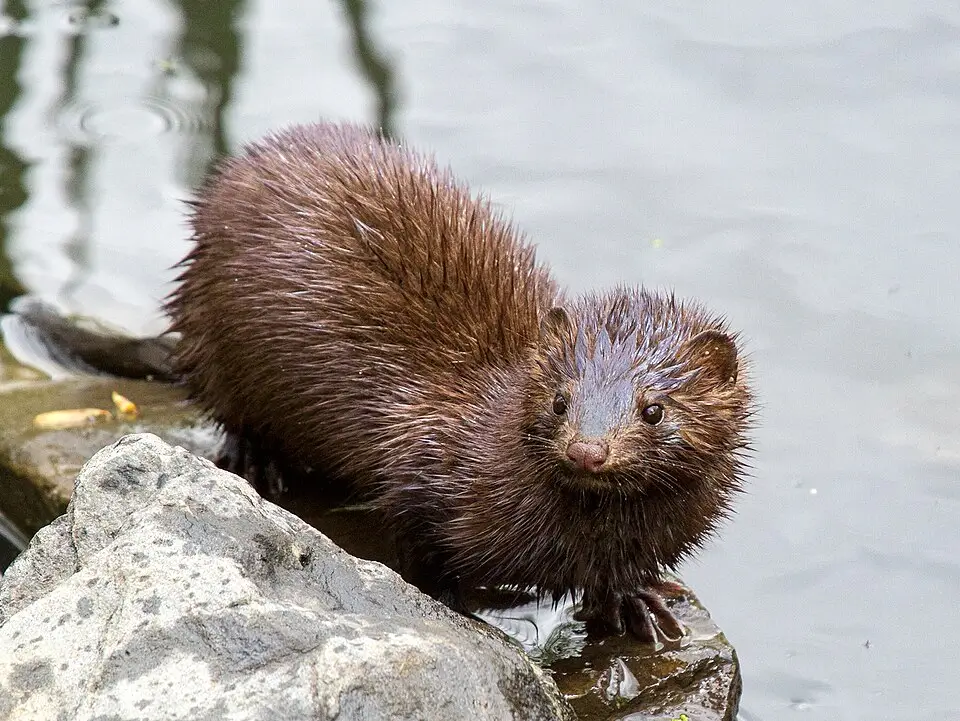
In terms of physical appearance, the American mink is a sleek, elongated mammal with dense, water-resistant fur. The coat is typically a rich, lustrous brown — often described as chocolate to dark chestnut — with a small white patch sometimes visible on the chin or chest. This thick, oily pelage serves a critical functional purpose: it insulates the animal against cold water and helps repel moisture, allowing the mink to hunt effectively in aquatic environments even during the colder months of the year.
Sexual dimorphism is notable in this species. Males are significantly larger than females, a trait common among mustelids. Adult males may measure anywhere from roughly 13 to 18 inches in body length with an additional bushy tail, while females are noticeably smaller and lighter. Both sexes possess the characteristic musk glands common to the mustelid family, which can be used for territorial marking and defense.
The mink's sensory capabilities are well-suited to its predatory lifestyle. Its eyes, while not exceptional for night vision by absolute standards, are adapted for low-light hunting. Its sense of smell is keen, helping it locate prey and navigate its territory. The animal's feet are partially webbed, giving it excellent swimming ability, and its flexible spine allows it to twist and maneuver through dense aquatic vegetation, under ice, and into the burrows and dens of its prey.
As a carnivore, the American mink has a broad and opportunistic diet. It readily takes muskrats, rabbits, mice, voles, fish, crayfish, frogs, snakes, and birds. This dietary flexibility makes the mink a highly effective predator across seasons, able to switch prey items as availability changes. Mink are known to be bold hunters, often taking on prey larger than themselves — a muskrat, for example, is a formidable quarry that many mink successfully overpower.
Reproduction in the American mink follows a seasonal pattern typical of mustelids. Mating generally occurs in late winter or early spring, and the species exhibits delayed implantation — a fascinating biological phenomenon in which the fertilized egg does not immediately implant in the uterus. After a variable gestation period, females give birth to a litter of kits, typically ranging from three to six young, in a secluded den site along a waterway. Dens may be located in hollow logs, rock crevices, muskrat lodges, or bank burrows. The female raises the kits alone, weaning them over several weeks before they begin to disperse and establish their own territories by late summer or fall.
The American mink is a largely solitary and territorial animal. Both males and females maintain home ranges along waterways, with males typically occupying larger territories that may overlap with those of several females. Territories are marked with scent secretions, and mink communicate through a variety of vocalizations including hisses, squeaks, and soft churring sounds.
Habitat & Range
The American mink is widely distributed across North America, ranging from the Atlantic to the Pacific coast and from the southern United States well into Canada and Alaska. It is among the most broadly distributed mustelids on the continent, a testament to its adaptability and resourcefulness.
True to its semi-aquatic nature, the mink shows a strong preference for habitats in close proximity to water. Riverbanks, stream corridors, lake margins, marshes, swamps, beaver ponds, and coastal wetlands all serve as prime mink habitat. The key requirements are access to water, an adequate prey base, and suitable denning cover. Dense riparian vegetation — willows, alders, cattails, and sedges — provides the cover and structural complexity that mink depend upon for hunting and denning.
Michigan is, in many ways, an ideal mink state. The Great Lakes State is crisscrossed by thousands of miles of rivers and streams, dotted with tens of thousands of inland lakes, and bordered by four of the five Great Lakes. Its extensive wetlands, including vast marshes in the Upper Peninsula and the coastal wetlands along Saginaw Bay, Lake St. Clair, and the St. Marys River, offer exceptional mink habitat. Both the Upper and Lower Peninsulas support resident mink populations, with the species present wherever suitable riparian and wetland habitats exist.
Mink are year-round residents throughout their range. Unlike some mammals, they do not hibernate, remaining active through Michigan's cold winters. They may travel under ice to hunt fish and other aquatic prey, and their dense fur allows them to tolerate frigid temperatures with minimal difficulty.
Hunting and Trapping Information
The American mink has been one of the most commercially valuable fur-bearing animals in North America for hundreds of years. The fur trade that opened much of the continent to European exploration was driven in significant part by the demand for mink and other mustelid pelts, and today mink fur remains prized for its softness, density, and durability.
In Michigan, the mink has a long tradition as a target species for trappers. The state's rich wetland and riparian ecosystems support trappable populations, and mink trapping is part of a broader heritage of regulated furbearer management that has characterized Michigan's outdoor tradition for generations.
Trapping is the primary method used to harvest wild mink. Common techniques include the use of body-grip traps and footholds sets placed near water, in run ways along stream banks, or at den entrances. Experienced trappers learn to read mink sign — tracks in mud or snow, scats, slides along stream banks — to identify active travel routes and place sets effectively. Lures and baits, including fish-based scents, are commonly used to attract mink to trap locations.
Because mink are curious and relatively bold animals, they can be successfully targeted by hunters as well, though trapping remains far more common and effective. Hunters working wetland edges may occasionally encounter mink while pursuing other species, and in some states and provinces spot-and-stalk or dog-assisted hunting is practiced.
It is important for any hunter or trapper targeting mink in Michigan to consult the most current regulations published by the Michigan Department of Natural Resources (DNR) before the season. Specific season dates, bag limits, required licenses, and legal trapping methods are subject to change and are managed to ensure sustainable harvest levels. As of the time of this writing, specific season dates and license requirements for mink in Michigan were not available from the source data consulted for this article; hunters and trappers should always verify current rules directly with the Michigan DNR.
Conservation
The American mink is currently listed as a species of Least Concern by the International Union for Conservation of Nature (IUCN), reflecting its broad distribution and generally stable wild populations across most of its native range. This positive conservation status is a testament both to the mink's adaptability and to the effectiveness of regulated harvest programs that have governed its take for decades.
Like all wildlife, mink populations are subject to pressures from habitat loss, particularly the degradation or elimination of riparian and wetland habitats. Maintaining healthy waterways, protecting streamside vegetation buffers, and preserving wetland complexes are all important for long-term mink population stability. Michigan's extensive network of public lands, state and federal wetland protection programs, and active stream restoration efforts collectively benefit mink and the many other species that share its habitat.
The role of regulated trapping in mink conservation is also worth recognizing. Well-managed harvest programs, grounded in population data and adjusted as needed by wildlife managers, allow for sustainable use of the resource while contributing to conservation funding through license sales. In Michigan, revenue from hunting and trapping licenses supports the Michigan DNR's wildlife management programs, benefiting both game and non-game species alike.
The American mink also serves an important ecological function as a mid-level predator in riparian food webs. By regulating populations of muskrats, rodents, and other prey species, mink help maintain balance in wetland ecosystems. Their presence is often an indicator of a healthy, productive aquatic environment — a living signal that a waterway supports the abundance and diversity of life needed to sustain top predators.
For wildlife watchers, hunters, trappers, and conservationists, the American mink remains one of the most compelling ambassadors of wild North America — a small but fierce predator that asks only for clean water, healthy wetlands, and a chance to do what it has always done: thrive along the water's edge.