Overview
Few birds embody the spirit of the wild northern forest quite like the Spruce grouse (Canachites canadensis). Known colloquially by nicknames such as "fool hen" or "spruce hen," this compact, hardy bird has captivated naturalists, wildlife enthusiasts, and hunters alike for generations. Perfectly adapted to the dense coniferous forests that blanket much of northern North America, the Spruce grouse is a true symbol of the boreal wilderness. Whether you encounter one standing motionless on a forest trail or hear the muffled drumming of a male during the spring breeding season, the Spruce grouse offers a memorable encounter with authentic wild nature.
For hunters venturing into the vast forests of Maine and other northern states, the Spruce grouse represents a unique and rewarding quarry. Maine, with its more than 17 million acres of forests and wild lands, is one of the premier destinations for experiencing this remarkable bird in its natural habitat. The state's dense spruce-fir forests, remote wilderness tracts, and rich wildlife heritage make it an ideal backdrop for both wildlife observation and upland bird hunting. Understanding the biology, behavior, and habitat requirements of the Spruce grouse only deepens the appreciation for this extraordinary species and the landscapes it calls home.
Biological Traits
The Spruce grouse is a medium-sized member of the family Phasianidae, which also includes turkeys, pheasants, and other grouse species. Its scientific name, Canachites canadensis, reflects its deep association with the Canadian boreal zone, though its range extends southward into portions of the northern United States, including Maine.
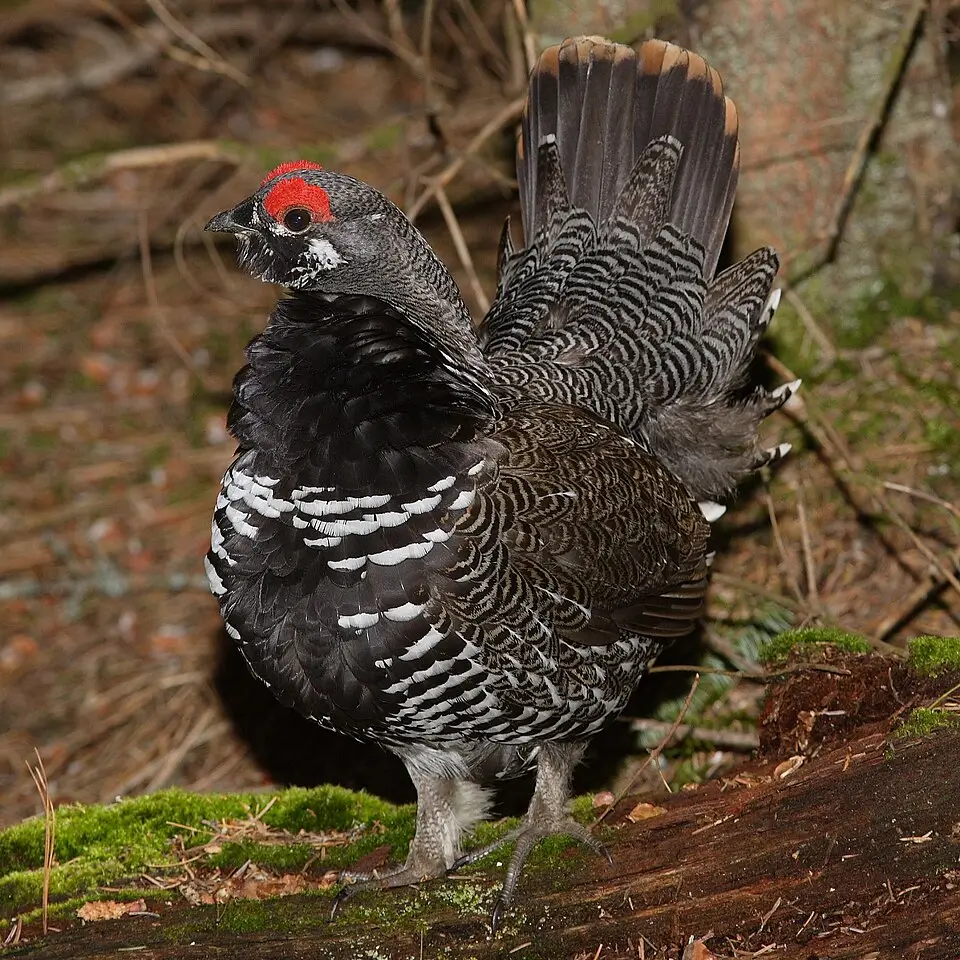
Males and females differ noticeably in appearance, a characteristic known as sexual dimorphism. Male Spruce grouse display bold, striking plumage featuring a jet-black breast and throat, offset by vivid red eyebrow combs — fleshy supraorbital patches that become especially pronounced and bright during courtship displays. The upper parts are intricately patterned in shades of gray and brown, providing outstanding camouflage within the shadowy understory of spruce and fir forests. Females, by contrast, wear more subdued, mottled brown-and-buff plumage, a coloration ideally suited for nesting concealment among the forest floor debris.
One of the most widely discussed behavioral traits of the Spruce grouse is its legendary tameness in the presence of humans. Unlike many wild birds that immediately flush at the first sign of disturbance, Spruce grouse often remain remarkably still and approachable, relying on their cryptic coloration rather than flight to avoid detection. This behavior likely evolved in remote boreal forests where large mammalian predators — rather than humans — were the primary threats. This trusting nature is the origin of the bird's longtime nickname, "fool hen," though wildlife biologists would more accurately describe the behavior as a sophisticated adaptation to its natural environment.
Diet plays a fascinating role in the Spruce grouse's life cycle. During winter months, this species relies heavily on the needles of coniferous trees, particularly spruce and fir, as a primary food source. This diet would be toxic or at minimum indigestible for most bird species, but the Spruce grouse has evolved a specially enlarged cecum — a portion of the digestive tract — capable of processing and extracting nutrition from tough, resinous needles. In warmer months, the diet diversifies to include berries, seeds, green plant matter, mushrooms, and invertebrates, providing essential nutrients during the breeding and brood-rearing seasons.
Breeding behavior in the Spruce grouse is elaborate and captivating. Males engage in impressive strutting displays, fanning their tails, inflating their red eyebrow patches, and producing deep, resonant tail-drumming sounds by rapidly beating their wings. Nesting occurs on the ground, typically in a shallow scrape lined with plant material, tucked beneath low-hanging conifer branches or beside fallen logs. Females incubate clutches typically ranging from four to ten eggs, and chicks are precocial — meaning they are mobile and capable of foraging shortly after hatching. This early independence is critical for survival in an environment where predators are ever present.
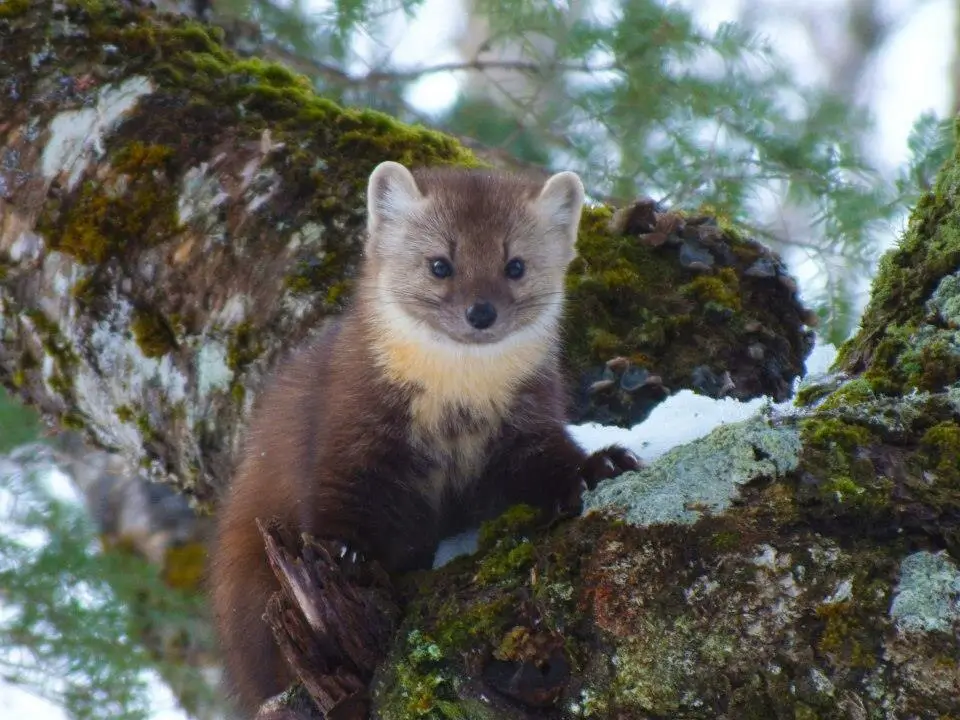
The lifespan of the Spruce grouse, like many grouse species, tends to be relatively short in the wild, with natural predation, harsh winters, and the challenges of reproduction all taking their toll. Predators include raptors such as goshawks and great horned owls, as well as terrestrial predators like foxes, martens, and fishers.
Habitat & Range
The Spruce grouse is fundamentally a bird of the boreal forest. Across its range, it shows a strong preference for dense coniferous woodlands dominated by black spruce, white spruce, balsam fir, and jack pine. It is also frequently found in mixed coniferous-deciduous forests, particularly where spruce and fir are well represented in the understory. Bog edges, muskegs, and areas with dense low shrub cover are especially favored habitats, providing both food and protective cover.
The species' range extends across the boreal forest belt from Alaska eastward through Canada, and dips southward into the northern portions of the contiguous United States. In the East, populations are found in northern New England — with Maine being a stronghold — as well as the Adirondack region of New York and parts of the upper Great Lakes states. Maine's vast, largely undisturbed spruce-fir forests make it one of the most important regions for Spruce grouse in the eastern United States.
Within their range, Spruce grouse tend to be relatively non-migratory, maintaining relatively small home ranges and moving only short distances between seasonal habitats. They may shift slightly in elevation or move to areas with denser conifer cover during deep winter months, but they do not undertake the long migrations characteristic of many other bird species.
The connectivity and health of boreal forest landscapes are essential to the long-term persistence of Spruce grouse populations. Areas with mature and old-growth spruce-fir cover, minimal fragmentation, and a diverse understory structure tend to support the healthiest populations.
Hunting Information
The Spruce grouse holds a cherished place in the tradition of upland bird hunting across northern North America. For hunters exploring the remote forests of Maine and neighboring states, an encounter with a Spruce grouse is one of the quintessential experiences of northern wilderness hunting. Maine, aptly nicknamed "Vacationland" and endowed with more than 17 million acres of forests and wild lands, provides some of the finest Spruce grouse habitat available anywhere in the eastern United States.
Hunting Spruce grouse is often described as an intimate, boots-on-the-ground experience. Because the birds rely on stillness and camouflage rather than explosive flight as their primary defense, hunters frequently encounter them at close range on old logging roads, forest trails, and the edges of spruce bogs. This characteristic makes Spruce grouse hunting accessible to hunters of varying experience levels, including those new to upland bird hunting. A pointed dog is certainly useful, but many hunters simply walk slowly through promising habitat and watch carefully for the birds' distinctive silhouettes perched in low spruce branches or standing on the forest floor.
The traditional method of hunting Spruce grouse in the eastern boreal forest often involves still-hunting — moving quietly and deliberately through dense coniferous forest, pausing frequently to scan the understory. Small-gauge shotguns are the classic choice for this type of close-quarters hunting, providing adequate pattern and power for birds encountered at short distances.
For those planning a Spruce grouse hunt in Maine, the Maine Department of Inland Fisheries and Wildlife (MDIFW) is the authoritative source for current season dates, bag limits, licensing requirements, and regulations. Regulations can change from year to year, and it is always the hunter's responsibility to consult the most current MDIFW guidelines before heading afield. Maine's hunting licensing and regulation information is available directly through the Maine Department of Inland Fisheries and Wildlife.
Conservation
The Spruce grouse is currently considered a species of low conservation concern across most of its range, reflecting the relative health and extent of the boreal forest ecosystems it inhabits. The vast boreal forests of Canada remain largely intact, providing extensive habitat for healthy populations. However, in the southern portions of its range — including Maine and other northern U.S. states — the species can be more locally sensitive to habitat changes.
Logging practices, forest succession, and landscape fragmentation all have the potential to affect local Spruce grouse populations. The birds depend on mature and structurally complex coniferous forests, and large-scale alterations of forest composition or structure can reduce the suitability of habitat over time. Conservation-minded forestry practices that retain diverse age classes and maintain areas of dense spruce-fir cover are beneficial to the species.
Hunters have historically played a supportive role in the conservation of game birds and their habitats across North America, and Spruce grouse are no exception. Through license fees, excise taxes on sporting equipment under the Federal Aid in Wildlife Restoration Act (Pittman-Robertson Act), and active engagement with wildlife management agencies, hunters contribute meaningfully to the funding and advocacy that sustains healthy populations of upland birds including the Spruce grouse.
Maine's rich hunting heritage, supported by the dedication of the Maine Department of Inland Fisheries and Wildlife, ensures that wildlife management decisions for species like the Spruce grouse are grounded in science and oriented toward long-term population sustainability. For hunters and wildlife enthusiasts alike, the continued presence of the Spruce grouse in Maine's boreal forests is a testament to the value of well-managed wild lands and the conservation ethic that underpins the North American Model of Wildlife Conservation.