Overview
Few waterfowl species command as much admiration among duck hunters and wildlife observers as the American black duck (Anas rubripes). At once familiar and elusive, this robust dabbling duck has carved out a unique place in the cultural and ecological fabric of the northeastern United States and eastern Canada. For generations, hunters wading through coastal marshes at dawn and birders scanning tidal flats have recognized the unmistakable silhouette of this bird — a species that embodies the wild, briny character of the Atlantic flyway.
The American black duck is arguably one of the most iconic waterfowl of the northeastern states, and Maine — the northeasternmost state in the contiguous United States — holds a particularly important place in the bird's story. Maine's vast wetlands, rugged coastline, and boreal forests provide critical habitat for this species throughout the year. Whether you are a waterfowl hunter looking to pursue this challenging quarry in the Pine Tree State, or simply a nature enthusiast eager to learn more about this remarkable bird, this guide offers a thorough look at everything that makes the American black duck so special.
Biological Traits
The American black duck (Anas rubripes) belongs to the family Anatidae and is classified within the genus Anas, placing it in close taxonomic company with the mallard (Anas platyrhynchos). In fact, the two species are so closely related that they hybridize regularly where their ranges overlap, and the resulting offspring are fertile — a fact that has long intrigued ornithologists and conservationists alike.
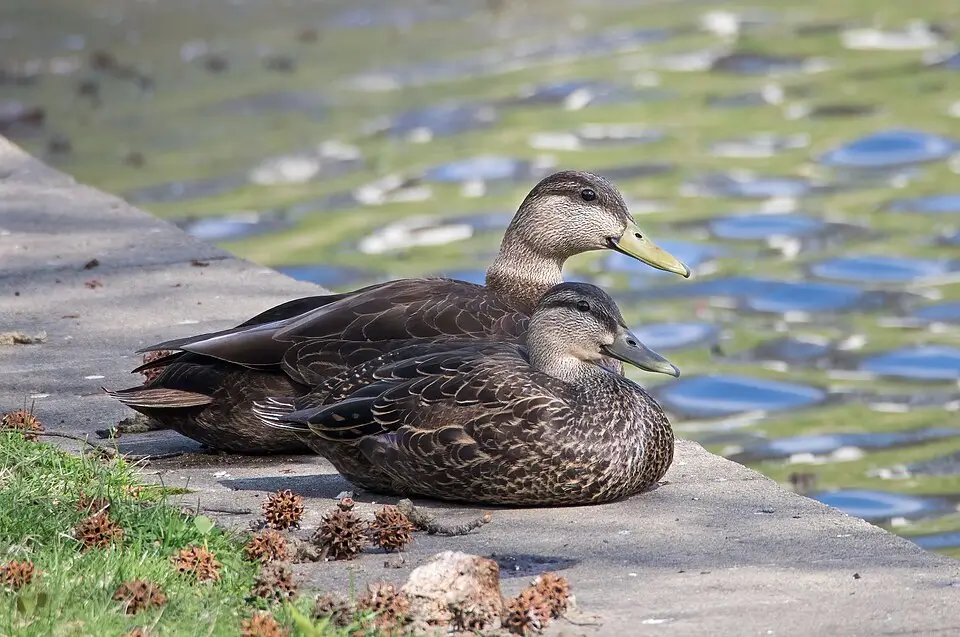
Despite its name, the American black duck is not truly black. The plumage of both males and females appears a very dark sooty brown, almost chocolate in coloration, particularly on the body feathers. This deep, rich coloring contrasts sharply with a paler, buff-colored head and neck, giving the bird a distinctly two-toned appearance. In flight, one of the most striking features becomes apparent: the bright white underwings flash brilliantly against the dark body, making the bird instantly identifiable even at a distance. The speculum — the iridescent wing patch visible on many dabbling ducks — is a vivid violet-blue on the American black duck, bordered by black rather than the white edging found on the mallard's speculum.
Unlike the mallard, in which males and females display dramatic differences in plumage (sexual dimorphism), the American black duck shows only subtle distinctions between the sexes. Both males (drakes) and females (hens) sport the characteristic dark body plumage. The most reliable way to distinguish a drake from a hen is by the bill: males typically have a yellow-green bill, while females display an olive-green to dull orange bill, often with dark mottling. The legs and feet of both sexes are orange-red.
The American black duck is a medium to large dabbling duck, generally comparable in size to the mallard. Like all dabbling ducks, it feeds primarily by tipping forward in shallow water to access submerged vegetation, invertebrates, seeds, and aquatic plants, rather than diving beneath the surface. The species is also known to forage on land, particularly in agricultural fields and along shorelines, where it may feed on grasses, berries, and waste grain.
Vocalizations follow the typical dabbling duck pattern. Females produce the classic loud quack commonly associated with ducks, while males give a softer, raspier call. The species tends to be somewhat more wary and alert than the mallard, making it a prized and challenging target for hunters.
Habitat & Range
The American black duck is fundamentally a bird of the eastern half of North America. Its breeding range spans from the Atlantic Coast westward through the Great Lakes region and northward into the boreal forests and tundra edges of Canada. The species is especially associated with the northeastern United States and the maritime provinces of Canada, where it breeds in large numbers.
Maine, with its extraordinary diversity of wetland habitats, is a stronghold for this species. The state is the largest in New England by total area, and its landscape encompasses over 17 million acres that include tidal marshes, freshwater wetlands, beaver ponds, rivers, lakes, and vast tracts of boreal forest. These varied environments offer the American black duck everything it needs: sheltered nesting sites, abundant food resources, and relatively undisturbed expanses of wild country.
The American black duck demonstrates remarkable habitat flexibility. During the breeding season, it favors wooded swamps, beaver flowages, and shrubby wetland edges where dense vegetation provides cover for nesting. Females construct their nests on the ground, typically hidden beneath grasses or shrubs near water. Clutch sizes generally range from six to twelve eggs, and the hen alone handles incubation duties.
As the seasons change, black ducks shift their habitat use significantly. In autumn and winter, coastal habitats become increasingly important. Salt marshes, estuaries, tidal creeks, and coastal bays along the Gulf of Maine and the broader Atlantic seaboard serve as critical wintering and staging areas. The species is notably tolerant of cold, and many individuals winter well to the north, taking advantage of coastal waters that remain ice-free even during the harshest months.
Maine's coastline — bordered by the Gulf of Maine to the southeast — is thus an enormously valuable landscape for this species. From the rugged, rock-strewn shores of Downeast Maine to the broad tidal marshes of the southern coast, the state offers some of the finest black duck habitat on the entire Atlantic flyway.
Hunting Information
The American black duck has a long and storied history as a game bird in Maine and throughout the northeastern United States. For waterfowl hunters who pursue ducks along the Atlantic flyway, the black duck represents a unique and rewarding challenge. The species' natural wariness — often described as superior to that of the mallard — means that hunters must employ careful concealment, realistic decoy spreads, and patient calling techniques to be successful.
Maine offers some of the best hunting and fishing opportunities in the country, and the state's waterfowl hunting tradition runs deep. Hunters pursuing American black ducks in Maine typically work coastal marshes, tidal creeks, river edges, and freshwater wetlands. The black duck's affinity for these environments, combined with Maine's vast wild acreage, creates exceptional opportunities for dedicated waterfowlers.
Because regulations governing the hunting of American black ducks — including season dates, bag limits, and licensing requirements — are set annually by state and federal wildlife management authorities and are subject to change, hunters are strongly encouraged to consult the Maine Department of Inland Fisheries and Wildlife (IFW) for the most current and accurate regulatory information before heading afield. The Maine IFW is the official authority on hunting regulations within the state and provides up-to-date guidance on all aspects of waterfowl hunting, including required licenses and permits.
Waterfowl hunters in Maine also benefit from the state's close proximity to Canadian breeding grounds, which funnel migrating black ducks southward through the state each autumn. Hunting pressure, weather patterns, and habitat conditions all influence the timing and quality of the migration, and experienced hunters pay close attention to cold fronts and wind shifts that tend to push birds south and into huntable areas.
Hunting methods for American black ducks are similar to those used for other dabbling ducks. Hunters typically use layout boats, shore blinds, or boat blinds positioned along productive feeding and resting areas. Decoy spreads often include both black duck and mallard decoys, as the two species frequently associate with one another. Calling can be effective, though black ducks are often more call-shy than mallards, and restrained, realistic calling tends to produce better results.
Conservation
The conservation of the American black duck has been a significant focus of wildlife management agencies and waterfowl conservation organizations throughout the latter half of the twentieth century and into the present day. The species experienced notable population declines over several decades, driven by a combination of habitat loss, hunting pressure, and hybridization with the closely related mallard.
Wetland drainage, coastal development, and the degradation of tidal marsh habitats have all reduced the quantity and quality of black duck habitat across the Atlantic flyway. Conservation efforts have focused on protecting and restoring these critical wetland systems, as healthy marshes and coastal wetlands are foundational to the long-term survival of the species.
The management of hunting seasons and bag limits has also been an important conservation tool. Wildlife managers carefully monitor population data and adjust regulations accordingly to ensure that harvest remains sustainable and that black duck populations can thrive over the long term.
Organizations such as Ducks Unlimited and various state wildlife agencies continue to invest in wetland conservation initiatives that benefit black ducks and other waterfowl species. Maine's commitment to protecting its remarkable wild landscape — including the millions of acres of wetland and forest habitat that define the state — plays a direct and positive role in the conservation of this iconic bird.
The relationship between hunters and conservationists has historically been a productive and mutually reinforcing one. License fees, excise taxes on sporting equipment, and conservation donations generated through the hunting community have funded significant wetland restoration and habitat protection projects that benefit American black ducks directly. This model of conservation through regulated hunting continues to support healthy populations of the species across its range.