Overview
Few animals embody the wild spirit of North America's waterways quite like the American mink. With its lustrous fur, sinuous body, and relentless hunting instincts, this small but formidable predator has captured the imagination of naturalists, trappers, and wildlife enthusiasts for centuries. Known scientifically as Neogale vison, the American mink is a semi-aquatic carnivore belonging to the family Mustelidae — the same family that includes otters, weasels, badgers, and wolverines. Whether you encounter one slipping silently along a frost-edged stream bank or catch a flash of dark fur diving beneath the surface of a quiet beaver pond, the American mink is an unforgettable sight.
In a state like Maine — the largest of the New England states and a place blessed with over 17 million acres of wild, forested land — the American mink finds some of its most ideal habitat in the entire eastern United States. Maine's countless rivers, lakes, ponds, marshes, and tidal flats provide exactly the kind of semi-aquatic environment this species thrives in. For hunters, trappers, and wildlife observers alike, understanding the biology, habits, and ecology of the American mink adds a deeper layer of appreciation to time spent in the field.
This article explores the American mink in depth — from its remarkable biological traits and wide-ranging habitat to its place in Maine's proud hunting and trapping heritage, and the conservation story that continues to unfold along its watery domain.
Biological Traits
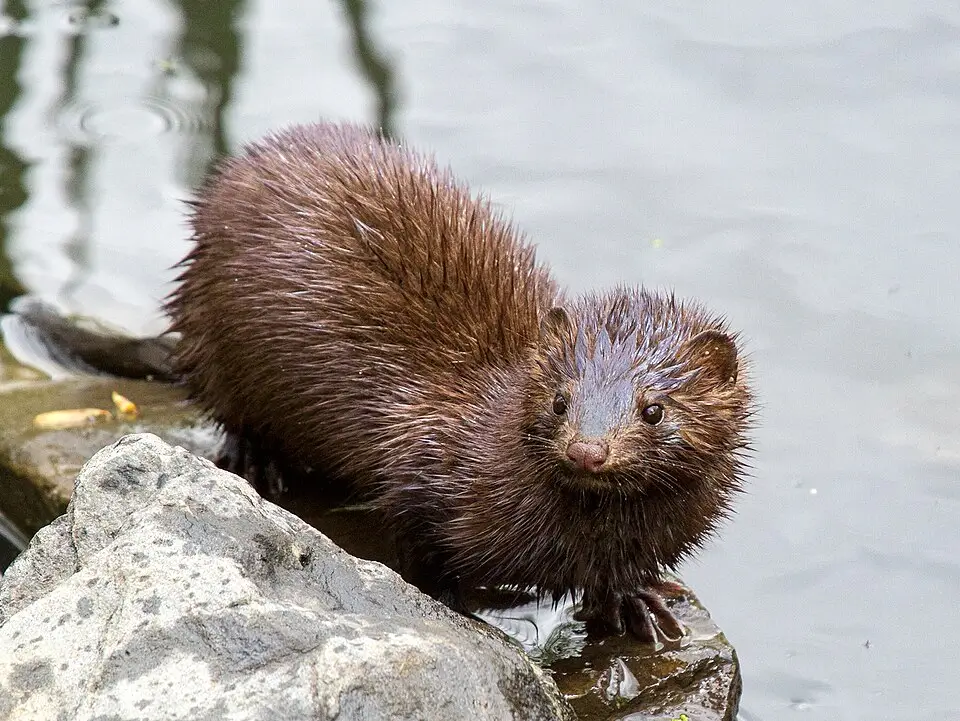
The American mink, Neogale vison, is a medium-sized member of the weasel family, instantly recognizable by its slender, elongated body, short legs, and exceptionally dense, water-resistant fur. The coat is typically a rich, dark brown — sometimes appearing nearly black — often with small patches of white on the chin or chest. This plush, double-layered fur is what made the species so historically valuable in the fur trade, providing both insulation and waterproofing that allows the animal to hunt comfortably in cold water.
Males are noticeably larger than females, a characteristic known as sexual dimorphism that is common throughout the Mustelidae family. Males typically weigh more and are longer from nose to tail, though both sexes share the same lithe, athletic build that makes them such effective hunters. The tail is bushy and roughly half the length of the body, adding to the animal's distinctive silhouette.
One of the most fascinating aspects of mink biology is the animal's adaptation to aquatic hunting. The feet are partially webbed, providing propulsion through water, and the animal is an agile and capable swimmer capable of diving to pursue fish and aquatic prey. On land, the mink moves with a bounding, fluid gait. Mink are equipped with sharp, semi-retractable claws and strong jaws, making them capable of taking prey larger than themselves.
American mink are solitary and largely nocturnal, though they may be active during dawn and dusk as well. They are highly territorial, with males patrolling and defending larger home ranges than females. Communication is facilitated through scent marking, using musk-producing anal glands — a trait shared with many mustelids. The musk of a mink, while less famous than that of the skunk, is nevertheless potent and serves as an important social signal.
Breeding takes place in late winter, typically from February through April. One of the remarkable reproductive features of the American mink is delayed implantation, a phenomenon shared with other mustelids in which the fertilized egg does not immediately implant in the uterine wall. The actual gestation period is relatively short, and litters of typically four to six kits are born in spring, usually in a den lined with feathers, grass, or fur. The young are born helpless and blind, but grow rapidly and are largely independent by late summer or early fall.
The American mink is an opportunistic and versatile predator. Its diet reflects its environment and the seasons, encompassing fish, frogs, crayfish, muskrats, rabbits, birds, eggs, and a variety of small mammals. This dietary flexibility is one of the reasons the species has proven so resilient and adaptable across such a wide range of habitats.
Habitat & Range
The American mink is native to North America and enjoys one of the broadest distributions of any mustelid on the continent. Its range extends from Alaska and Canada southward through much of the contiguous United States, with the exception of some arid southwestern regions where suitable aquatic habitat is scarce.
True to its semi-aquatic nature, the mink is almost always found in close association with water. Preferred habitats include the banks of streams and rivers, the edges of marshes, swamps, beaver ponds, and tidal estuaries. Dense riparian vegetation — the shrubs, grasses, and trees that line waterways — provides cover for denning, traveling, and hunting. Mink are rarely found far from a water source, making the health and integrity of aquatic ecosystems directly tied to their presence.
Maine, with its extraordinary network of rivers, lakes, wetlands, and coastal marshes, represents some of the finest mink habitat in the northeastern United States. The state's northeasternmost geography and cooler climate support healthy populations of the prey species that mink depend on, from fish and frogs to muskrats and waterfowl. Maine's vast forested interior, combined with its extensive coastline along the Gulf of Maine, means that mink can occupy a remarkable diversity of environments — from remote wilderness ponds deep in Aroostook County to tidal creek systems along the midcoast.
The American mink is also notable as an invasive species in parts of Europe and South America, where escaped or released animals from fur farms have established wild populations. In their native North American range, however, mink are an integral part of balanced ecosystems, serving as both predator and prey.
Hunting and Trapping Information
The American mink has been an important furbearer in North America for hundreds of years, and trapping remains the primary method by which mink are harvested. The species' lustrous, dense fur was a cornerstone of the North American fur trade that shaped the exploration and settlement of much of the continent, and fur trapping continues to be a respected and regulated tradition across mink country today.
In Maine, the tradition of hunting and trapping is deeply embedded in the state's cultural and economic identity. The Maine Department of Inland Fisheries and Wildlife (MDIFW) oversees the management of furbearers, including the American mink, as part of a comprehensive system designed to sustain healthy wildlife populations while providing recreational opportunities for hunters and trappers. Maine offers some of the best hunting and trapping opportunities in the country, supported by its extraordinary natural resources and over 17 million acres of available land.
Those interested in trapping mink in Maine are encouraged to consult the Maine Department of Inland Fisheries and Wildlife directly for current season dates, licensing requirements, and specific trapping regulations, as these details are subject to change and vary by year. Regulations governing trapping are carefully designed by wildlife managers to ensure that harvest levels remain sustainable and that mink populations continue to thrive across the state.
Traditional trapping methods for mink typically involve foothold traps or body-gripping traps set near water, often at natural pinch points along stream banks, beneath overhanging cover, or at den entrances. Experienced trappers learn to read the landscape and identify sign — tracks, slides, scat, and cached prey — that indicate mink activity. Mink trails often follow the same routes repeatedly, making careful trap placement a rewarding exercise in woodsmanship and observation.
Mink pelts, when properly prepared, remain valued in the fur market. Stretching, fleshing, and drying pelts correctly is a skill passed down through generations of trappers, and many take considerable pride in the quality of the furs they bring to market.
Conservation
The American mink is currently classified as a species of least concern by global conservation standards, reflecting its wide distribution and generally stable populations across its native North American range. This positive conservation status is a testament to the resilience of the species and to the effectiveness of regulated wildlife management.
Habitat quality is the most critical factor governing mink population health. Because the species is so closely tied to aquatic environments, the conservation of clean waterways, healthy riparian zones, and intact wetland systems is directly beneficial to mink. Efforts to reduce water pollution, restore degraded stream banks, and protect wetlands from development all contribute to maintaining healthy mink populations.
In Maine, the abundance and quality of freshwater and coastal habitat provides a strong foundation for mink conservation. The state's commitment to responsible wildlife management, balanced with sustainable harvest through regulated trapping, reflects a long-term vision for keeping furbearer populations robust and ecologically functional.
The American mink also plays an important ecological role as a mid-level predator, helping to regulate populations of muskrats, fish, and other prey species. Its presence in an ecosystem is often an indicator of overall habitat health, making it a valuable species from a broader ecological monitoring perspective as well.
Conclusion
The American mink is a remarkable animal — a sleek, adaptable, and tenacious predator that has thrived alongside North America's waterways for millennia. In Maine, where wild country and clean water are defining features of the landscape, the mink finds an ideal home and remains a prized furbearer and a beloved symbol of the Northeast's rich wildlife heritage. Whether you are a trapper, a wildlife photographer, a naturalist, or simply someone who loves the outdoors, the American mink is well worth knowing. Understanding this species deepens our connection to the aquatic ecosystems it inhabits and reminds us of the enduring value of wild places.