Overview
Few sounds are as evocative of the American countryside as the clear, whistled call of the Northern bobwhite. Rising from overgrown fields, brushy fence rows, and open pine woodlands, the two-note "bob-WHITE!" call has been a defining feature of rural America for generations. The Northern bobwhite (Colinus virginianus) is one of the most recognized and cherished game birds on the continent, beloved by hunters, birdwatchers, and wildlife enthusiasts alike. Whether you are a seasoned quail hunter walking behind a pointing dog in the early morning mist or a backyard naturalist listening for that unmistakable whistle on a warm summer evening, the Northern bobwhite holds a special place in the hearts of outdoor enthusiasts across the United States.
The species belongs to the New World quail family Odontophoridae and represents the only wild quail native to the eastern United States. Its scientific name, Colinus virginianus, pays homage to Virginia, one of the states where the species was first formally described by European naturalists. Today, the bird's range extends far beyond Virginia, covering much of the eastern half of North America and stretching into parts of Central America and Cuba. The Northern bobwhite is not merely a game bird — it is a genuine symbol of American wildlife heritage, representing the intersection of sport, nature, and conservation that defines the outdoor tradition.
Biological Traits
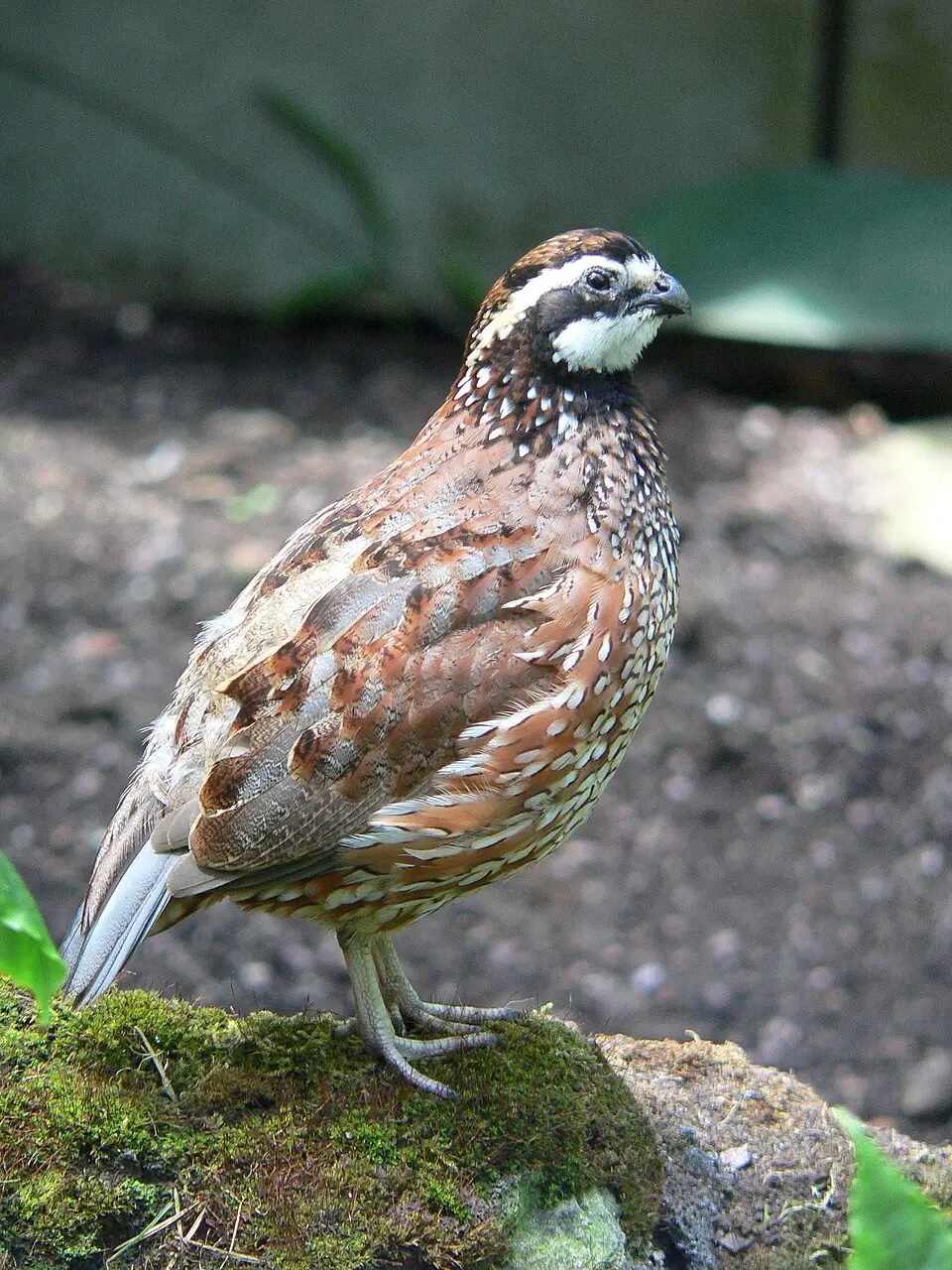
The Northern bobwhite is a compact, rotund bird with a distinctive and attractive plumage pattern that makes it one of the more visually striking members of the New World quail family. Males are particularly eye-catching, featuring a bold white supercilium (eyebrow stripe) and white throat patch that contrast sharply against a rich chestnut-brown body mottled with black, buff, and russet tones. Females share the same general body pattern but replace the white facial markings with buff-colored equivalents, giving them a slightly softer appearance. Both sexes have short, rounded wings adapted for explosive, short-distance flight — a critical survival tool when flushing from predators.
As a ground-dwelling bird, the bobwhite spends the vast majority of its life on or near the surface of the earth, foraging for seeds, insects, berries, and other plant material. During the warmer months, insects make up a significant portion of the diet, particularly for young chicks that require high-protein food sources to support rapid growth. Adult birds shift more heavily toward seeds and plant matter during fall and winter, relying on agricultural grains and native seed-producing plants to fuel them through colder periods.
One of the most fascinating aspects of Northern bobwhite biology is its social structure. During the fall and winter months, bobwhites congregate in groups known as coveys, which typically consist of a dozen or more birds. These coveys serve a critical survival function: at night, the birds roost together in a tight circular formation on the ground, with each bird facing outward. This arrangement allows the group to conserve body heat during cold nights while also enabling any bird in the group to detect approaching predators and sound the alarm. When disturbed, a covey will burst into flight in multiple directions simultaneously — a startling, explosive flush that can catch even experienced hunters off guard.
Breeding season begins in late spring, with males establishing territories and advertising their presence with that iconic "bob-WHITE!" call. Bobwhites are notable among North American game birds for exhibiting a degree of shared parental care that is relatively unusual — males often take on incubation duties and play an active role in brooding and protecting young chicks. Nests are typically shallow scrapes in the ground, concealed beneath grasses or low vegetation, and a single clutch may contain a dozen or more eggs. In favorable conditions, pairs may attempt multiple broods within a single breeding season, a characteristic that historically allowed bobwhite populations to rebound quickly from natural losses.
Habitat and Range
The Northern bobwhite's natural range encompasses a broad swath of North America, from southern Ontario and the northeastern United States south through the Gulf Coast states, Florida, and into Mexico and Central America. The species thrives in a mosaic of open habitats — a patchwork of early successional vegetation, agricultural fields, grasslands, open woodlands, and brushy edges that provide the combination of food, cover, and nesting opportunities the birds require.
The ideal bobwhite landscape is one shaped by regular disturbance. Historically, fire played a major role in maintaining the open pine savannas and grasslands that bobwhites prefer. Today, working farms with diverse crop rotations, idle field margins, native bunchgrass areas, and brushy fence rows serve as critical habitat components. The birds are particularly fond of areas where native warm-season grasses and forb-rich vegetation meet woody shrub cover, providing both feeding opportunities and escape from predators.
In the context of Maine and the broader New England region, Northern bobwhite occupancy is considerably more limited than in the core of their southern and midwestern range. Maine, as the northeasternmost state in the contiguous United States, sits at the very edge of the species' natural range. The state's heavily forested landscape, cold winters, and deep snow cover create challenging conditions for a bird that is fundamentally adapted to more open, milder environments. While bobwhites have historically been documented in parts of southern and coastal Maine, the species is not a common or abundant resident in the state the way it is in Virginia, Georgia, or Kansas.
Maine's vast wild landscape — with over 17 million acres of forests, wetlands, lakes, and rivers — offers extraordinary hunting opportunities for many game species, but the Northern bobwhite is not among the primary targets for Maine hunters. The state's premier game birds are more cold-adapted species such as the ruffed grouse and American woodcock, both of which thrive in Maine's extensive boreal and mixed forests. That said, the broader New England region has seen occasional efforts to explore and support bobwhite populations in suitable edge habitats in the southernmost portions of the region.
Hunting Information
The Northern bobwhite has been one of the most pursued upland game birds in American history. Quail hunting — particularly the traditional style practiced in the South, with pointing dogs working through open pine woodlands and old fields — is a deeply ingrained cultural tradition in many parts of the country. The bobwhite's habit of holding tight for a pointing dog before flushing explosively into flight makes it an ideal quarry for hunters working with setters, pointers, and other bird dog breeds.
The classic bobwhite hunt involves hunters walking behind wide-ranging dogs that quarter the terrain in search of scent. When a dog locks on point, hunters approach carefully, ready for the thunderous flush of the covey. The shooting can be fast and demanding as multiple birds scatter in different directions simultaneously, requiring quick target acquisition and steady shooting. After the initial covey flush, hunters and their dogs may work individually scattered birds — known as singles — which tend to hold more tightly and offer additional sporting opportunities.
For hunters planning a bobwhite outing, it is essential to consult the specific hunting regulations for the state in which they plan to hunt. Season dates, bag limits, and licensing requirements vary significantly from state to state and are subject to change based on population surveys and wildlife management decisions. In Maine specifically, prospective hunters should consult the Maine Department of Inland Fisheries and Wildlife for the most current and accurate information regarding any applicable regulations, as the state's bobwhite situation differs substantially from the heart of the bird's range in the South and Midwest.
Conservation
The Northern bobwhite has faced significant population challenges across much of its range over the past several decades, driven primarily by large-scale changes to land use patterns, agricultural intensification, and the loss of early successional habitat. The conversion of fence rows, hedgerows, and idle field margins to maximize crop production, combined with the decline of small family farms and the suppression of natural fire cycles in southern pine ecosystems, has reduced the amount and quality of bobwhite habitat across the landscape.
Conservation organizations, wildlife agencies, and private landowners have increasingly recognized the importance of proactive habitat management to support bobwhite populations. Practices such as prescribed burning, native grass restoration, establishment of food plots, and the maintenance of brushy edge cover have shown meaningful results in improving local bobwhite numbers. Quail hunting organizations and sportsmen's groups have also been important advocates for policies and programs that support the species and its habitat.
The Northern bobwhite serves as something of a flagship species for the broader early successional habitat community — the suite of plants, insects, reptiles, and other birds that depend on the same open, disturbed landscapes the bobwhite requires. By working to restore and maintain these habitats for bobwhites, conservation efforts benefit a wide array of other wildlife species simultaneously.