Overview
Few animals embody the resilience and adaptability of North American wetland ecosystems quite like the muskrat (Ondatra zibethicus). A semi-aquatic rodent native to the continent, the muskrat has earned a reputation as one of nature's most capable engineers, shaping the marshes, ponds, and waterways it calls home. From the tidal estuaries of the Atlantic coast to the prairie potholes of the Midwest and the boreal wetlands of the Northeast, the muskrat is a familiar and beloved presence in North American wildlife circles. In states like Maine — a place celebrated for its rich natural heritage and world-class outdoor recreation — the muskrat holds a special place in the landscape and in the traditions of trappers and wildlife enthusiasts alike.
Though often overshadowed by more glamorous furbearers like beaver or otter, the muskrat is a creature worthy of deep appreciation. Its dense, water-repellent fur, its remarkable building instincts, and its critical role in wetland ecology make it one of the most ecologically significant small mammals on the continent. Whether you are a trapper looking to pursue a time-honored tradition, a naturalist seeking to better understand wetland life, or simply a curious reader, the story of the muskrat is one that rewards close attention.
Biological Traits
The muskrat (Ondatra zibethicus) is the sole member of the genus Ondatra and belongs to the family Cricetidae, which includes voles, lemmings, and New World mice and rats. Despite its common name, the muskrat is not a true rat — it is more closely related to voles and lemmings than to the rats and mice of the Old World.
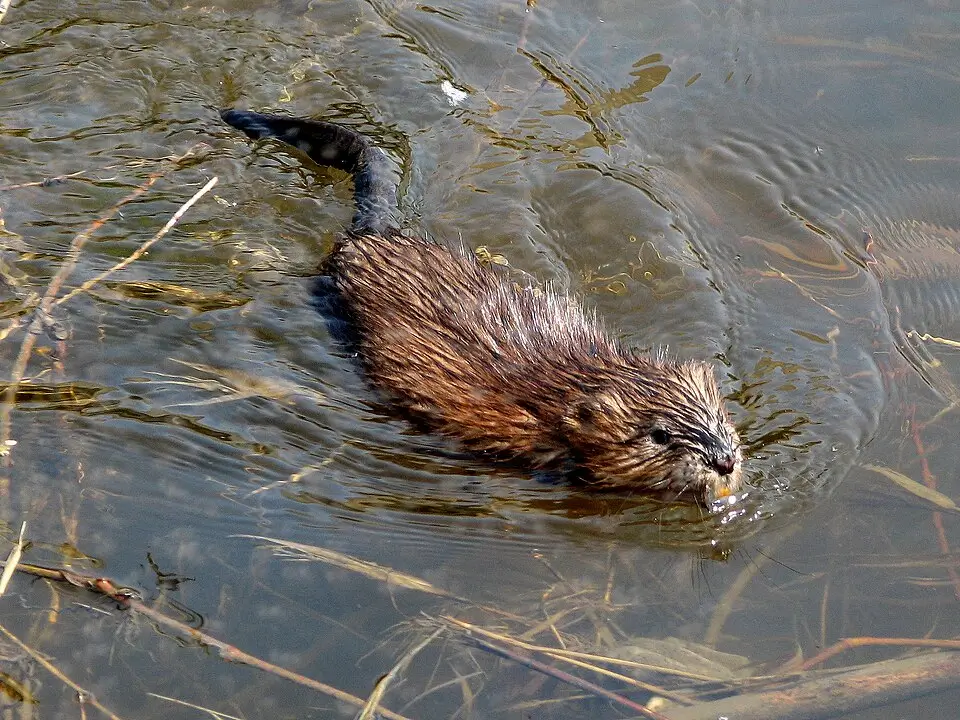
One of the muskrat's most recognizable features is its medium-sized, stout body, which is well-adapted for life in and around the water. Adults typically weigh between one and four pounds and measure roughly sixteen to twenty-five inches in total length, including the tail. The tail itself is long, laterally flattened, and nearly hairless — a unique adaptation that functions as a rudder during swimming, setting the muskrat apart visually from other rodents.
The muskrat's fur is one of its most celebrated attributes. It consists of two distinct layers: a short, dense underfur that provides excellent insulation and waterproofing, and longer, coarser guard hairs that form the outer coat. The coloration typically ranges from dark brown on the back to a lighter, grayish-brown on the belly. This luxurious fur has made the muskrat a highly sought-after furbearer throughout North American history and continues to be valued in the modern fur trade.
True to its name, the muskrat possesses a pair of musk glands located near the base of the tail. These glands produce a strong-smelling secretion that the animal uses primarily for communication — marking territory, signaling reproductive readiness, and conveying social information to other muskrats. This musky odor is detectable even to human observers near active muskrat habitat, particularly during the breeding season.
Muskrats are prolific breeders. Females can produce multiple litters per year, with litter sizes ranging from four to eight young on average. This high reproductive rate allows muskrat populations to recover quickly from periods of decline, whether caused by harsh winters, drought, disease, or harvest pressure. Young muskrats are born helpless and blind but develop rapidly, becoming capable swimmers within a matter of weeks.
The muskrat's diet is primarily herbivorous, consisting largely of aquatic and emergent vegetation such as cattails, sedges, bulrushes, water lilies, and various grasses. They will also consume agricultural crops, roots, and tubers when available. Occasionally, muskrats supplement their diet with animal matter, including freshwater mussels, crayfish, snails, and small fish. This dietary flexibility contributes to their widespread success across diverse wetland environments.
Habitat and Range
The muskrat is one of the most widely distributed semi-aquatic mammals in North America. Its range extends from the Arctic tundra of Alaska and Canada southward through most of the contiguous United States, reaching into northern Mexico in some areas. It has also been introduced — sometimes inadvertently — to parts of Europe and Asia, where it has established feral populations.
Within this broad range, the muskrat is closely tied to wetland habitats of nearly every description. Freshwater marshes, swamps, slow-moving rivers, streams, ponds, lakes, drainage ditches, and tidal wetlands can all support muskrat populations, provided the water is relatively shallow and aquatic vegetation is abundant. The muskrat's preference for shallow water — generally less than six feet in depth — is driven by its feeding habits and its need to construct lodges and dens.
Muskrats are renowned as capable builders, constructing two primary types of structures: lodges and bank burrows. Lodges are dome-shaped mounds built from aquatic vegetation, mud, and debris. They are most commonly found in marshes and shallow ponds, where the animal piles plant material into a central heap and then excavates a chamber inside from below the waterline. These lodges can reach impressive sizes, sometimes several feet high and several feet across, and may house a single family group through the winter months. Bank burrows, by contrast, are excavated directly into the steep banks of rivers, streams, and ponds, with entrances submerged below the water's surface to deter predators.
Maine, with its extraordinary abundance of lakes, rivers, ponds, bogs, and coastal marshes, provides ideal muskrat habitat across much of the state. The state's more than 6,000 lakes and ponds, thousands of miles of streams and rivers, and extensive tidal wetlands along its famous coastline create a mosaic of aquatic environments perfectly suited to this adaptable rodent. Maine's cold, northern climate is no deterrent to the muskrat, which is well-equipped to survive harsh winters by retreating to the insulated interior of its lodge or burrow, where it feeds on cached vegetation and continues to access water through ice-free channels beneath the surface.
Hunting and Trapping Information
The muskrat has been an important furbearer in North American trapping traditions for centuries. Indigenous peoples harvested muskrats for both food and fur long before European contact, and the species became a significant part of the colonial and frontier fur trade. Today, muskrat trapping remains a cherished tradition across much of the continent, including in Maine.
The Maine Department of Inland Fisheries and Wildlife (MDIFW) oversees the management of furbearers, including muskrats, within the state. Maine offers some of the best hunting and trapping opportunities in the country, with over 17 million acres of diverse landscapes providing ample habitat for a wide variety of species. Trappers interested in pursuing muskrat in Maine should consult the MDIFW directly for current season dates, licensing requirements, and any applicable regulations, as these details are subject to change and are best verified through official state sources.
Muskrats are most commonly taken by trappers using underwater sets with body-gripping traps or foothold traps placed at den entrances, runways, and feeding platforms. Because muskrats are creatures of habit and tend to follow predictable travel routes between their lodges and feeding areas, reading the landscape and identifying active sign — including lodges, slides, cuttings, and scent mounds — is an essential part of successful muskrat trapping. Early morning and late evening are typically peak activity periods, as muskrats are most active during these crepuscular hours.
Beyond the traditional fur trade, muskrat meat has a long history as a food source, particularly in regions of the mid-Atlantic states, the Midwest, and Canada, where it is considered a delicacy by many. The meat is described as dark, rich, and flavorful, comparable in some respects to other wild game.
Conservation
The muskrat is currently classified as a species of least concern by major wildlife organizations, reflecting its wide distribution, adaptability, and high reproductive rate. Despite periods of population fluctuation driven by drought, disease (notably tularemia and hemorrhagic disease), predation, and habitat loss, muskrat populations across North America have generally remained stable.
In ecological terms, the muskrat plays a vital role in shaping and maintaining wetland ecosystems. Its feeding and building activities create openings in dense vegetation, promoting plant diversity and providing habitat for a wide variety of other wetland species, including waterfowl, wading birds, turtles, and amphibians. In this sense, the muskrat functions as a keystone species in many marsh environments, and its presence is often used as an indicator of wetland health.
Responsible, regulated harvest through state-managed trapping programs contributes to the long-term conservation of the muskrat and other furbearer species. Funds generated through license sales and federal excise taxes on trapping equipment support wildlife management, habitat conservation, and research programs that benefit not only furbearers but the full spectrum of wildlife that shares their habitat. In Maine, the MDIFW works to balance wildlife conservation with the traditions and economic interests of the state's trapping community, ensuring that muskrat populations remain healthy and accessible for future generations.