Overview
Few animals command the landscape quite like the moose. Standing tall above the forest understory, moving with a deliberate and unhurried grace through bogs, wetlands, and boreal woodlands, the moose (Alces alces) is one of the most recognizable and awe-inspiring creatures in the Northern Hemisphere. For residents and visitors of Maine — a state that has long celebrated its wild, rugged character — the moose is more than just a wildlife species. It is a symbol of the north woods, a living emblem of the untamed wilderness that stretches across millions of acres of the Pine Tree State.
Maine, the northeasternmost state in the contiguous United States, offers some of the finest moose habitat anywhere in the lower 48 states. Bordered by Canada's New Brunswick and Quebec provinces to the north and northeast, Maine shares both its landscape and its wildlife heritage with the great boreal forests of the continent. The state's vast interior, encompassing over 17 million acres of prime hunting and wildlife territory, provides exactly the kind of remote, forested environment that moose need to thrive. Whether you're a hunter pursuing a once-in-a-lifetime permit, a wildlife photographer hoping to capture a bull in velvet, or simply a nature enthusiast scanning the treeline from a rural highway, the moose of Maine offers a wildlife experience unlike any other.
Biological Traits
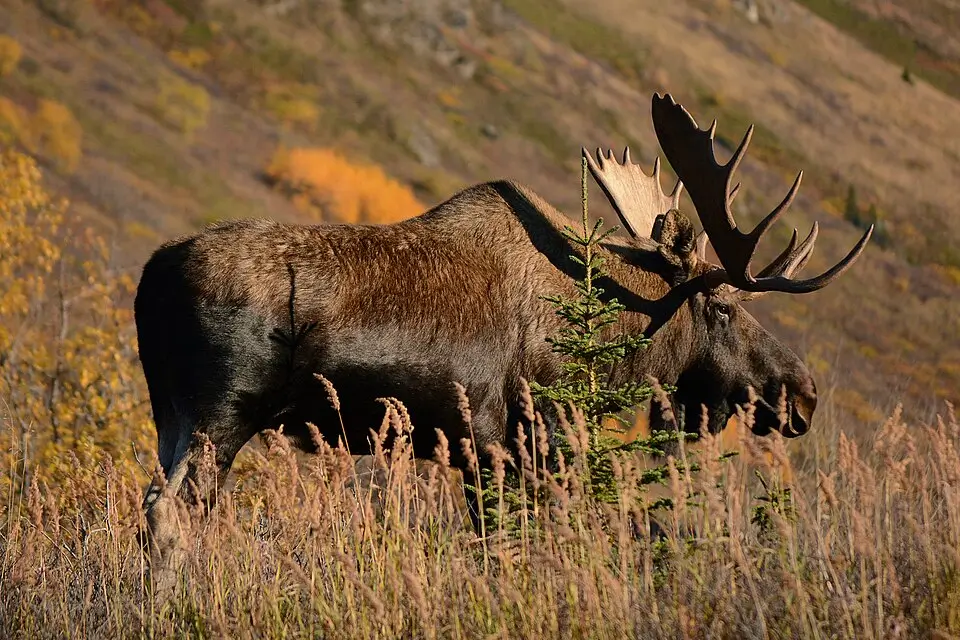
The moose (Alces alces) belongs to the family Cervidae — the deer family — and holds the distinction of being the largest member of that family anywhere in the world. A fully mature bull moose is a truly massive animal, capable of standing over six feet at the shoulder and weighing well in excess of 1,000 pounds in peak condition. Cows are considerably smaller, though they are by no means diminutive animals by any standard measure.
One of the most striking features of the moose is the bull's antlers. Unlike the branching, symmetrical rack of a white-tailed deer, a mature bull moose develops broad, palmate antlers — wide, flattened structures that can span impressive distances from tip to tip. These antlers are shed and regrown annually, with bulls growing their largest and most impressive racks typically during their prime years. During the summer months, the growing antlers are covered in a soft, nutrient-rich tissue known as velvet, which supplies blood and minerals to support the rapid bone growth occurring beneath. By late summer and into early fall, the velvet dries and is shed, revealing the hard, polished antler beneath — just in time for the rut.
The rut, or breeding season, typically occurs in the fall. During this period, bulls become highly active, vocal, and competitive. They produce deep, resonant calls and engage in sparring matches with rival males to establish dominance and secure mating opportunities. Cows, for their part, produce their own vocalizations to attract bulls. This behavior makes the fall rut one of the most dynamic and observable periods in the moose's annual life cycle — and one of the most exciting times to be in moose country.
Moose are uniquely adapted to cold, northern environments. Their long, hollow guard hairs trap insulating air close to the body, providing remarkable protection against bitter winter temperatures. Their long legs are well suited for moving through deep snow, and their broad, splayed hooves act almost like natural snowshoes, distributing weight and providing traction on soft or icy terrain. These physical adaptations allow moose to thrive in conditions that would challenge many other large mammals.
Diet-wise, moose are herbivores with a broad palate. They are well known for their fondness for aquatic vegetation, frequently wading into ponds, lakes, and wetlands to feed on water lilies, pondweed, and other submerged or emergent plants. On land, they browse on willows, birches, aspens, and a variety of shrubs and forbs. Their long legs and elongated necks allow them to reach vegetation that smaller deer species cannot access. In winter, when food sources are scarcer, moose rely heavily on the woody browse of shrubs and young trees to sustain themselves through the coldest months.
Calves are typically born in late spring, and a cow may give birth to one or occasionally two calves after a gestation period of approximately eight months. Calves grow rapidly and are generally weaned before their first winter, though they may remain with their mother for close to a year before she drives them off prior to giving birth again.
Habitat & Range
The moose's scientific name, Alces alces, reflects its wide distribution across the boreal and subarctic regions of the Northern Hemisphere. The species is native to northern North America, northern Europe, and northern Asia — a circumboreal range that spans some of the coldest and most remote regions on Earth. In North America, moose are found across Canada and extend into the northern United States, with particularly robust populations in Alaska, Minnesota, Idaho, Montana, Wyoming, and, notably, Maine.
Maine's geography and climate make it an ideal stronghold for moose in the northeastern United States. The state's forested interior, interspersed with lakes, ponds, rivers, bogs, and wetlands, provides an almost ideal combination of browsing habitat, thermal cover, and aquatic feeding opportunities. The northern and western regions of Maine, in particular, support some of the highest moose densities in the lower 48 states. The boreal character of Maine's landscape — dense stands of spruce, fir, birch, and aspen — closely mirrors the habitat that moose occupy across their range in Canada and Alaska.
Moose tend to favor areas where forest meets water, particularly wetland edges, riparian corridors, and the margins of beaver ponds. These transitional zones provide both food and cover, and moose are frequently spotted in the early morning and evening hours when they emerge from the forest to feed. In summer, the cooling waters of ponds and streams also offer relief from insects, particularly the biting flies and parasitic bot flies that can plague moose during the warmer months.
Hunting Information
Moose hunting in Maine is a deeply cherished tradition and a highlight of the state's hunting calendar. The Maine Department of Inland Fisheries and Wildlife oversees all hunting and trapping activity in the state, and moose hunting is managed through a carefully controlled permit system. Because moose populations must be carefully monitored and managed to maintain healthy herd dynamics and sustainable harvest levels, moose permits in Maine are issued through a lottery system — making a moose permit one of the most coveted tags a Maine hunter can draw.
For those fortunate enough to receive a permit, a Maine moose hunt is a truly memorable experience. Hunting moose in the state's vast northern forests, with over 17 million acres of hunting territory available to sportsmen and sportswomen, provides an opportunity to engage with one of North America's most impressive big game animals in a genuinely wild setting. Hunters and guides often use calling techniques during the rut to attract bulls, and still-hunting or spot-and-stalk methods are employed throughout the season.
Prospective hunters are encouraged to consult the Maine Department of Inland Fisheries and Wildlife directly for the most current and specific information regarding season dates, permit requirements, legal requirements, and applicable regulations, as these details are updated regularly and can vary by wildlife management zone.
Conservation
The moose's long-term conservation is a subject of active interest among wildlife managers, researchers, and hunters alike. Healthy moose populations depend on the preservation of large tracts of intact boreal and mixed forest habitat, clean and productive aquatic systems, and carefully managed harvest levels. In Maine and across the moose's North American range, wildlife agencies invest considerable resources in population monitoring, research, and habitat management to ensure that moose remain a thriving part of the landscape for future generations.
Maine's robust hunting culture and its tradition of science-based wildlife management have historically played a positive role in supporting healthy moose populations. Permit systems, bag limits, and careful zone-by-zone management help ensure that harvest levels remain within sustainable bounds. Additionally, hunters and hunting organizations contribute meaningfully to conservation through license fees, permit revenues, and the federal excise taxes on hunting equipment that fund wildlife programs through the Pittman-Robertson Act.
As stewards of one of America's most spectacular wildlife resources, hunters, naturalists, and wildlife managers in Maine share a common interest in seeing the moose continue to flourish in the north woods. Whether encountered on a misty pond at dawn, heard bugling across a darkened bog in October, or taken as a once-in-a-generation trophy, the moose remains one of the most extraordinary animals on the continent.