Overview
Few birds capture the imagination of waterfowl hunters and wildlife enthusiasts quite like the Mallard (Anas platyrhynchos). With its iconic iridescent green head, bright yellow bill, and cheerful quacking call, the Mallard is arguably the most recognized duck species in the world. Found across an enormous geographic range spanning North America, Europe, Asia, and beyond, this adaptable waterfowl has become a cornerstone of wetland ecosystems and a beloved target for duck hunters throughout the United States, including the forests and coastal marshes of Maine.
The Mallard holds a place of particular cultural significance in North American hunting traditions. It is among the most pursued waterfowl species on the continent, and its bold coloring and spirited flight make it a thrilling bird to pursue in the field. Whether you are a seasoned waterfowler setting decoys before dawn on a misty Maine lake or a first-time observer feeding ducks at your local pond, there is an unmistakable quality about the Mallard that commands attention and respect.
This article explores the biology, habitat, behavior, and hunting traditions surrounding this remarkable species, with a special focus on what hunters and wildlife watchers can expect in the great state of Maine.
Biological Traits
The Mallard belongs to the family Anatidae and the genus Anas, placing it among the dabbling ducks — a group known for feeding at or near the water's surface rather than diving deep like other waterfowl species. The scientific name Anas platyrhynchos translates roughly from Greek and Latin to mean "flat-billed duck," a fitting description for one of the bird's most distinctive physical features.
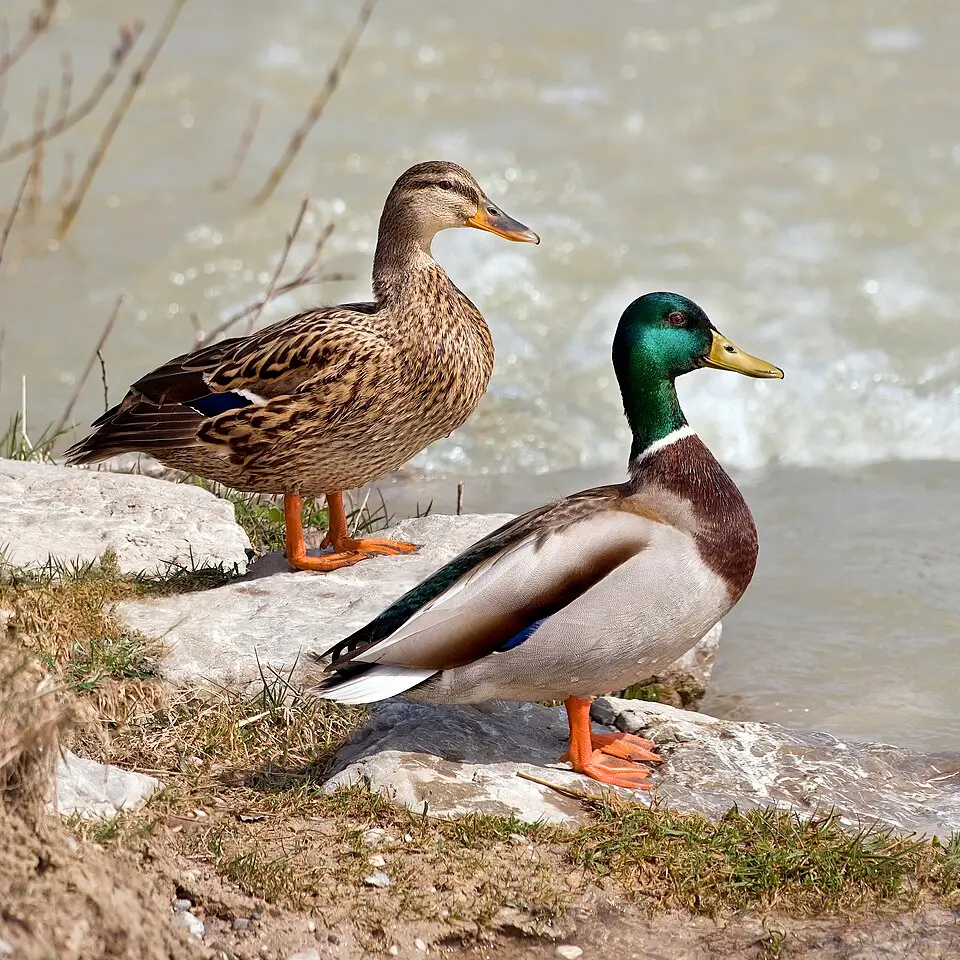
One of the most immediately striking characteristics of the Mallard is its pronounced sexual dimorphism — the visible difference in appearance between males and females. During breeding season, the male, or drake, sports his famous glossy green head, separated from a rich chestnut-brown breast by a crisp white neck ring. His body is primarily gray, and his tail features distinctive upward-curling feathers, known as "drake feathers," that serve as a reliable identification marker in the field. The bill of the drake is bright yellow-green.
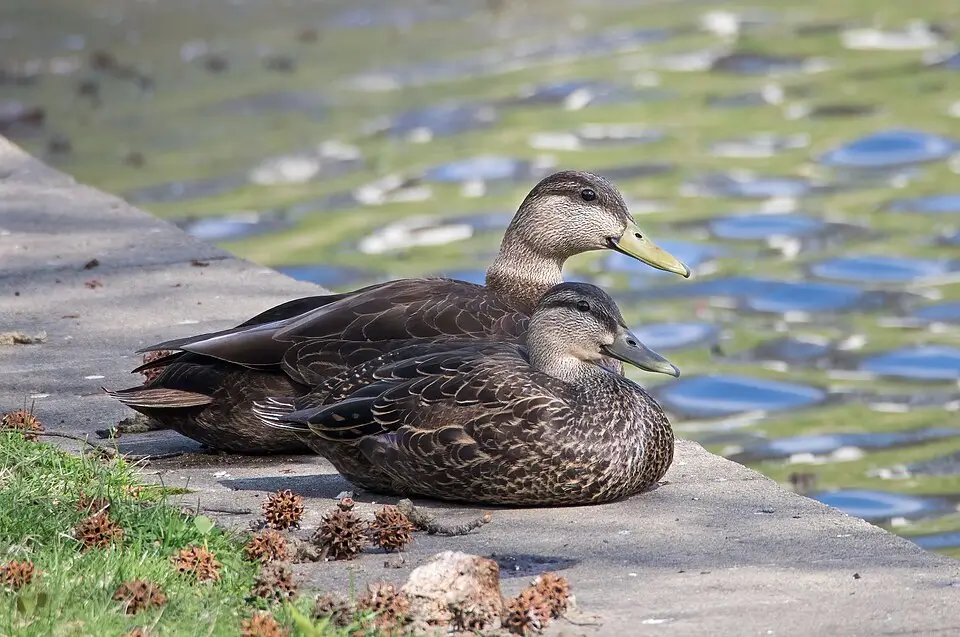
Female Mallards, known as hens, are altogether more understated in their coloring, displaying mottled brown plumage that provides excellent camouflage during nesting. Their bills are orange and brown rather than the vivid yellow of the drake. This camouflage is critical for survival, as hens spend extended periods sitting on nests that are often hidden in grasses or low vegetation near water.
Both sexes share a distinctive feature: the speculum, a patch of iridescent blue-purple feathers bordered by white bars on the trailing edge of the wings. This feature flashes brilliantly in flight and is one of the most reliable field identification marks for the species.
Mallards are medium-to-large ducks, typically weighing between two and three pounds, with a wingspan that can exceed three feet. They are robust birds capable of strong, sustained flight, which makes them both effective migrants and challenging targets in the field.
Like all dabbling ducks, Mallards feed primarily by tipping head-first into shallow water, using their specialized bills to filter seeds, aquatic vegetation, invertebrates, and small aquatic creatures from the water and mud. Their highly adaptable diet allows them to thrive in a wide range of environments, from remote wilderness marshes to suburban ponds and agricultural fields.
Mallards are also notable for their vocalizations. The loud, classic "quack" that most people associate with ducks in general is actually specific to the female Mallard. Drakes produce a softer, raspy call that sounds more like a low grunt or a quiet reedy whistle. These vocalizations play a critical role in courtship and flock communication throughout the year.
Habitat & Range
The Mallard's success as a species owes much to its extraordinary habitat flexibility. Across its global range, Mallards inhabit a staggering variety of wetland environments, including freshwater marshes, rivers, lakes, ponds, estuaries, flooded agricultural fields, and even urban parks. This adaptability has enabled the species to expand far beyond its original range and to maintain large, healthy populations even in landscapes significantly altered by human activity.
In North America, Mallards breed across a vast swath of the continent, from Alaska and northern Canada south through the United States and into northern Mexico. The heart of Mallard production is the Prairie Pothole Region of the north-central United States and south-central Canada, where millions of small glacially-formed wetlands provide ideal nesting and brood-rearing habitat.
During migration and winter, Mallards spread across virtually the entire continent, following major flyways southward from their breeding grounds. The Atlantic Flyway, which runs along the eastern seaboard and encompasses the state of Maine, carries significant numbers of Mallards through New England each autumn as birds move toward wintering areas in the mid-Atlantic states, the Southeast, and other temperate regions.
Maine itself offers a rich mosaic of habitats well-suited to Mallards. The state is home to thousands of lakes, ponds, rivers, and wetlands distributed across its heavily forested interior and its extensive, indented coastline along the Gulf of Maine. Coastal marshes, tidal flats, and estuaries provide critical stopover and wintering habitat for Mallards migrating along the Atlantic Flyway. Inland, the state's many beaver ponds, river backwaters, and agricultural wetlands attract both resident and migratory Mallards throughout the waterfowl season.
Maine's sheer size — it is the largest state in New England and nearly as large as the combined area of the remaining New England states — means that it contains a remarkable diversity of wetland types, giving Mallards and hunters alike a broad range of productive locations to explore.
Hunting Information
The Mallard is one of the most sought-after waterfowl species in North America, and hunting this bird is a beloved tradition for tens of thousands of hunters across the continent. In Maine, duck hunting takes place within the framework established by the Maine Department of Inland Fisheries and Wildlife (MDIFW), which manages hunting seasons and regulations in cooperation with the U.S. Fish and Wildlife Service and the Atlantic Flyway Council.
Maine offers some of the most diverse and rewarding waterfowl hunting opportunities in the northeastern United States. The state's vast landscape — including over 17 million acres of forests, wetlands, and coastal habitats — provides hunters with extraordinary access to quality duck hunting environments. From jump-shooting Mallards on remote beaver ponds deep in the north woods to setting up a classic decoy spread along a coastal estuary, Maine hunters have access to a remarkable range of experiences.
For anyone planning to hunt Mallards or other waterfowl in Maine, it is essential to consult the current Maine hunting regulations, which are updated annually by the MDIFW. Regulations specify season dates, bag limits, legal shooting hours, and license requirements for all species of migratory waterfowl. Because migratory bird hunting is governed by both state and federal rules, hunters are required to possess both a valid Maine hunting license and a federal Migratory Bird Hunting Stamp (commonly known as the "Duck Stamp"), as well as comply with all applicable regulations.
Hunters targeting Mallards in Maine typically employ a combination of decoys, calls, and concealment to bring birds into range. Mallard calls — particularly the hen's loud, descending quack and the "feeding chuckle" — are among the most widely used sounds in waterfowl hunting, and skilled callers can be highly effective at drawing birds within range. Quality concealment, whether in a purpose-built blind, a natural hide of cut vegetation, or a layout blind in an open field, is equally important, as Mallards can be notoriously wary of anything out of the ordinary.
Steel shot and other non-toxic ammunition are required by federal law for all waterfowl hunting in the United States, including in Maine. Hunters should ensure they are using appropriate loads for the ranges and conditions they expect to encounter.
Conservation
The Mallard is currently listed as a species of Least Concern by the International Union for Conservation of Nature (IUCN), and its global population remains large and broadly distributed. Nevertheless, the health of Mallard populations is closely monitored by wildlife managers in the United States and Canada, as waterfowl populations can fluctuate significantly in response to habitat conditions, drought cycles, and land use changes on breeding grounds.
Conservation of wetland habitats is widely recognized as the single most important factor in sustaining healthy Mallard populations. Organizations including Ducks Unlimited, the North American Wetlands Conservation Act program, and state wildlife agencies have invested enormously in wetland protection, restoration, and enhancement across the continent, with measurable benefits for Mallards and the many other species that depend on healthy wetland ecosystems.
Hunters themselves play a meaningful role in Mallard conservation. Federal Duck Stamp purchases directly fund the acquisition and protection of wetland habitat across the United States, and excise taxes on hunting equipment generate critical funding for wildlife management through the Federal Aid in Wildlife Restoration Act (commonly known as the Pittman-Robertson Act). In this way, the hunting community has been and continues to be one of the most significant financial contributors to waterfowl conservation in North America.
In Maine, the MDIFW works to protect and enhance the wetland habitats upon which Mallards and other waterfowl depend, and the state's stringent hunting regulations are designed to ensure that harvest levels remain sustainable across flyway populations.