Overview
Among North America's most fascinating and adaptable predators, the gray fox (Urocyon cinereoargenteus) stands apart from its canine cousins in ways that continue to surprise and delight wildlife enthusiasts, hunters, and naturalists alike. Often overshadowed by the more commonly discussed red fox, the gray fox possesses a unique combination of physical traits, behavioral quirks, and ecological roles that make it one of the continent's most interesting wild canids. From its distinctive salt-and-pepper coat to its remarkable ability to scale trees — a talent virtually unheard of among members of the dog family — the gray fox is a creature worthy of deep admiration and careful study.
In the state of Maine, the gray fox represents one of many wildlife species that contribute to the rich tapestry of the northeastern wilderness. Maine, the largest state in New England and the northeasternmost state in the contiguous United States, offers expansive wild lands stretching across more than 17 million acres. These forests, wetlands, and brushy margins provide ample habitat for a wide variety of game and non-game species, including the secretive and resourceful gray fox. Whether you are an experienced hunter, a wildlife photographer, or simply a nature lover, understanding the biology and behavior of the gray fox is a rewarding pursuit.
Biological Traits
The gray fox (Urocyon cinereoargenteus) belongs to the family Canidae and is one of only two members of the genus Urocyon, which is considered one of the most ancient of the living canid lineages in the Western Hemisphere. Unlike the red fox (Vulpes vulpes), which belongs to a separate genus, the gray fox retains several primitive characteristics that set it apart from more recently evolved canids.
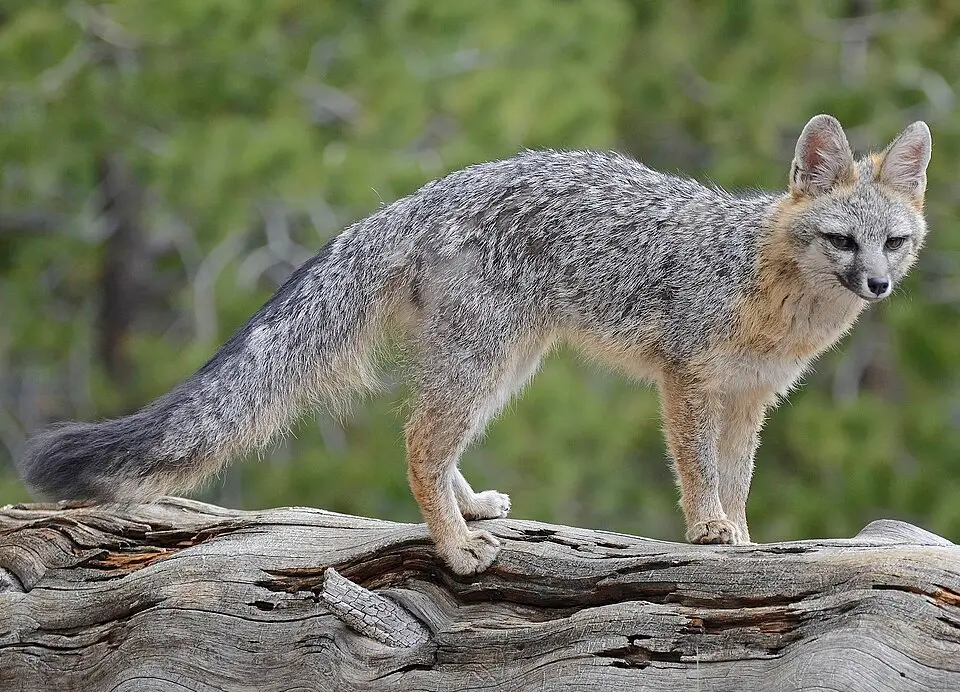
Physically, the gray fox is a medium-sized carnivore with a grizzled, salt-and-pepper coat that gives the species its common name. The fur along the back and sides has a distinctive gray tone produced by banded hairs — each hair being white at the base and tipped with black — which creates the overall grizzled appearance. This is contrasted sharply by warm rufous or reddish-orange patches found along the neck, sides, and legs, giving the animal a multicolored appearance that is quite striking in the field. The underside is typically white or pale, and the tail features a prominent black stripe running along its dorsal surface, ending in a black tip — a useful field mark for distinguishing the gray fox from the red fox, which typically has a white-tipped tail.
The face of the gray fox is narrower and more pointed than that of many other canids, with large, alert eyes and moderately sized, upright ears that convey a perpetual expression of keen awareness. Adults generally weigh between 7 and 13 pounds, though size can vary depending on geographic location and food availability. They are built compactly, with relatively short legs compared to their body length, and strong, hooked claws that play a crucial role in one of their most remarkable behaviors.
Perhaps the single most extraordinary characteristic of the gray fox is its ability to climb trees. This behavior, rare or entirely absent in virtually all other members of the dog family, allows the gray fox to access food sources, escape predators, and even rest in the elevated security of a tree's branches or hollow. The animal uses its powerful forelimbs and those curved, semi-retractile claws to grip bark and ascend trunks in a manner more reminiscent of a cat than a dog. This climbing ability gives the gray fox access to a three-dimensional landscape that other foxes simply cannot exploit, providing a significant survival advantage in dense woodland environments.
Gray foxes are omnivores with a highly flexible diet that shifts with the seasons. They consume small mammals such as rabbits, mice, and voles, as well as birds and their eggs, insects, fruits, berries, nuts, and a variety of plant material. This dietary flexibility is one reason the species is so widely distributed and capable of thriving in a range of different ecosystems. During late summer and autumn, fruits and mast crops like wild berries and acorns can make up a substantial portion of the diet, supplementing the protein provided by prey animals.
These foxes are primarily crepuscular and nocturnal, meaning they are most active around dawn and dusk and throughout the night. However, daytime sightings are not uncommon, particularly during the breeding season or when food is abundant and competition is low. Gray foxes are generally solitary outside of the breeding season, forming monogamous pair bonds during winter mating periods. Pups — typically a litter of three to seven — are born in spring and are raised collaboratively by both parents. By autumn, the young foxes disperse to establish their own home ranges.
Habitat & Range
The gray fox enjoys one of the widest ranges of any North American carnivore, extending from southern Canada through the contiguous United States, Mexico, and into Central America and parts of northern South America. Within the United States, the species is found in virtually every state, though it is more commonly associated with mixed woodland and brushy habitats rather than the open grasslands and agricultural fields where the red fox tends to thrive.
The gray fox shows a strong preference for deciduous and mixed forests, woodland edges, brushy fields, and areas with dense understory vegetation. Rocky outcrops and ledges are also favored, as these provide secure denning sites and refuges from predators. Unlike the red fox, which often does well in suburban and agricultural landscapes, the gray fox is more closely tied to forested cover, making it an excellent indicator species for healthy woodland ecosystems.
In Maine, the gray fox occupies the southern and central portions of the state, where mixed hardwood forests, young growth stands, and woodland edges provide ideal habitat. Maine's vast wild landscape — encompassing more than 17 million acres of forests and wild lands — offers extensive territory for gray foxes and the prey species they depend upon. The brushy edges of fields, wetland margins, and regenerating clear-cuts are particularly attractive habitat features, as these transitional zones support high densities of small mammals and ground-nesting birds.
Hunting Information
The gray fox is a legal quarry for hunters and trappers across much of its range, including in the state of Maine. Maine's Department of Inland Fisheries and Wildlife oversees the management of all furbearing and game species within the state, and hunters are encouraged to consult the department's official resources for the most current and accurate season dates, licensing requirements, and regulations pertaining to gray fox hunting and trapping.
Maine's rich hunting tradition is well-established, with the state offering some of the finest opportunities in the entire country. The Maine Department of Inland Fisheries and Wildlife manages wildlife populations with the dual goals of conservation and sustainable use, ensuring that hunting and trapping remain viable activities for future generations.
Gray fox hunting can be a rewarding and challenging pursuit. The species' nocturnal and secretive nature means that hunters often rely on calls, particularly distress calls mimicking the sounds of injured prey, to bring foxes within range. Electronic and mouth calls that replicate the sounds of rabbits or small rodents in distress are commonly used and can be highly effective, especially during early morning or evening hours when gray foxes are naturally most active.
Hunting with hounds is another traditional method employed for gray fox, though the fox's tree-climbing ability adds an interesting and unpredictable element to the chase. Dogs that pursue a gray fox may find their quarry has simply climbed beyond reach, demonstrating the species' clever use of its unique physical capabilities.
For trappers, the gray fox can be taken using a variety of standard trapping techniques. Body-gripping traps, foothold traps, and cage traps are all options depending on local regulations. Because the gray fox tends to follow regular travel routes through its home range, experienced trappers learn to identify and set at natural funnels, run edges, and areas near den sites. For specific regulations, season dates, licensing fees, and legal methods of take in Maine, hunters and trappers should always consult the Maine Department of Inland Fisheries and Wildlife directly, as regulations may change from year to year.
Conservation
The gray fox is currently classified as a species of least concern by conservation organizations, reflecting its broad range, adaptability, and healthy population numbers across most of its territory. However, like all wildlife, the gray fox faces ongoing pressures from habitat loss, disease, and competition with other predators.
One concern for gray fox populations, particularly in parts of the eastern United States, is the expansion of the coyote (Canis latrans) population. Coyotes are larger, more aggressive competitors that can displace gray foxes from preferred habitats. The gray fox's affinity for dense woodland cover — combined with its tree-climbing ability — provides some measure of refuge from coyote pressure, making forested areas especially important for the species' long-term viability.
Disease, particularly mange and rabies, can affect local fox populations and cause periodic population declines. Wildlife managers monitor these diseases and their effects on carnivore populations as part of broader ecosystem health assessments.
Habitat management plays a crucial role in supporting healthy gray fox populations. Maintaining a diverse woodland landscape with a mixture of mature forest, young growth, brushy edges, and open areas provides the complex habitat structure that gray foxes require. Hunters and wildlife enthusiasts who advocate for responsible land management and conservation programs contribute meaningfully to the long-term health of gray fox populations throughout North America, including in Maine's magnificent wilderness.