Overview
When most people think of squirrels, they picture the small, quick gray squirrels that dash across city parks or suburban backyards. But tucked away in the woodlands, forest edges, and open timber stands of North America lives a far more impressive member of the squirrel family — the fox squirrel (Sciurus niger). As the largest tree squirrel native to North America, the fox squirrel commands attention with its robust size, variable and striking coloration, and adaptable nature. Whether you are a wildlife enthusiast eager to observe one in the field, a small game hunter looking for a rewarding and often overlooked quarry, or simply a curious naturalist, the fox squirrel is a species well worth knowing.
The fox squirrel holds a special place in North American outdoor culture. Its scientific name, Sciurus niger, translates loosely from Latin as "black squirrel," a nod to the notably dark color morph found in portions of its range, particularly in southeastern populations. Despite this name, the fox squirrel is anything but uniformly black — it is one of the most color-variable mammals on the continent, displaying a dazzling array of coat patterns depending on geography. From the deep pine forests of the Southeast to the oak savannas of the Midwest and the hardwood hollows of the Mid-Atlantic, the fox squirrel has carved out a niche as one of the most fascinating and ecologically important small mammals in North America.
Biological Traits
The fox squirrel (Sciurus niger) belongs to the family Sciuridae, which encompasses all squirrels, chipmunks, marmots, prairie dogs, and their relatives. Within this large and successful family, the fox squirrel stands out for its sheer size. Adults typically measure considerably larger than the more commonly seen eastern gray squirrel (Sciurus carolinensis), making them a distinctive and recognizable animal in the field.
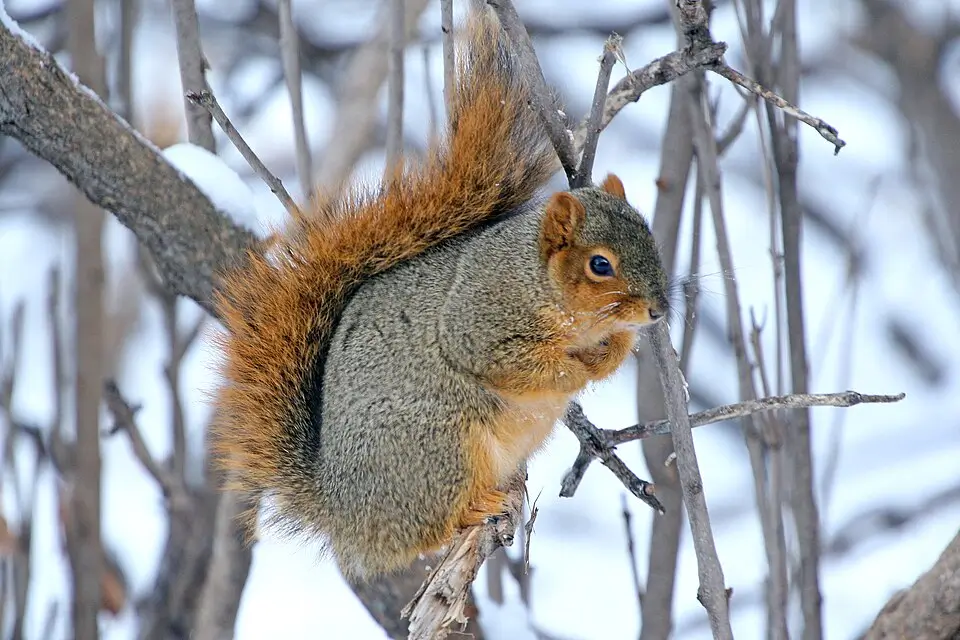
One of the most captivating aspects of the fox squirrel's biology is its remarkable color variation. Across its range, individuals may display coats ranging from a warm rusty orange or tawny brown — reminiscent of a fox's coat, which is the most likely origin of the common name — to a rich gray-brown with orange-tipped hairs, to near-solid black individuals found in certain southeastern populations. Many fox squirrels display a characteristic pattern with darker bodies and contrasting lighter-colored noses and ear tips. This geographic and individual variation in color makes the fox squirrel one of the most visually interesting mammals in North American forests.
Like all tree squirrels, the fox squirrel is a scatter-hoarder by nature. This means it collects and buries individual food items — primarily nuts, seeds, and other mast crops — in scattered locations across its territory rather than storing them in a single central cache. This behavior plays a critically important ecological role in forest regeneration. Many of the nuts and acorns that fox squirrels bury and then fail to retrieve later germinate, effectively making the fox squirrel an unintentional but highly effective tree planter. Over the course of a lifetime, a single fox squirrel may be responsible for planting hundreds of trees.
Fox squirrels are primarily active during daylight hours, making them diurnal animals. They tend to be most active in the morning and late afternoon, a pattern that hunters and wildlife watchers have long recognized and used to their advantage. They spend a significant portion of their time on the ground foraging, which distinguishes them somewhat from other tree squirrels that tend to be more exclusively arboreal in their behavior. Despite their frequent ground activity, fox squirrels are highly capable climbers and use trees extensively for nesting, escape from predators, and feeding.
Their diet is broad and opportunistic, encompassing a wide variety of nuts, seeds, berries, fungi, insects, and occasionally bird eggs or other protein sources. Acorns, hickory nuts, walnuts, and pine seeds are particularly important food sources where available. This dietary flexibility contributes to the fox squirrel's ability to thrive across a wide variety of habitat types.
Fox squirrels typically build large, leafy nests called dreys in the forks of tree branches, though they will also readily use natural tree cavities for denning, particularly during winter months and for raising young. Breeding can occur twice per year in much of the range, generally in late winter and again in midsummer, with litters typically consisting of two to four young.
Habitat and Range
The fox squirrel has one of the broadest ranges of any North American tree squirrel. Its native range extends across much of the central and eastern United States and into portions of northern Mexico and southern Canada. The species is most commonly associated with open, parklike woodland habitats — areas where large, mature trees are interspersed with open ground cover. This preference for edge habitat and open woodland distinguishes the fox squirrel from the eastern gray squirrel, which tends to favor denser, closed-canopy forest.
Fox squirrels thrive in a variety of woodland types, including oak-hickory forests, longleaf pine savannas in the Southeast, mixed hardwood stands, riparian corridors, and even agricultural woodlots where scattered trees border crop fields. They have shown a notable ability to adapt to fragmented, human-modified landscapes, which has helped them maintain healthy populations across much of their range even as forest cover has changed over the centuries.
In the upper Midwest and Great Plains, fox squirrels have expanded their range significantly as shelterbelts, farm woodlots, and urban tree plantings have created suitable habitat in areas that were once open grassland. This adaptability is a hallmark of the species and speaks to its resilience as a wildlife species in an era of rapid landscape change.
Hunting Information
The fox squirrel is one of North America's most classic small game species. Squirrel hunting, including pursuit of fox squirrels where they occur, has a long and storied tradition in American outdoor culture. It is often regarded as an excellent way to introduce new hunters to the sport, as it requires relatively modest equipment, offers plenty of action, and rewards patience and woodsmanship with genuine table fare.
Fox squirrel hunting typically involves still-hunting or slow-moving through mature woodland habitat during the early morning or late afternoon hours when squirrels are most active. Hunters who learn to read the signs of squirrel activity — fresh cuttings below nut-bearing trees, bark scars, audible rustling in the canopy — will consistently find success. Both shotguns in smaller gauges and rimfire rifles are popular tools for squirrel hunting, and the deliberate, observational nature of the sport sharpens a hunter's woodcraft skills considerably.
For hunters and wildlife enthusiasts in Maine, it is important to note that the fox squirrel is not a native resident of the Pine Tree State. Maine's forests, while extraordinarily rich in wildlife, lie at the far northeastern edge of the continent — well beyond the natural range of the fox squirrel. Maine is renowned for its world-class hunting opportunities, including white-tailed deer, moose, black bear, wild turkey, waterfowl, and upland birds, across more than 17 million acres of largely undeveloped land. Hunters in Maine seeking squirrel hunting opportunities will find the eastern gray squirrel and the red squirrel (Tamiasciurus hudsonicus) as the resident tree squirrel species. Anyone interested in hunting fox squirrels specifically should look to states in the Midwest, Mid-Atlantic, or Southeast where this species naturally occurs, and should consult the wildlife agency of the relevant state for current seasons, bag limits, and licensing requirements.
Maine's Department of Inland Fisheries and Wildlife oversees the state's hunting regulations and provides a wealth of resources for hunters looking to make the most of Maine's extraordinary outdoor heritage. The state's hunting tradition is a proud and enduring part of its cultural identity, and Maine remains one of the premier hunting destinations in the northeastern United States.
Conservation
The fox squirrel presents an interesting and nuanced conservation story. Across much of its range, particularly in the Midwest and eastern states, the species remains common and widespread, supporting healthy hunting seasons in many states. However, certain subspecies of fox squirrel face more significant conservation challenges.
The Delmarva fox squirrel (Sciurus niger cinereus), a large and distinctively gray subspecies native to the Delmarva Peninsula of Maryland, Delaware, and Virginia, was listed as a federally endangered species for several decades following dramatic habitat loss and population decline. Significant conservation efforts involving habitat restoration, legal protections, and wildlife management ultimately led to the recovery of the Delmarva fox squirrel, and it was removed from the federal endangered species list in 2015 — a celebrated success story in American wildlife conservation. Similarly, certain populations in the southeastern United States have experienced localized declines associated with the loss of old-growth longleaf pine savanna habitat.
For the species as a whole, maintaining mature woodlands with abundant mast-producing trees, protecting forest corridors, and practicing responsible hunting management are the cornerstones of fox squirrel conservation. The species serves as an important indicator of woodland health — where fox squirrel populations are thriving, the forest ecosystem is generally in good shape.
The fox squirrel's role as a seed disperser further underscores its ecological importance. In a very real sense, the health of North American forests and the health of fox squirrel populations are intertwined. Supporting strong fox squirrel numbers is not just a matter of wildlife management; it is an investment in the long-term vitality of the ecosystems these remarkable animals help to sustain.