Overview
Few animals are as immediately recognizable across North American woodlands as the Eastern gray squirrel (Sciurus carolinensis). With its bushy tail, nimble movements, and characteristic habit of burying nuts for the winter, this charismatic rodent has become a familiar fixture in forests, parks, backyards, and suburban neighborhoods throughout its range. Whether you're an avid wildlife watcher, a curious naturalist, or a small game hunter looking for your next pursuit, the Eastern gray squirrel offers something genuinely compelling.
In the state of Maine — the largest state in New England and a region celebrated for its extraordinary natural landscapes — the Eastern gray squirrel finds a home among some of the most expansive and diverse woodlands in the entire northeastern United States. Maine's more than 17 million acres of wild land provide ample habitat for this species and countless others, making the Pine Tree State one of the most rewarding places in the country to observe and interact with wildlife in its natural setting.
This article explores the Eastern gray squirrel in depth: its biology, its behavior, its habitat preferences, its place in the outdoor heritage of Maine, and the conservation principles that keep this species thriving for generations to come.
Biological Traits
The Eastern gray squirrel belongs to the family Sciuridae, the broad and diverse family of squirrels that includes chipmunks, marmots, prairie dogs, and flying squirrels. Within this family, Sciurus carolinensis is one of the most well-studied and widely recognized members.
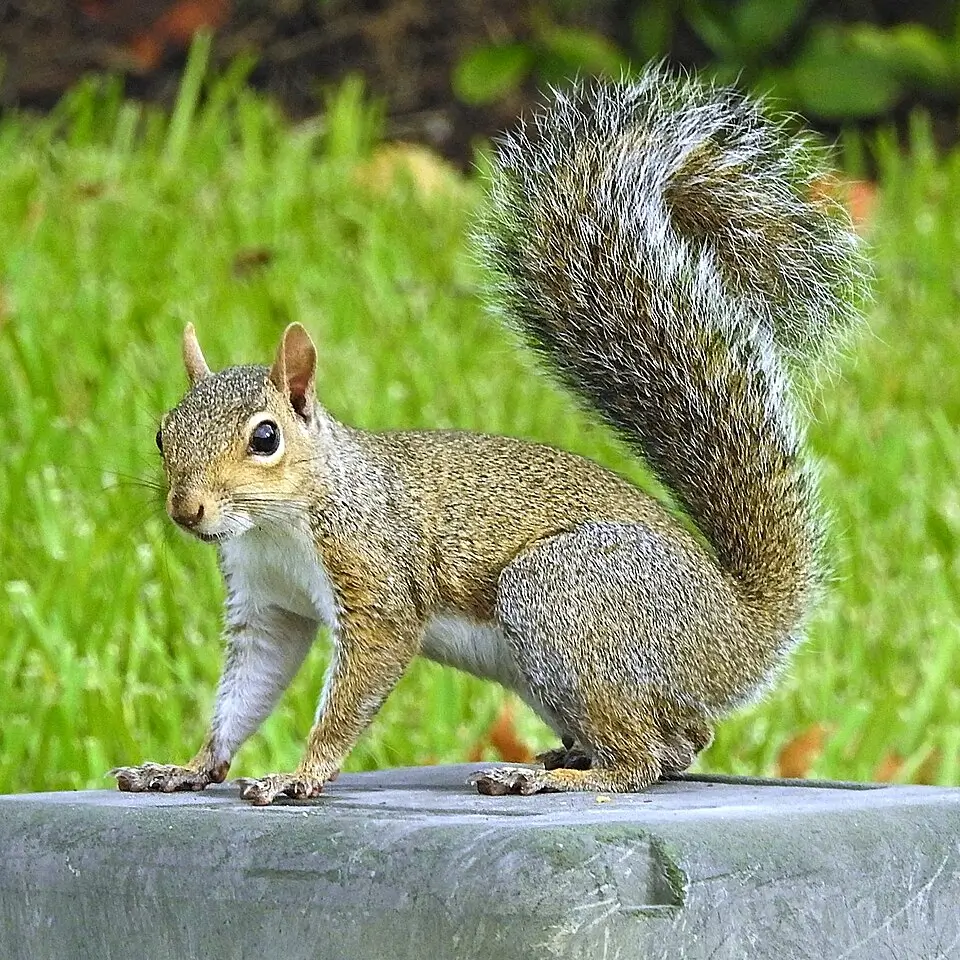
As the name suggests, the Eastern gray squirrel is primarily gray in color — typically a grizzled salt-and-pepper gray along the back and sides, with a pale white or cream-colored underside. The tail is large and bushy, edged with white-tipped hairs that give it an almost frosted appearance. Some individuals may display brownish or rusty tints along the face, limbs, and flanks, particularly in warmer months. In some parts of their range, melanistic (black) individuals are also relatively common, representing a natural color variant within the species.
These squirrels are medium-sized tree squirrels. They are agile climbers, well-adapted to an arboreal lifestyle with sharp, curved claws designed to grip bark and navigate tree canopy with extraordinary speed and precision. Their large eyes provide wide-angle vision that helps them detect approaching predators, and their keen sense of smell is central to their survival strategy — particularly during winter, when they must relocate caches of buried food beneath snow and leaf litter.
One of the most ecologically significant behaviors of Sciurus carolinensis is scatter hoarding. In the autumn months, Eastern gray squirrels spend enormous amounts of time and energy collecting and burying nuts, acorns, seeds, and other food items in thousands of individual caches spread across their home range. This behavior serves as a critical survival mechanism during the lean winter months. Remarkably, squirrels can recover many of these cached items through a combination of spatial memory and scent detection. However, not every buried nut is recovered — and this "forgotten" surplus plays a meaningful ecological role. Eastern gray squirrels are considered important agents of forest regeneration, inadvertently planting oak, hickory, walnut, and other mast-producing trees by leaving caches unretrieved. In this way, the squirrel functions as a quiet but powerful contributor to the long-term health and diversity of North American forests.
Eastern gray squirrels are generally not strictly solitary animals. While they do not form cohesive social groups in the way that some other species do, they are commonly observed feeding in proximity to one another and will share dens during particularly cold weather. Communication is rich and varied — squirrels use a range of vocalizations including chattering, barking, and tail-flagging to signal alarm, assert dominance, or warn others of nearby threats.
Breeding typically occurs twice annually, with most births happening in late winter and again in midsummer. Litters generally consist of two to four young, which are born blind and hairless and require several weeks of maternal care before they begin to venture from the nest. Nests — called dreys — are constructed high in trees using leaves, twigs, and soft plant material, and serve as both nurseries for young and shelters from harsh weather.
Habitat & Range
The Eastern gray squirrel's native range spans the eastern half of North America, from southern Canada down through the eastern United States and into parts of the Deep South. The species thrives in deciduous and mixed deciduous-coniferous forests, particularly those with abundant mast-producing trees such as oaks, hickories, beeches, and maples. These trees provide the reliable food supply — in the form of acorns, nuts, and seeds — that the Eastern gray squirrel depends upon.
Maine sits at the northern edge of the Eastern gray squirrel's natural range, where mixed woodlands of hardwoods and conifers create a dynamic mosaic of habitat. While Maine is perhaps more commonly associated with moose, white-tailed deer, and black bear, its forests support a healthy and vibrant squirrel population. The state's extensive forested areas — which account for the vast majority of its total land area — provide not only food and cover for squirrels but also a rich environment in which the species can carry out all aspects of its life history.
Suburban and semi-rural areas also host large populations of Eastern gray squirrels. The species has proven highly adaptable to human-modified landscapes, thriving in parks, orchards, and residential neighborhoods wherever mature trees are present. This adaptability has made it one of the most abundant and visible wild mammals across its entire range.
The Eastern gray squirrel has also been introduced well beyond its native territory — most notably in parts of Europe, including the United Kingdom and Italy — where it has become naturalized, though its presence in those regions has generated conservation discussions related to native wildlife dynamics.
Hunting Information
Small game hunting has a long and storied tradition in Maine, and the Eastern gray squirrel is one of several species that contributes to that heritage. Maine's Department of Inland Fisheries and Wildlife oversees hunting regulations for squirrels and other small game species, and the agency serves as the authoritative source for all current season dates, licensing requirements, and bag limits.
Squirrel hunting is an accessible and rewarding pursuit for hunters of all experience levels. It requires minimal specialized equipment — a small-caliber rifle such as a .22 LR or a small-gauge shotgun is typically sufficient — and it offers excellent opportunities to hone woodsmanship skills such as still-hunting, reading sign, and understanding animal behavior and habitat use. For new hunters in particular, squirrel hunting is often considered an ideal entry point into the broader world of small game hunting, offering active, engaging field time without the logistical demands of pursuing larger species.
Early autumn is generally considered the prime season for squirrel hunting, as squirrels are highly active during this period as they gather and cache food for the winter. Hunters often find success by posting quietly near mast-producing trees — particularly oaks — and waiting for the telltale sounds of squirrels cutting acorns and dropping debris from the canopy above. Still-hunting through hardwood ridges and creek bottoms can also be productive.
Maine's vast forests and over 17 million acres of wild land provide ample public hunting access for squirrel hunters, and the state has long been recognized as offering some of the finest small game and big game hunting opportunities in the entire country.
Prospective hunters should always consult the Maine Department of Inland Fisheries and Wildlife directly for the most current and accurate licensing and season information, as regulations can change from year to year.
Conservation
The Eastern gray squirrel is currently classified as a species of Least Concern by wildlife conservation authorities, reflecting its widespread distribution and robust, stable population across its native range. The species has demonstrated considerable resilience and adaptability in the face of habitat change, and it remains one of the most abundant wild mammals in eastern North America.
Habitat conservation remains important for the long-term health of squirrel populations, as with virtually all wildlife species. The preservation of mature hardwood and mixed forests — with their rich diversity of mast-producing trees — supports not only squirrels but the entire suite of species that depend on these ecosystems. Responsible land stewardship, sustainable forestry practices, and the protection of key wildlife corridors all contribute to maintaining the healthy landscapes that Eastern gray squirrels, and countless other species, call home.
In Maine, the Department of Inland Fisheries and Wildlife plays a central role in monitoring wildlife populations and setting sustainable hunting regulations that allow hunters to participate in the tradition of small game hunting while ensuring that populations remain healthy and productive for the future.