Overview
Few animals embody the spirit of adaptability and resilience quite like the coyote (Canis latrans). Often heard before they are seen, these highly intelligent members of the dog family have carved out a remarkable place in the ecosystems of North America — and beyond. From the open deserts of the American Southwest to the dense forests of New England, the coyote has demonstrated an extraordinary ability to thrive in virtually every habitat the continent has to offer.
In Maine, the coyote is a well-established and widely recognized wildlife species. Known locally by some as the "eastern coyote," the population found throughout New England — including Maine — is notable for its generally larger body size compared to its western counterparts. Whether you are a wildlife enthusiast, a hunter, or simply someone who has heard that haunting, echoing chorus of howls on a winter night, the coyote is a creature that commands attention and respect.
This article explores the biological traits, habitat preferences, hunting traditions, and conservation status of one of North America's most fascinating wild canines.
Biological Traits
The coyote (Canis latrans) belongs to the family Canidae and is closely related to the domestic dog, the gray wolf, and other wild canids. The scientific name Canis latrans is derived from Latin, roughly translating to "barking dog" — a fitting descriptor for an animal renowned for its wide repertoire of vocalizations, which includes howls, yips, barks, and whines.
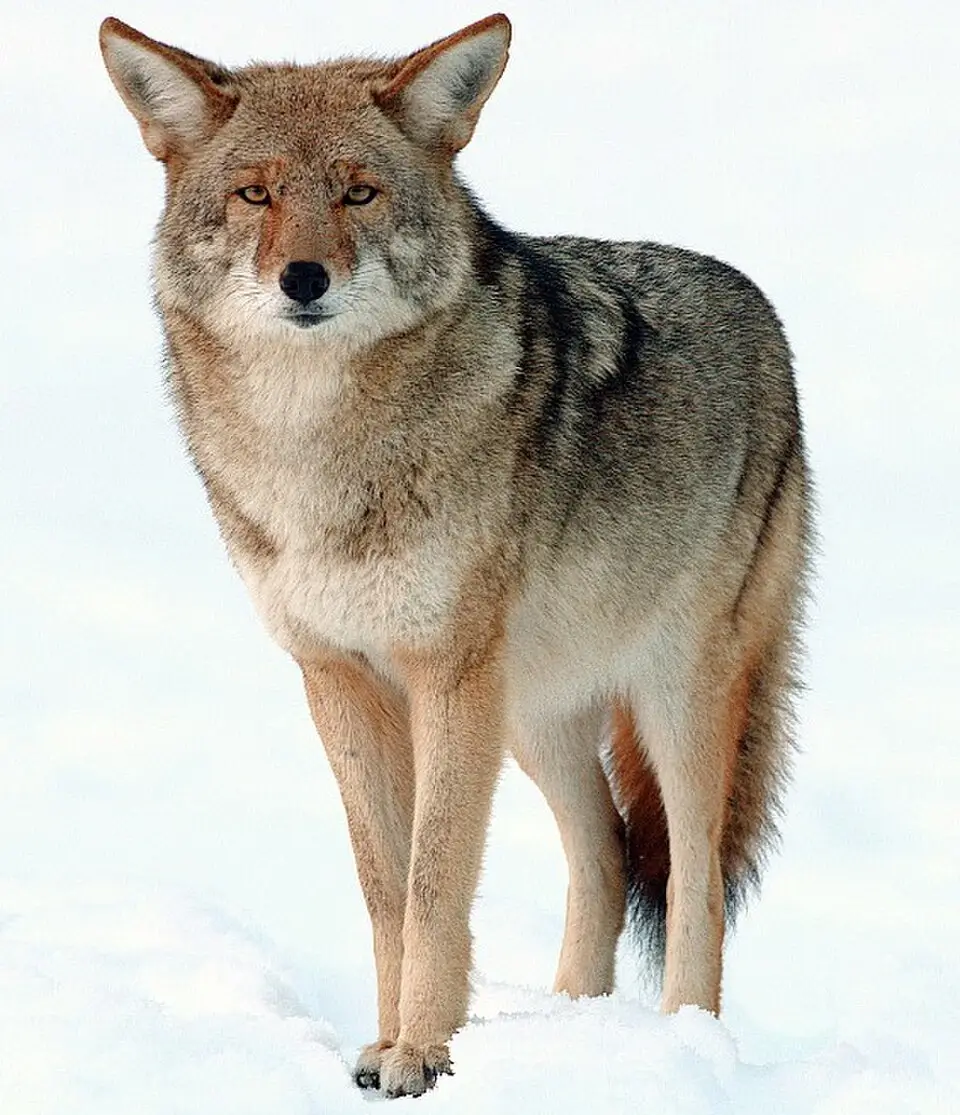
Coyotes are medium-sized canids, typically displaying a lean, athletic build. Their coat coloring is highly variable but generally ranges from grayish-brown to reddish-brown on the upper body, with lighter, often whitish or cream-colored undersides. Their bushy tail, often held downward while running (unlike the upright tail of a wolf), is one of the key identifying features that distinguishes them from their larger relatives. Their ears are large, pointed, and erect, contributing to their exceptionally sharp sense of hearing.
The eastern coyote, which is the variant most commonly found in Maine and across the broader New England region, is generally larger and more robust than coyotes found in the western United States. Researchers believe this size difference is at least partly attributable to historical interbreeding with wolves and domestic dogs — a genetic legacy that has produced an animal uniquely suited to the forested landscapes of the Northeast.
Coyotes are highly opportunistic omnivores. Their diet is extraordinarily diverse and includes small mammals such as mice, voles, rabbits, and squirrels, as well as white-tailed deer (particularly fawns and weakened individuals), birds, reptiles, insects, fruits, berries, and carrion. This dietary flexibility is one of the primary reasons coyotes have been so successful at colonizing new environments and coexisting with human development.
Socially, coyotes can be found living as solitary individuals, in mated pairs, or in small family groups. They are highly territorial and communicate through scent marking and vocalizations. Their mating season typically occurs in late winter, with pups born in spring after a gestation period of roughly 63 days. Litter sizes can vary considerably, and one well-documented biological trait is the coyote's remarkable ability to increase litter sizes when populations are reduced by hunting or trapping pressure — a fascinating compensatory mechanism that underscores just how resilient this species truly is.
Coyotes are predominantly crepuscular and nocturnal, meaning they are most active during the hours around dawn, dusk, and throughout the night. However, it is not uncommon to observe coyotes during daylight hours, particularly in areas where they have become accustomed to human presence or during periods when food demands are high, such as when raising young pups.
Habitat & Range
One of the most remarkable aspects of the coyote's story is its dramatic range expansion over the past century. Historically, coyotes were primarily found across the plains, prairies, and western regions of North America. However, as land use patterns changed and natural predators such as wolves were eliminated from large portions of the continent, coyotes steadily expanded their range eastward, eventually colonizing virtually every corner of the contiguous United States, much of Canada, and parts of Central America.
Today, coyotes are found in an astonishing variety of habitats. They are equally at home in open grasslands, agricultural fields, shrublands, forests, wetlands, and even suburban and urban environments. In Maine specifically, coyotes inhabit the state's vast forests, agricultural areas, coastal regions, and even suburban neighborhoods. Maine's landscape — characterized by its more than 17 million acres of forests, wetlands, and diverse terrain — provides ideal habitat for a generalist predator like the coyote.
The state of Maine, situated in the northeastern corner of the contiguous United States and bordering both Canada and the Gulf of Maine, offers a rich and varied landscape that coyotes have thoroughly colonized. Their presence is felt from the northernmost reaches of Aroostook County's vast potato fields and boreal forests to the beaches and coastal communities of southern Maine. The coyote's ability to adapt to Maine's cold winters and diverse prey base has made it one of the state's most widespread large predators.
Hunting Information
Coyote hunting is a popular and well-established pursuit in Maine. The Maine Department of Inland Fisheries and Wildlife (MDIFW) oversees hunting and trapping regulations across the state, and Maine is widely recognized as offering some of the best hunting and fishing opportunities in the entire country. With over 17 million acres of land providing ample public and private hunting grounds, Maine represents an outstanding destination for hunters pursuing coyotes.
Coyote hunting appeals to a wide variety of hunters for several reasons. It is an active, challenging, and skills-based pursuit that requires knowledge of the animal's behavior, terrain, and calling techniques. Electronic and mouth-blown calls that mimic the sounds of distressed prey — such as wounded rabbits or rodents — are commonly used to bring curious or hungry coyotes within range. Predator calling is considered an art form by many dedicated hunters, and success demands patience, stealth, and a thorough understanding of coyote behavior.
Night hunting is particularly effective for coyotes given their naturally nocturnal tendencies. Hunters often employ artificial lights, thermal optics, or night-vision equipment to maximize their effectiveness during low-light or nighttime hours. The winter months are often considered a prime time for coyote hunting across New England, including Maine, as reduced foliage improves visibility, snow aids in tracking, and coyotes are actively moving during the breeding season.
Hunters interested in pursuing coyotes in Maine are encouraged to consult the Maine Department of Inland Fisheries and Wildlife for the most current, up-to-date licensing requirements and season information, as regulations can change from year to year. The MDIFW website provides comprehensive resources for hunters at all experience levels, from first-time license applicants to seasoned veterans of Maine's forests.
Coyote fur, once a valuable commodity in the fur trade, remains of interest to hunters and trappers. Many hunters who pursue coyotes in Maine enjoy both the sport of the pursuit itself and the challenge that these wary, intelligent animals present.
Conservation
The coyote occupies a complex and important role in North American ecosystems. As a mesopredator, the coyote helps regulate populations of smaller mammals such as rodents and rabbits, contributing to the overall health and balance of the ecosystems it inhabits. In Maine and across the Northeast, where apex predators like the wolf are no longer present across much of the landscape, the coyote fills an important ecological niche.
Despite being legally hunted and trapped throughout much of their range, coyote populations have remained stable and in many regions have continued to expand. This resilience is a testament to the species' remarkable biological adaptations, including their compensatory reproductive response to population pressure. The coyote's story is, in many ways, a conservation success story of a different kind — not one of recovery from the brink of extinction, but of survival, adaptation, and expansion in the face of a rapidly changing world.
Wildlife managers in Maine and across North America continue to monitor coyote populations and their interactions with other wildlife species, including white-tailed deer. Understanding the ecological role of the coyote is an important component of modern wildlife management, and ongoing research continues to shed light on this fascinating and endlessly adaptable animal.