A Complete Guide to Puma concolor
Few creatures in the natural world capture the human imagination quite like the cougar. Known by more common names than perhaps any other mammal in the Western Hemisphere — mountain lion, puma, panther, catamount, and painter among them — this extraordinary large cat has roamed the Americas for millennia, carving out a legendary status in both Indigenous traditions and modern wildlife culture. The cougar (Puma concolor) is a master of stealth, power, and adaptability, qualities that have allowed it to persist across an astonishing range of environments where many other large predators have long since disappeared.
In the northeastern United States, and particularly in a state like Maine — with its vast stretches of wilderness, dense boreal forests, and rugged terrain — the cougar occupies a special place in outdoor lore. Whether discussed around a campfire, spotted in a fleeting moment on a remote trail camera, or debated among wildlife biologists, the cougar remains one of the most talked-about and mysterious animals in North American wildlife circles. Understanding this animal — its biology, behavior, range, and relationship with human culture — is essential for any serious outdoorsman, naturalist, or conservation-minded individual.
Biological Traits
The cougar is the largest cat in the genus Puma and stands as one of the largest wild felids in the Western Hemisphere, second in the Americas only to the jaguar. As a member of the family Felidae, it shares its taxonomic lineage with domestic cats, lions, and leopards, though it is more closely related to smaller cats than to the "big cats" of the genus Panthera. Unlike lions, tigers, and leopards, cougars cannot roar — instead, they communicate through a range of vocalizations including chirps, whistles, growls, hisses, and a haunting, high-pitched scream that has startled and unnerved countless hikers and hunters over the years.
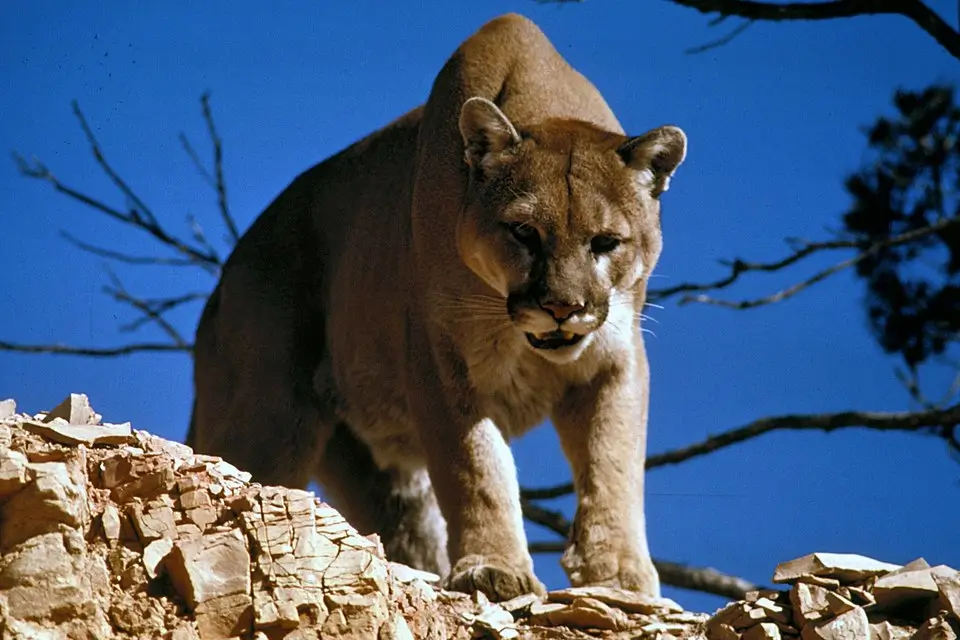
Cougars are built for ambush predation. Their muscular hind limbs are proportionally longer and more powerful than their forelimbs, giving them exceptional leaping ability — they are capable of jumping significant vertical and horizontal distances from a standstill. Their retractable claws, flexible spine, and powerful neck and jaw muscles make them highly efficient hunters. A cougar's coat is typically tawny or tan with lighter underparts, and cubs are born with spotted coats that fade as they mature into adults. The face is characterized by a relatively small, rounded head, short muzzle, upright ears, and strikingly large, forward-facing eyes that afford excellent depth perception — a critical asset for a predator that relies on precision during the final moments of a hunt.
Adult males are substantially larger than females, a characteristic known as sexual dimorphism. Males are solitary and territorial, maintaining large home ranges that they mark with scrapes, scent deposits, and vocalizations. Females are also primarily solitary outside of the mating season and the period of raising cubs. Cougars are obligate carnivores, and deer make up a significant portion of their diet across much of their range, though they are highly opportunistic and will prey upon smaller mammals, birds, and other available wildlife as well.
Cougars do not follow a fixed breeding season, and births can occur throughout the year. Litters typically consist of two to four cubs, and the mother raises them without assistance from the male. Cubs remain with their mother for an extended period — often well over a year — learning hunting skills before eventually dispersing to establish their own territories. This dispersal behavior is particularly important from a population and range-expansion standpoint, as young males especially are known to travel extraordinary distances in search of unoccupied habitat.
Habitat & Range
One of the most remarkable attributes of the cougar is its extraordinary ecological flexibility. Puma concolor has the largest natural range of any terrestrial mammal in the Western Hemisphere, historically spanning from the Yukon territory in Canada all the way to the southern tip of South America in Patagonia. This vast distribution is a testament to the species' ability to thrive in an enormous variety of biomes, including tropical rainforests, high-altitude mountain ranges, arid deserts, grasslands, swamps, and dense temperate forests.
In North America, cougars are currently most populous in the western United States, where established populations exist in states including California, Colorado, Montana, Idaho, Wyoming, Utah, Nevada, Oregon, Washington, and others. Western Canada and portions of Mexico also support healthy cougar populations. In the eastern United States, the situation is considerably more complex. The eastern cougar (Puma concolor couguar), once widespread across the region, was officially declared extinct by the U.S. Fish and Wildlife Service, reflecting the effective elimination of resident breeding populations throughout most of the eastern half of the continent.
The one recognized exception in the eastern United States is the Florida panther (Puma concolor coryi), a critically endangered subspecies that persists in the swamps and forests of southern Florida and represents one of the most intensive large mammal conservation efforts in American history.
In Maine specifically, the cougar's status is a subject of enduring fascination and ongoing debate. Maine's landscape — characterized by millions of acres of unbroken forest, an abundance of white-tailed deer, and relatively low human population density across much of the interior — would appear to offer ideal cougar habitat in many respects. The state's own wildlife agency, the Maine Department of Inland Fisheries and Wildlife, oversees management of the state's wildlife resources across more than 17 million acres of extraordinary habitat. While the department has not confirmed the presence of an established resident cougar population in Maine, the state's wilderness corridors and proximity to Canadian wildlands ensure that the subject continues to generate interest among hunters, hikers, and wildlife watchers alike.
Hunting Information
Given the cougar's status in the eastern United States — and particularly in Maine — hunting regulations and seasons for this species in the state reflect the biological and conservation realities on the ground. Maine does not have an established cougar hunting season, and the species is not currently listed as a game animal available for harvest in the state.
For those interested in cougar hunting, the primary opportunities exist in the western United States and parts of Canada, where regulated hunting seasons are administered by individual state and provincial wildlife agencies. In those jurisdictions where hunting is permitted, it is strictly regulated, with mandatory licensing, tag systems, and reporting requirements designed to ensure sustainable harvest levels. Methods of take, season dates, and bag limits vary considerably from one jurisdiction to another and are subject to change based on population surveys and ongoing wildlife management assessments.
Hunters planning to pursue cougars in western states should consult the specific regulations of the state in question, work with licensed outfitters who specialize in cougar hunts, and ensure full compliance with all applicable federal, state, and local laws. Cougar hunting most commonly involves the use of trained hounds that track and tree the cat, allowing the hunter to make a selective and ethical harvest. This traditional hunting method requires significant skill, physical endurance, and dedication on the part of both the hunters and the dogs.
Conservation
The story of cougar conservation in North America is one of both cautionary history and remarkable resilience. Once persecuted intensively as a threat to livestock and game, cougars were extirpated from vast portions of their former range throughout the 18th, 19th, and early 20th centuries. Bounty programs and unregulated killing took a severe toll on populations across the continent.
Today, the picture is considerably more nuanced. In the western United States and Canada, cougar populations have recovered substantially under modern wildlife management frameworks that treat the species as a regulated game animal rather than a pest. Conservation science, regulated hunting, and shifting public attitudes have all played roles in this recovery. The cougar's ability to adapt to a wide range of habitats has aided its persistence, and there is ongoing scientific discussion about the potential for natural range expansion back into portions of the eastern United States over the coming decades.
The Florida panther recovery program stands as one of conservation biology's most celebrated efforts, involving genetic rescue through the introduction of Texas pumas and intensive management of both the cats and their prey base in southern Florida. This program has been widely studied as a model for large carnivore conservation.
For wildlife enthusiasts, hunters, and conservationists in Maine and across the Northeast, the cougar represents both a powerful symbol of wild nature and a compelling conservation story. Whether or not resident populations ever reestablish themselves in the great forests of New England, the cougar's legend endures — a reminder of the richness and complexity of North America's natural heritage.