Overview
Few animals embody the spirit of the American countryside quite like the cottontail rabbit. Darting through brushy thickets, freezing motionless in tall grass, or bounding across an open field in a zigzagging sprint, the cottontail is one of the most widely recognized and beloved wild mammals in North America. For hunters, naturalists, and wildlife enthusiasts alike, encountering a cottontail in the field is one of those quintessential outdoor experiences that connects people to the land in a deeply satisfying way.
The cottontail rabbit belongs to the genus Sylvilagus, a diverse group of small to medium-sized rabbits that are native exclusively to the Americas. The genus name Sylvilagus is derived from Latin, roughly translating to "forest hare" — a fitting name for a creature so intimately tied to woodland edges, brushy clearings, and overgrown habitats across the continent. With multiple species spread from Canada to South America, the cottontails as a group represent one of the most ecologically successful rabbit lineages in the world.
In states like Maine, where wild landscapes stretch across millions of acres and outdoor traditions run deep, the cottontail holds a special place in the hunting community. Small game hunting — with its accessible entry point, modest equipment requirements, and family-friendly nature — has long served as a gateway into the broader world of hunting for generations of sportsmen and women. The cottontail rabbit sits at the very heart of that tradition.
Biological Traits
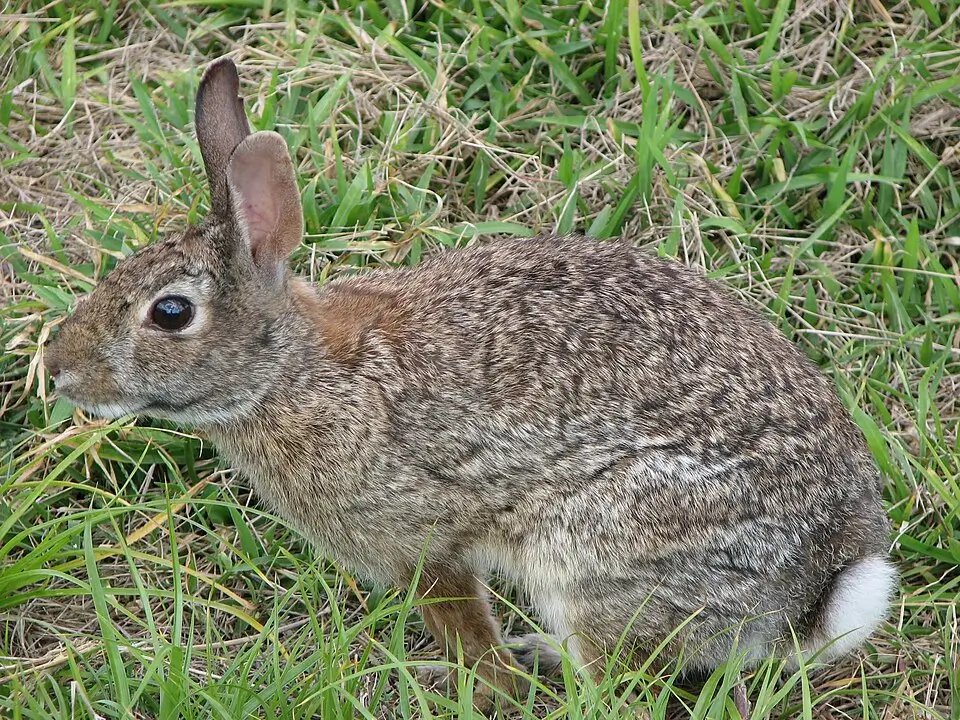
Cottontail rabbits are compact, well-adapted mammals that have evolved an impressive suite of survival strategies over millions of years. The most immediately recognizable feature of any cottontail is, of course, its tail — a small, rounded puff of white fur that flashes conspicuously when the animal runs, giving the entire genus its common name. This distinctive tail, which resembles a small ball of cotton, contrasts sharply with the animal's brownish-gray body and serves as a visual signal among individuals.
The body of a typical cottontail is built for speed and agility. Their powerful hind legs allow for explosive bursts of acceleration and rapid directional changes — a critical survival mechanism when evading predators such as foxes, coyotes, hawks, owls, and domestic cats and dogs. Their large, expressive eyes are positioned on the sides of their head, providing a nearly panoramic field of vision that helps them detect approaching threats from nearly any angle. Long, mobile ears serve a dual purpose, both collecting sound from a wide range, and helping regulate body temperature through heat dissipation.
Cottontails are herbivores, feeding on a wide variety of plant material that changes with the seasons. During warmer months, they consume grasses, clovers, wildflowers, and the tender shoots of various shrubs. In winter, when green vegetation is scarce, they shift to woody browse, nibbling on the bark and twigs of young trees and shrubs. This dietary flexibility is one of the reasons cottontails thrive across such a wide range of environments.
One of the most remarkable biological traits of the cottontail is its reproductive capacity. Like all members of the rabbit and hare family (Leporidae), cottontails are prolific breeders. A single female, called a doe, can produce multiple litters per year, with each litter containing several young, known as kittens or kits. The young are born relatively helpless — blind, nearly hairless, and entirely dependent on their mother — but they develop quickly, reaching independence within just a few weeks. This high reproductive rate is nature's answer to the cottontail's role as prey for a wide array of predators, helping to sustain stable populations even under significant predation pressure.
Cottontails are primarily crepuscular and nocturnal, meaning they are most active during the low-light hours of dawn and dusk, as well as throughout the night. During daylight hours, they typically rest in sheltered locations, crouching in depressions in the ground called "forms," tucking beneath brush piles, or hiding within dense vegetation. This behavioral pattern helps them avoid the many daytime predators that share their habitat.
Habitat & Range
The genus Sylvilagus is extraordinarily widespread, with species occupying habitats that range from tropical rainforests and desert scrubland to mountain meadows and temperate woodlands. In North America, the most commonly encountered species include the Eastern Cottontail (Sylvilagus floridanus), the New England Cottontail (Sylvilagus transitionalis), and the Desert Cottontail (Sylvilagus audubonii), among others.
In the northeastern United States — including Maine — two species are of particular interest: the Eastern Cottontail and the native New England Cottontail. The New England Cottontail is considered the only rabbit species native to New England, having evolved alongside the region's dense shrubby habitats for thousands of years. It is closely associated with early successional forests — young, dense growth that follows forest disturbance — as well as shrubby thickets, alder carr, and areas with heavy ground cover.
The Eastern Cottontail, while technically not native to New England, has expanded its range northward and eastward over the past century, partly facilitated by habitat changes and human-altered landscapes. It tends to occupy slightly more open habitats than the New England Cottontail, favoring brushy field edges, overgrown pastures, hedgerows, and the margins of agricultural land.
Maine's diverse landscape, which encompasses vast stretches of coniferous and mixed forest, open agricultural areas, coastal shrublands, and river corridor habitats, provides suitable conditions for cottontail rabbits in many parts of the state. However, cottontail populations in Maine, particularly the New England Cottontail, are more localized than in states farther south, and are generally found in the southern and coastal portions of the state where habitats are more suitable.
Hunting Information
Cottontail rabbit hunting is one of the most storied small game traditions in North America, and for good reason. It is accessible, affordable, and enormously rewarding. Hunters of all ages and experience levels can pursue cottontails with minimal equipment — a small gauge shotgun, a .22 rimfire rifle, or even a well-trained beagle and a pair of boots are all that is truly necessary for a successful outing.
Maine offers hunters access to some excellent small game hunting country. According to the Maine Department of Inland Fisheries and Wildlife, the state boasts over 17 million acres of hunting and outdoor recreation opportunities, making it one of the most compelling destinations in the Northeast for sportsmen and women seeking wild places and quality experiences. Maine's nickname "Vacationland" speaks to the richness of its natural resources, and the state's hunting heritage is a proud and enduring part of its outdoor culture.
For specific season dates, bag limits, licensing requirements, and any special regulations pertaining to cottontail rabbit hunting in Maine, hunters should consult the official Maine Department of Inland Fisheries and Wildlife website directly. Regulations can vary by year and by specific management zone, and staying current with the official guidelines is both a legal obligation and a sign of respect for the resource.
Hunters pursuing cottontails in Maine and across the Northeast have a variety of effective methods at their disposal. Still-hunting along brushy edges and pushing through dense thickets can produce excellent action, particularly on calm mornings when rabbits are actively feeding. One of the most beloved traditional methods is hunting with beagles — small hounds bred specifically for rabbit hunting. A well-trained beagle pack will flush cottontails from cover and pursue them in a wide, circling pattern, often bringing the rabbit back around to within range of waiting hunters. The sound of hounds working a fresh track through the winter woods is, for many hunters, one of the most evocative and joyful sounds in all of the outdoors.
Cold, clear days with a light snow cover are often considered prime conditions for cottontail hunting. Fresh snow makes tracking rabbits significantly easier, allows hunters to identify active areas, and contrasts well with the dark forms of rabbits moving through cover.
Conservation
The conservation of cottontail rabbits — particularly the native New England Cottontail — is a subject of genuine importance in the northeastern United States. Habitat loss and the maturation of formerly young forests into closed-canopy woodlands have reduced the availability of the dense, shrubby early successional habitat that New England Cottontails depend upon. Various conservation organizations and state wildlife agencies have worked collaboratively to restore and maintain suitable cottontail habitat through targeted habitat management projects.
Hunters play a meaningful role in cottontail conservation. License fees and excise taxes on sporting equipment — collected under the Federal Aid in Wildlife Restoration Act (commonly known as the Pittman-Robertson Act) — fund wildlife research, habitat management, and population monitoring programs across the country. Responsible small game hunters who advocate for the preservation of brushy, diverse landscapes are among the most effective voices for cottontail conservation.
For the New England Cottontail specifically, ongoing monitoring and habitat restoration efforts reflect a broader commitment among wildlife managers and sportsmen alike to ensure that this native species continues to thrive in its historic range for generations to come.