Overview
Few birds capture the imagination of hunters and wildlife enthusiasts quite like the Common pheasant (Phasianus colchicus). With its vibrant plumage, spirited nature, and long-standing role in upland game hunting traditions, this remarkable bird has earned a celebrated place in outdoor culture across the globe. Whether flushing dramatically from a hedgerow in the British countryside, strutting across a Midwestern grain field, or being pursued across the rolling forests and open lands of New England, the Common pheasant is a species that commands attention and respect.
Originally native to Asia, the Common pheasant has been introduced across much of the world, becoming one of the most widely distributed game birds on the planet. In North America, it has woven itself deeply into the fabric of hunting culture, and in states like Maine, it represents a cherished upland hunting opportunity embedded within a broader tradition of outdoor adventure. Maine's expansive wild lands — stretching across more than 17 million acres — provide a compelling backdrop for pursuing this magnificent bird.
This article explores the biology, habitat, hunting heritage, and conservation story of the Common pheasant, offering a thorough look at a species that is as fascinating to study as it is thrilling to hunt.
Biological Traits
The Common pheasant (Phasianus colchicus) belongs to the family Phasianidae, which also includes turkeys, grouse, peacocks, and quail. It is one of the world's most recognizable birds, largely because of the extraordinary sexual dimorphism displayed between males and females.
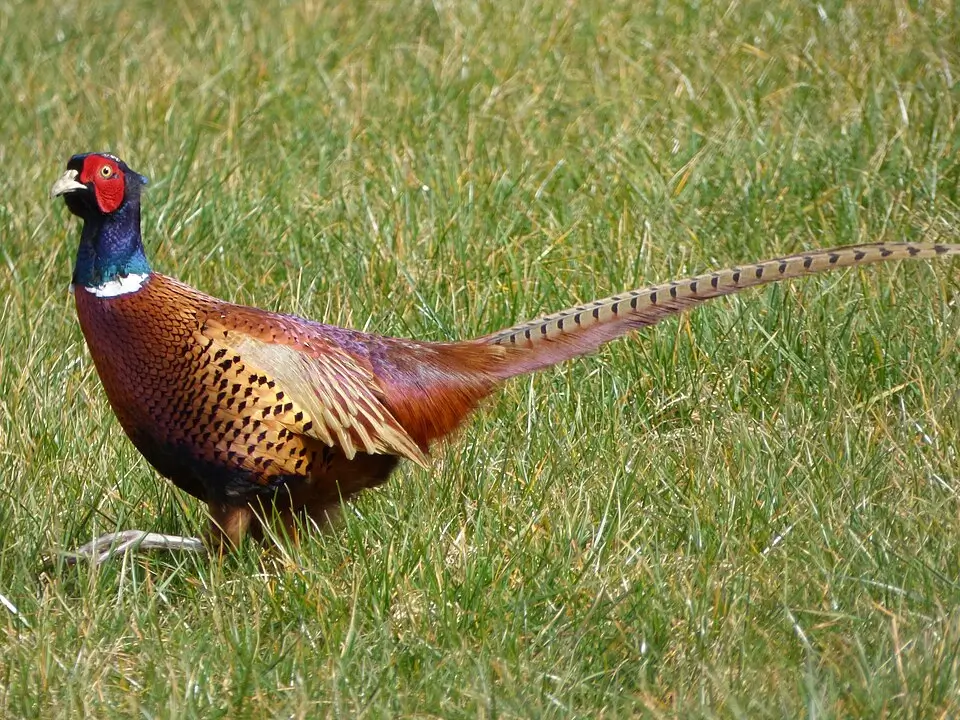
Male pheasants, known as roosters or cocks, are among the most visually striking birds in the Northern Hemisphere. They are adorned with a rich tapestry of iridescent copper, gold, and chestnut feathers across their bodies, with a deep green or blue-green head that shimmers in direct sunlight. A bold red wattle surrounds the eye, and many individuals display a distinctive white ring around the neck — a feature that has given one of the most common subspecies, the Ring-necked Pheasant, its popular name. The rooster's tail is long, pointed, and elegantly barred, often accounting for a significant portion of the bird's total length.
Female pheasants, called hens, are considerably more subdued in appearance — a classic evolutionary adaptation for nesting birds that must remain camouflaged. Their plumage is a warm mottled brown, streaked and patterned in ways that blend seamlessly with dry grasses, leaf litter, and brush. While less flashy than the male, the hen possesses an elegant beauty of her own.
Common pheasants are large, robust birds. Roosters are considerably larger than hens, and the species as a whole is built for a ground-dwelling lifestyle, with powerful legs well-suited for running and scratching through vegetation in search of food. Their diet is omnivorous and highly opportunistic, encompassing seeds, grains, berries, insects, worms, and other small invertebrates. This dietary flexibility is one reason the species has adapted so successfully to agricultural landscapes.
Pheasants are known for their explosive flush — when startled, they burst upward with a loud, cackling call and powerful wingbeats, capable of reaching considerable speeds over short distances. This behavior, while a survival mechanism, is also what makes them such a thrilling target for wing shooters.
Breeding behavior in Common pheasants is polygynous, meaning a single dominant rooster may mate with several hens within a territory. After mating, hens construct simple ground nests hidden in dense vegetation and lay clutches that typically range from around 8 to 15 eggs. Incubation is carried out solely by the hen. Chicks are precocial, meaning they are mobile and capable of feeding themselves shortly after hatching — an important survival trait for ground-nesting birds.
The lifespan of wild Common pheasants is generally short due to predation and hunting pressure, though individuals can live several years under favorable conditions. In captivity, pheasants may live considerably longer.
Habitat & Range
The Common pheasant's native range spans a wide swath of Asia, from the Caucasus region — where the species name colchicus references the ancient kingdom of Colchis on the eastern Black Sea coast — eastward through Central Asia, China, Korea, and into the Russian Far East. There are numerous subspecies distributed across this vast range, each with slight variations in plumage and form.
Through centuries of deliberate introduction for hunting and sport, the Common pheasant has established self-sustaining or semi-sustaining populations across much of Europe, North America, New Zealand, Australia, and parts of South America. In the United States, pheasant introductions began in earnest in the late 19th century, and the species became one of the premier game birds of the American Midwest and Great Plains.
In their preferred habitat, Common pheasants are strongly associated with agricultural and edge environments. They thrive where open fields, grain crops, and pastures border brushy hedgerows, woodland edges, wetland margins, and overgrown fence lines. This mosaic of open foraging areas and dense cover for shelter and nesting is the hallmark of prime pheasant country. The birds rely on thick vegetation for protection from predators and for nesting, while open areas provide the food resources needed to sustain populations through the year.
In the northeastern United States, including Maine, the species faces some of the natural challenges associated with colder, snowier winters and less intensive agricultural landscapes compared to the Midwest. However, pheasants can and do survive in these environments, particularly in areas where agricultural activity, brushy cover, and managed lands provide the necessary resources.
Hunting Information
The Common pheasant is among the most sought-after upland game birds in North America, and hunting pheasants is a deeply rooted tradition that brings hunters together across generations. The typical method of pheasant hunting involves working a pointing or flushing dog — breeds like the English Springer Spaniel, Labrador Retriever, German Shorthaired Pointer, or English Setter are perennial favorites — through fields, brush piles, and edge cover to locate and flush birds within shooting range.
The dramatic, cackling flush of a rooster pheasant and the challenging angles it presents to wing shooters make pheasant hunting one of the most exciting and skill-demanding forms of upland bird hunting. Shots at flushing pheasants require quick reflexes, sharp eye-hand coordination, and practiced shotgunning technique.
For hunters in Maine, the state's Department of Inland Fisheries and Wildlife oversees hunting regulations and opportunities. Maine is described as offering some of the best hunting and fishing opportunities in the country, with over 17 million acres of land providing extensive outdoor recreation possibilities. Hunters interested in pursuing Common pheasants in Maine should consult the Maine Department of Inland Fisheries and Wildlife directly for the most current and accurate information on season dates, licensing requirements, bag limits, and any specific regulations that may apply.
Pheasant hunting in Maine may include opportunities on stocked lands, wildlife management areas, or other designated properties where pheasants are managed for public hunting. As with all hunting activities in Maine, adherence to current regulations and obtaining the proper licensing is essential before heading afield. The Maine Department of Inland Fisheries and Wildlife's official resources are the definitive reference for up-to-date hunting information.
Conservation
The conservation story of the Common pheasant is a nuanced one. As an introduced species in much of its current range, the pheasant does not face the same types of existential threats that affect many native wildlife species. However, populations in various regions have shown sensitivity to changes in agricultural practices, habitat management, and predator dynamics.
In areas where intensive farming has reduced hedgerow cover, eliminated weedy field margins, and decreased food availability during winter months, pheasant numbers have declined. Conversely, habitat management efforts — including the planting of food plots, the restoration of brushy edge cover, and the maintenance of nesting habitat — have demonstrated meaningful positive effects on pheasant populations.
Wildlife managers and hunting organizations have long championed pheasant habitat restoration as a conservation priority. The work of hunters and hunting-funded organizations in supporting habitat programs, advocating for conservation policy, and funding research has been instrumental in sustaining pheasant populations in many parts of North America.
Stocking programs, in which pen-raised birds are released to supplement wild populations or provide hunting opportunities, are common in many states including those in the Northeast. While stocked birds behave somewhat differently from truly wild birds, these programs play an important role in providing public access to pheasant hunting and in maintaining cultural and traditional connections to the sport.
The long-term conservation of Common pheasants — both as a game species and as a component of the broader agricultural ecosystem — depends on the continued commitment of hunters, landowners, wildlife agencies, and conservation organizations working collaboratively toward shared habitat and population goals.
Conclusion
The Common pheasant is a bird that has captivated human imagination for centuries — from the ancient civilizations of Asia that first encountered it in the wild, to the European aristocracy that elevated pheasant shooting to an art form, to the American upland hunter who rises before dawn to work a good dog through frosty autumn cover. Phasianus colchicus is a species rich in history, stunning in appearance, and endlessly exciting in the field.
For hunters in Maine and across New England, the pheasant represents a spirited upland quarry set against some of the most beautiful autumn scenery the country has to offer. Understanding the biology, habitat needs, and conservation dynamics of this remarkable bird makes every day afield not just a hunting experience, but a richer connection to the natural world.