Overview
Few sights in the natural world are as iconic as a V-formation of Canada geese cutting across an autumn sky, their resonant honking carrying across fields and waterways below. The Canada goose (Branta canadensis) is one of North America's most familiar and widely recognized wild birds, a creature that has become deeply woven into the cultural and ecological fabric of the continent. From the tundra wetlands of the far north to the managed marshes and open farmlands of the eastern seaboard, this remarkable bird commands attention wherever it is found.
In Maine — the largest state in New England and the northeasternmost in the contiguous United States — the Canada goose is a celebrated part of the autumn landscape. Maine's vast wilderness, which encompasses more than 17 million acres of diverse terrain, provides outstanding habitat for waterfowl of all kinds. The state's Department of Inland Fisheries and Wildlife manages hunting and wildlife resources for residents and visitors alike, making it a premier destination for waterfowl hunters seeking a memorable experience. For hunters, birdwatchers, and wildlife enthusiasts, the Canada goose represents one of the most thrilling and rewarding encounters that North America's outdoors has to offer.
Biological Traits
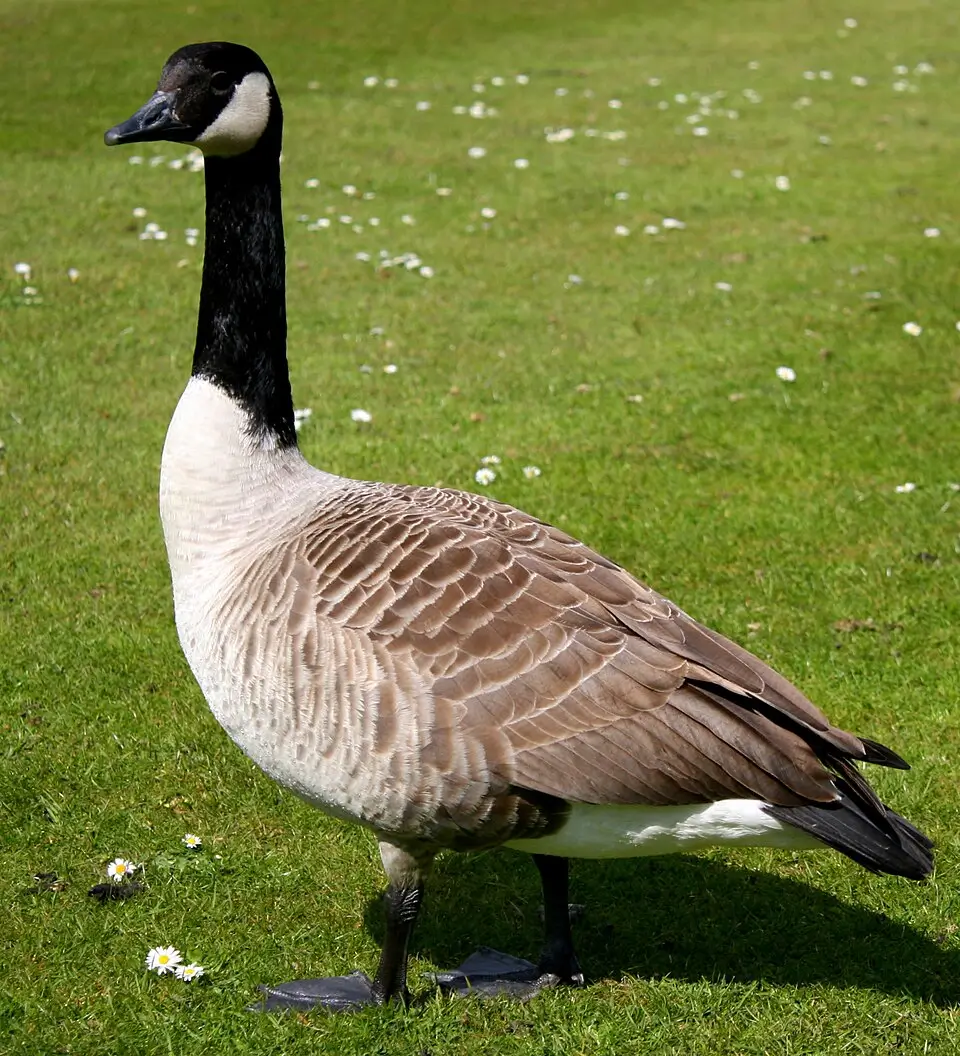
The Canada goose (Branta canadensis) belongs to the family Anatidae, which encompasses ducks, geese, and swans. It is a large waterfowl species instantly recognizable by its distinctive black head and long black neck, contrasted sharply by a white chinstrap or cheek patch. The body is typically brownish-tan on the back and wings, with a lighter, creamy-white breast and belly. The tail is black, and the undertail coverts are white — a feature that can be a helpful identification marker in the field.
Canada geese are among the largest waterfowl in North America. Body size varies considerably across the several recognized subspecies, which range from the relatively small Cackling goose-adjacent forms to the large, familiar "Giant" Canada goose (Branta canadensis maxima). In general, adult birds have wingspans that can exceed five feet, making them an imposing presence both in the air and on the water.
One of the most notable behavioral traits of the Canada goose is its strong tendency toward monogamy. Pairs typically form long-term bonds, often mating for life. Nesting usually begins in early spring, with females selecting a site near water on elevated ground or in concealed vegetation. A typical clutch consists of between two and eight eggs, which the female incubates for approximately 25 to 28 days. The male stands guard nearby, defending the nest with considerable tenacity against potential predators and other intruders.
Goslings are precocial — meaning they hatch in a well-developed state, capable of walking and swimming within a day of hatching. Family groups remain tightly bonded throughout the summer, with young geese staying close to their parents well into their first autumn and often their first migration. This strong family cohesion is one reason Canada geese are so frequently observed in large, coordinated flocks.
Canada geese are primarily herbivores. Their diet includes grasses, aquatic vegetation, grains, berries, and other plant matter. In agricultural areas, they readily feed on leftover grain in harvested fields, which can make such areas productive spots for hunters and birdwatchers during the autumn migration. Their grazing habits are well adapted to both natural and human-modified landscapes.
The Canada goose is also celebrated for its navigational abilities. Like many migratory birds, Canada geese rely on a combination of visual landmarks, the position of the sun, the Earth's magnetic field, and even star patterns to navigate during their long seasonal journeys. Their famous V-formation flight pattern is not merely aesthetic — it is an energy-efficient strategy in which each bird benefits from the updraft created by the wingbeats of the bird ahead, reducing overall energy expenditure during long-distance travel.
Habitat & Range
The Canada goose has one of the broadest ranges of any waterfowl species on the continent. It breeds across a vast swath of North America, from the Arctic tundra of northern Canada and Alaska southward through much of the continental United States and into the northern tier of the lower 48 states. Wintering populations are found across much of the southern United States, Mexico, and coastal regions where water remains open through the cold months.
Preferred habitats include lakes, ponds, rivers, marshes, bays, and estuaries — essentially any open water environment with access to grassy or vegetated shorelines suitable for feeding and nesting. Canada geese are equally comfortable in natural wilderness settings and in suburban or agricultural environments, a adaptability that has contributed significantly to their population success over the past several decades.
In Maine, the Canada goose is both a migratory visitor and, increasingly, a year-round resident in some areas. Maine's geography offers a wealth of prime waterfowl habitat. The state borders the Gulf of Maine to the southeast, offering expansive coastal wetlands, tidal estuaries, and saltmarshes that serve as important staging and resting areas for migrating birds. Inland, Maine's countless lakes, ponds, rivers, and bogs provide additional habitat of high quality. The state's agricultural lands also offer geese abundant food resources during the critical fall staging period, when birds are building up energy reserves for the journey south.
During autumn migration, Maine sits within the Atlantic Flyway — the great corridor of bird movement that stretches from the Canadian Arctic down the eastern seaboard to wintering grounds in the south. This positioning makes Maine a key waypoint for thousands of Canada geese each fall, and the sight of large migrating flocks is a highlight of the season for outdoor enthusiasts throughout the state.
Hunting Information
Canada goose hunting has a long and storied tradition across North America, and Maine is no exception. The state's Department of Inland Fisheries and Wildlife oversees all hunting and trapping regulations, working to ensure that waterfowl populations remain healthy and sustainable while providing quality hunting opportunities. Maine's more than 17 million acres of diverse landscape offer hunters a wide variety of settings in which to pursue Canada geese, from coastal marshes and tidal flats to inland agricultural fields and lakeshores.
Hunters pursuing Canada geese in Maine are required to obtain the appropriate licenses and permits as specified by the Maine Department of Inland Fisheries and Wildlife. Because Canada geese are a migratory species, they are managed jointly under federal and state frameworks, meaning hunters must comply with regulations set both by the U.S. Fish & Wildlife Service and by the state of Maine. Prospective hunters should always consult the most current regulations from the Maine Department of Inland Fisheries and Wildlife for up-to-date season dates, bag limits, and licensing requirements, as these details are subject to change from year to year.
Field hunting over decoys in harvested grain fields is among the most popular and effective techniques for taking Canada geese. Calling is another important skill — the ability to reproduce the resonant honks, clucks, and moans of real geese can be the difference between drawing birds into range and watching them veer away. Hunters also frequently pursue geese from layout blinds, pit blinds, and natural cover along the edges of fields and water bodies.
Layout spread setups with large numbers of full-body or shell decoys are standard practice among dedicated goose hunters. Attention to wind direction, decoy placement, and realistic calling can make a morning in a Maine goose field a truly memorable experience. The combination of cool autumn air, stunning foliage, and the thrill of working a flock of geese into range is something that draws hunters back to Maine's fields and marshes season after season.
Conservation
The Canada goose is currently listed as a species of Least Concern by international conservation standards, a status that reflects its healthy and robust population across North America. In fact, certain resident populations of Canada geese have grown substantially over the past several decades, thanks in large part to conservation efforts, legal protections under the Migratory Bird Treaty Act, and the species' remarkable ability to thrive in a wide range of habitats.
Wildlife managers across the United States and Canada work collaboratively to monitor goose populations, conduct breeding surveys, and adjust harvest regulations as needed to maintain sustainable population levels. The Atlantic Flyway Council, which includes Maine among its member states, plays an important role in coordinating these efforts across the eastern migratory corridor.
Wetland conservation is also a cornerstone of Canada goose management. Healthy, intact wetland ecosystems provide the nesting cover, food resources, and safe resting areas that geese and other waterfowl depend upon. Organizations dedicated to wetland preservation, as well as individual hunters and landowners who maintain and restore wetland habitats, make meaningful contributions to the long-term health of Canada goose populations.
Maine's commitment to sound wildlife management, reflected in the work of the Department of Inland Fisheries and Wildlife, ensures that Canada geese will continue to grace the state's skies, waterways, and fields for generations to come. Whether you are a hunter, a birdwatcher, or simply someone who pauses to watch a V-formation pass overhead on a crisp October morning, the Canada goose is a bird that enriches the natural heritage of Maine and all of North America.