Overview
Few animals capture the human imagination quite like the gray wolf. Known scientifically as Canis lupus, the wolf is one of the most studied, admired, and debated large carnivores on the planet. With a haunting howl that echoes across mountain valleys and a social intelligence that rivals many primates, the wolf has earned its place as a cornerstone species in wild ecosystems throughout the Northern Hemisphere. In the American West, and particularly in the rugged landscapes of Idaho, the wolf represents both the raw power of wilderness and the complex interplay between wildlife management, conservation, and human land use.
Whether you are a hunter seeking to understand this apex predator, a wildlife enthusiast hoping to catch a glimpse in the backcountry, or simply someone curious about one of nature's most compelling animals, this guide offers a thorough look at the biology, behavior, habitat, and management of the gray wolf.
Biological Traits
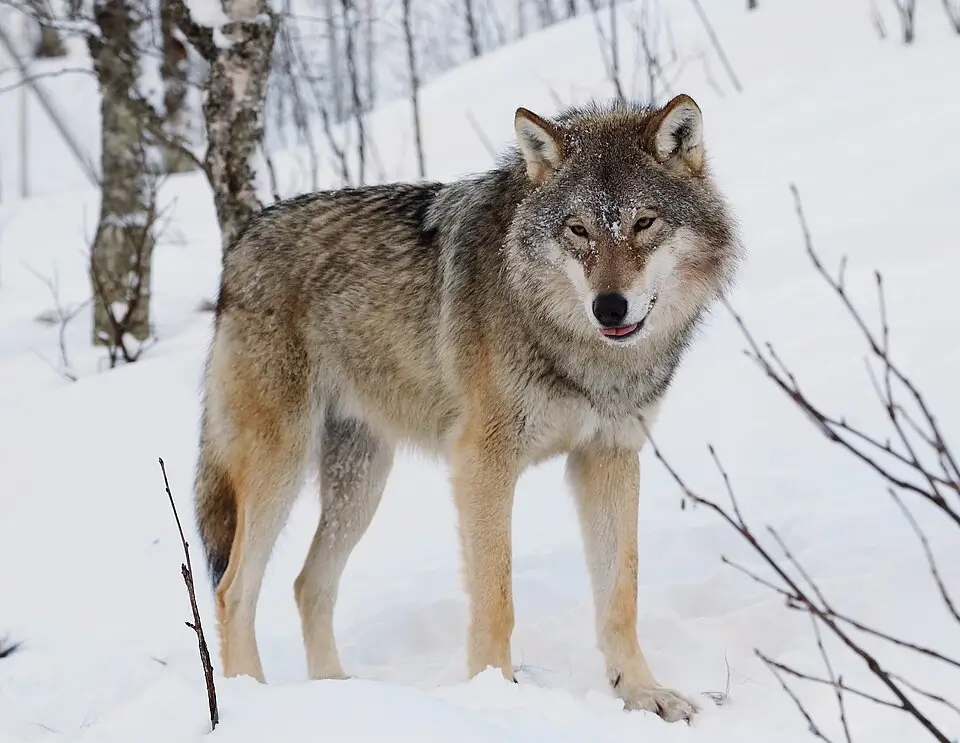
The gray wolf, Canis lupus, is the largest wild member of the family Canidae. Despite its common name, gray wolves display a wide range of coat colors, including pure white, jet black, tawny brown, and various shades of gray. This remarkable variation in pelage makes individual identification possible in the field and adds to the visual appeal of the species.
Adult wolves are powerfully built animals. They possess long legs designed for endurance travel, deep chests that house large lung capacity, and oversized feet that act almost like natural snowshoes in deep winter conditions. Their skulls are broad and heavily muscled, housing jaws capable of exerting tremendous crushing force — an essential adaptation for a predator that must bring down large ungulates such as elk, deer, moose, and bison.
One of the most fascinating aspects of wolf biology is their highly developed social structure. Wolves are pack animals, living in family groups that typically consist of a breeding pair — often referred to as the alpha male and alpha female — along with their offspring from one or more previous years. Pack sizes can vary considerably depending on prey availability and habitat conditions, but most packs in North America range from roughly five to ten individuals, though larger packs have been documented.
Communication within a wolf pack is sophisticated and multifaceted. Wolves use vocalizations, body language, scent marking, and facial expressions to convey information to one another. The howl, arguably the wolf's most iconic behavior, serves multiple purposes: it helps reunite separated pack members, advertises territory to rival packs, and reinforces social bonds within the group. A wolf's howl can carry for several miles under the right atmospheric conditions, making it one of the most effective long-distance communication tools in the animal kingdom.
Wolves are highly intelligent animals with strong memories and the ability to adapt their hunting strategies to different prey and terrain. Cooperative hunting is one of the pack's greatest advantages, allowing wolves to pursue and exhaust prey far larger than any individual wolf could tackle alone. Their hunting success, however, is far from guaranteed — studies of wild wolf packs consistently show that wolves fail to make a kill on the majority of their hunting attempts, underscoring the difficulty and athleticism involved in their predatory lifestyle.
Reproduction in wolves is seasonal. Breeding typically occurs in late winter, and after a gestation period of approximately 63 days, a litter of pups — usually between four and six, though litters can be larger — is born in a den. Both parents, as well as older offspring from previous years, participate in raising the pups, bringing food to the den site and engaging in the intensive work of socializing and protecting the young. Pups grow rapidly and begin traveling with the pack by autumn of their first year.
Wolves are also well-known for their remarkable stamina. A single wolf can cover enormous distances in a single day — reports of wolves traveling 30 to 50 miles or more in a 24-hour period are not uncommon. This mobility is essential for patrolling large territories, locating prey, and dispersing young wolves who leave their natal packs to find mates and establish new territories.
Habitat & Range
The gray wolf once ranged across virtually the entire Northern Hemisphere, from the Arctic tundra to the forests of Central Asia, the open steppes of Eastern Europe, and throughout North America from Canada and Alaska down into Mexico. Centuries of persecution and habitat loss dramatically reduced the wolf's range, but recovery efforts in recent decades have allowed populations to rebound in several key regions.
In North America, wolves are found in their greatest densities in Alaska and Canada, where vast wilderness areas remain largely intact. In the contiguous United States, wolf populations have re-established themselves in the Northern Rocky Mountain region — including Idaho, Montana, Wyoming, Washington, and Oregon — as well as in the Great Lakes states of Minnesota, Wisconsin, and Michigan. More recently, wolves have begun appearing in parts of California and other western states.
Idaho, with its exceptional combination of remote mountain terrain, extensive national forests and wilderness areas, and abundant prey populations, represents some of the finest wolf habitat in the lower 48 states. The state's rugged geography — including the Frank Church–River of No Return Wilderness, one of the largest roadless areas in the contiguous United States — provides wolves with vast stretches of territory largely undisturbed by human activity. The presence of robust elk and deer herds throughout Idaho's mountains ensures that wolves have the food resources necessary to sustain healthy pack structures.
Wolves are highly adaptable and can thrive in a variety of ecosystems, including boreal forests, mountain ranges, grasslands, tundra, and even semi-arid shrublands. The key requirements are sufficient prey, adequate space to maintain territories, and, ideally, limited persecution by humans. Where these conditions are met, wolves demonstrate a remarkable capacity to reclaim and occupy landscapes from which they were long absent.
Hunting Information
Wolf hunting in Idaho is a regulated activity managed by the Idaho Department of Fish and Game. Idaho has been at the forefront of wolf management in the Western United States since wolves were delisted from federal Endangered Species Act protections in the Northern Rocky Mountain region, a process that unfolded over a series of legal and legislative milestones in the late 2000s and early 2010s.
Idaho recognizes wolves as a manageable big game species, and the state has established hunting and trapping seasons designed to maintain wolf populations at levels consistent with state wildlife management objectives. Hunting wolves in Idaho requires obtaining the appropriate licenses and tags as specified by the Idaho Department of Fish and Game. Because regulations change from year to year based on population surveys, management goals, and legislative direction, prospective hunters are strongly encouraged to consult the most current official regulations published by the Idaho Department of Fish and Game before planning any hunt.
Wolf hunting presents unique challenges that set it apart from pursuing more commonly hunted big game species. Wolves are wary, highly mobile, and capable of detecting human presence at extraordinary distances through their acute senses of hearing and smell. Successful wolf hunters typically invest significant time in scouting, learning pack territories, and understanding wolf movement patterns relative to prey concentrations. Some hunters use calling techniques — mimicking howls or prey distress sounds — to locate or attract wolves. Others employ spot-and-stalk methods in open terrain where visibility is high.
Given the official hunting information was not available at the time of this article's publication, readers are urged to visit the Idaho Department of Fish and Game's official website for the most accurate and up-to-date season dates, zone restrictions, bag limits, and licensing requirements. Regulations governing wolf hunting can be subject to change, and compliance with current rules is both a legal obligation and a hallmark of ethical hunting.
Conservation
The story of the wolf in the American West is, in many respects, one of the most dramatic conservation narratives of the twentieth and twenty-first centuries. Wolves were systematically eliminated from most of the contiguous United States by the mid-twentieth century through a combination of government predator control programs, habitat loss, and direct persecution. By the 1970s, gray wolves in the lower 48 states had been reduced to a small remnant population in northeastern Minnesota and a tiny group on Isle Royale in Michigan.
The passage of the Endangered Species Act in 1973 provided a legal framework for wolf recovery, and in the mid-1990s, the U.S. Fish and Wildlife Service undertook the landmark reintroduction of wolves into Yellowstone National Park and central Idaho. This effort, which involved translocating wolves from Canada, has been widely regarded as one of the most successful large carnivore reintroduction programs in history.
The ecological effects of wolf recovery have been extensively studied, particularly in and around Yellowstone. Research has highlighted the role wolves play as a keystone species — their presence influencing the behavior and distribution of prey animals, which in turn affects vegetation, stream systems, and a cascade of other species throughout the ecosystem. These findings have added scientific depth to already passionate debates about the role of large predators in wild landscapes.
Today, wolf conservation in Idaho and across the Northern Rockies is managed through a partnership of state agencies, federal entities, tribal nations, and conservation organizations. The goal of maintaining viable wolf populations while addressing the legitimate concerns of ranchers, hunters, and rural communities remains an ongoing and evolving challenge — one that reflects the broader complexity of wildlife management in a modern, diverse society.