Overview
Among the most recognizable waterfowl of North America, the American black duck (Anas rubripes) holds a distinguished place in the natural history of the continent. Despite its common name, this dabbling duck is not truly black — instead, it presents a remarkably rich, dark plumage that has captured the attention of birders, naturalists, and waterfowl hunters alike for generations. As one of the larger members of the dabbling duck family, the American black duck occupies a fascinating ecological niche and carries with it a compelling story of adaptability, habitat dependence, and conservation significance.
While this species is most closely associated with the eastern regions of North America — where it thrives in coastal marshes, freshwater wetlands, and forested ponds — its profile extends well beyond its core range into the broader world of North American waterfowl management. For enthusiasts in western states like Idaho, understanding the American black duck provides a richer appreciation for the diversity of waterfowl found across the continent. Whether you are a dedicated waterfowl hunter, a passionate birdwatcher, or simply a lover of the natural world, the American black duck is a species well worth knowing.
Biological Traits
The American black duck is a member of the family Anatidae and belongs to the genus Anas, placing it in close genetic and ecological company with the familiar mallard (Anas platyrhynchos). In fact, the two species are so closely related that hybridization between them is relatively common — a fact that has significant implications for the long-term genetic identity of the black duck population.
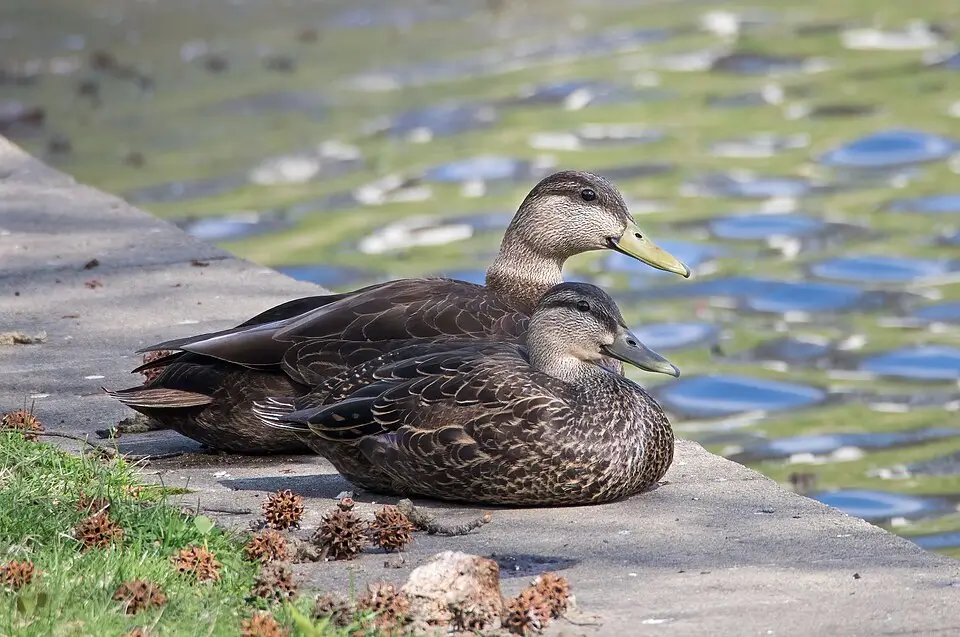
In terms of appearance, the American black duck is a large, robust dabbling duck. Both males and females share a similar coloration, which is somewhat unusual among dabbling ducks where sexual dimorphism is typically pronounced. The body plumage is a deep sooty brown to near-black, with lighter brown streaking on the head and neck that creates a subtle but beautiful contrast. The underwings flash a bright white in flight, offering a striking visual signature that helps observers identify the bird even at a distance. The speculum — the patch of iridescent feathers on the wing — is a deep violet-purple, and notably it is bordered by black rather than the white borders seen on the mallard's speculum. This detail is one of the key field marks separating the two species.
Male American black ducks, known as drakes, can be distinguished from females by their yellow-green bills, while females typically display an olive-colored or orange-mottled bill. The legs and feet of both sexes are typically orange to red in color, adding another vivid detail to an otherwise dark bird.
In terms of size, the American black duck is comparable to the mallard. Adults generally measure between 21 and 23 inches in length, with a wingspan that can reach approximately 35 inches. These are solidly built birds, well-suited for the cold, often harsh environments they inhabit.
The vocalizations of the American black duck are nearly identical to those of the mallard. Females produce the classic, resonant quacking call most people associate with ducks, while males produce a softer, raspier sound. Their behavioral patterns in feeding, courtship, and nesting also closely mirror those of the mallard, reflecting their close evolutionary relationship.
As dabbling ducks, American black ducks feed primarily by tipping forward in shallow water to reach aquatic vegetation, invertebrates, and seeds below the surface. They do not dive for food the way diving ducks do. Their diet is broad and opportunistic, including aquatic plants, grasses, grains, mollusks, crustaceans, and aquatic insects — a dietary flexibility that serves them well across a range of habitats and seasons.
Habitat & Range
The American black duck is predominantly a species of eastern North America, with its breeding range centered on the boreal forests, wetlands, and coastal areas stretching from the Atlantic Coast inland through Quebec, Ontario, and into the Great Lakes region. Its wintering range extends along the Atlantic Seaboard, from New England southward to the Gulf Coast, with some birds wintering in interior wetlands as well.
This species shows a strong affinity for a wide variety of wetland habitats. During the breeding season, American black ducks favor boreal and mixed forests with abundant freshwater wetlands, bogs, beaver ponds, and marshy lake edges. They are particularly associated with forested wetlands in ways that distinguish them ecologically from the more open-country mallard. In winter, coastal marshes — both salt and brackish — become critically important habitat, and this species is arguably one of the waterfowl species most dependent on the health of Atlantic coastal wetland systems.
The American black duck's tolerance for salt and brackish water marshes is notable. It can frequently be found foraging in tidal flats, estuaries, and coastal bays during migration and winter months, exploiting the rich food resources these dynamic ecosystems provide. Inland, they use freshwater marshes, rivers, reservoirs, and flooded agricultural fields during migration.
For residents and hunters in Idaho, the American black duck is not a species typically encountered in the wild. Idaho is a landlocked state situated in the Pacific Northwest and Mountain West, far removed from the Atlantic Flyway and Great Lakes regions that form the core of black duck territory. Idaho's waterfowl hunting is more commonly associated with species such as mallards, teal, widgeon, and various diving ducks that travel along the Pacific Flyway. That said, rare vagrant sightings of American black ducks have been recorded in western states, and a thorough knowledge of this species enriches any waterfowl enthusiast's understanding of North American ducks as a whole.
Hunting Information
The American black duck has a long history as a prized game bird. Among waterfowl hunters in eastern North America — particularly along the Atlantic Flyway — the black duck holds near-legendary status. Its wariness and alertness make it a challenging quarry, and its large size and excellent table quality have made it a sought-after species for generations of hunters.
Waterfowl hunting for American black ducks is regulated at the federal level in the United States through the U.S. Fish and Wildlife Service, which sets annual frameworks for migratory bird seasons in coordination with the Canadian Wildlife Service. Individual states then adopt their own specific season dates, bag limits, and legal shooting hours within those federal frameworks. Because migratory bird hunting regulations change annually, hunters are always encouraged to consult the most current regulations from their state wildlife agency before heading afield.
For hunters in Idaho, it is important to understand that the American black duck is not a target species within the state's typical waterfowl hunting opportunities. Idaho lies along the Pacific Flyway, and its waterfowl populations and hunting seasons reflect the species that migrate through this corridor. Official hunting information specific to the American black duck in Idaho is not available, as the species does not regularly occur there in huntable numbers.
Any waterfowl hunter pursuing birds in Idaho should obtain a valid Idaho hunting license, the required federal Duck Stamp (Migratory Bird Hunting and Conservation Stamp), and stay current with both federal and state migratory bird regulations. These foundational requirements apply regardless of species, and they support the conservation programs that benefit waterfowl across North America.
Conservation
The conservation story of the American black duck is one of the more closely watched narratives in North American waterfowl management. Over the latter half of the twentieth century, black duck populations experienced significant declines, prompting concern among wildlife managers, conservation organizations, and hunters alike. The causes of this decline are multifaceted and have been the subject of considerable scientific study.
Habitat loss and degradation have played a central role. The coastal and inland wetlands that American black ducks depend upon — particularly along the Atlantic Seaboard — have been subject to substantial losses due to development, drainage, and pollution. The health of coastal estuaries and salt marshes is directly tied to the well-being of this species.
Another significant factor is hybridization with mallards. As mallard populations have expanded eastward — partly through introductions and partly through range shifts facilitated by habitat changes — the two species increasingly come into contact. Because they are closely related and will interbreed, there is genuine concern that hybridization could dilute the genetic distinctiveness of the American black duck over time. This concern has made the species a focus of ongoing genetic and population monitoring.
Conservation efforts on behalf of the American black duck have involved multiple partners, including Ducks Unlimited, the U.S. Fish and Wildlife Service, Canadian wildlife agencies, and numerous state and provincial wildlife management programs. Wetland protection and restoration have been cornerstones of these efforts. The North American Waterfowl Management Plan, a landmark cooperative agreement between the United States, Canada, and Mexico, has directed significant resources toward habitat conservation that benefits black ducks and many other species.
Hunting regulations have also been carefully managed to reflect population status. Federal frameworks have historically been conservative for black ducks relative to more abundant species, reflecting the management community's cautious approach to this species.
The American black duck serves as an important indicator of wetland ecosystem health along the Atlantic coast. Its continued presence in healthy numbers is a sign of thriving marshes, clean water, and functional coastal ecosystems — values that benefit not only wildlife but human communities as well.