Overview
Few birds in North America capture the imagination of wildlife enthusiasts and upland hunters quite like the American woodcock (Scolopax minor). Often overlooked due to its cryptic plumage and secretive habits, this remarkable shorebird-turned-upland-game-bird occupies a unique niche in North American wildlife. Known by a colorful array of colloquial names — including timberdoodle, bogsucker, mud snipe, and Labrador twister — the American woodcock is a bird full of surprises, from its unusual physical adaptations to its mesmerizing springtime courtship display. Whether you are a naturalist, a birder, or a seasoned upland hunter working a pointer through a tag alder thicket, encountering a woodcock is always a memorable experience.
Despite its classification within the sandpiper family (Scolopacidae), the American woodcock has largely abandoned the open shorelines and mudflats associated with its relatives and instead made its home in the moist, thicketed woodlands of eastern North America. Its life history, biology, and behavior are all shaped by this unusual ecological choice, making it one of the most interesting birds on the continent.
Biological Traits
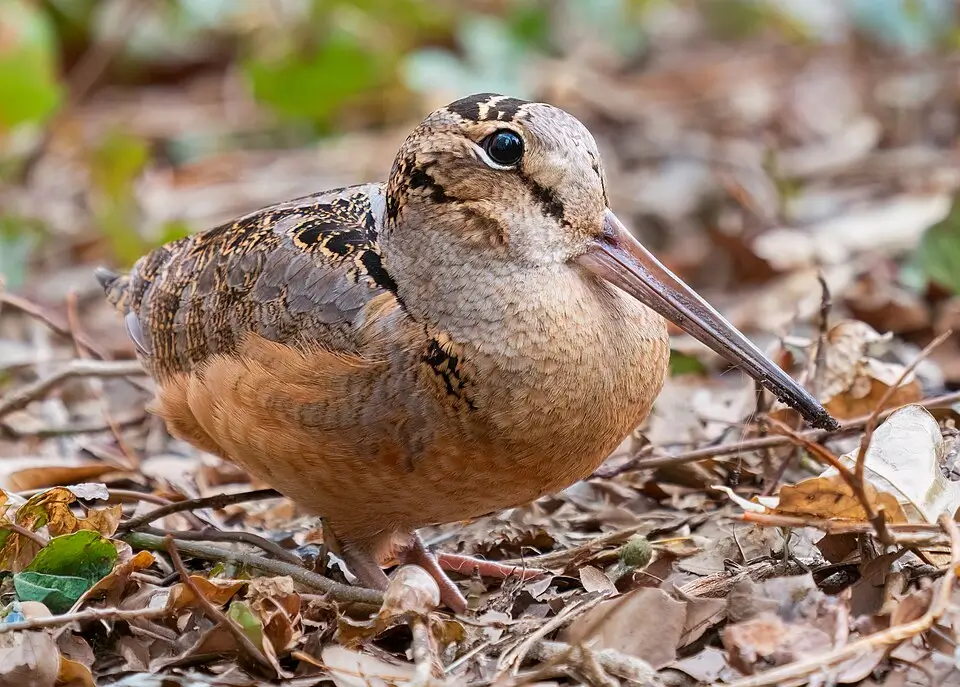
The American woodcock is a medium-sized, stout bird built for life on the forest floor. Its rotund body, short legs, and extraordinarily long bill give it an almost comical silhouette that belies its remarkable sensory capabilities and athletic flight performance. The bird's plumage is a masterwork of camouflage — a rich blend of russet, brown, black, and buff tones that mirrors the leaf litter of the forest floor with stunning accuracy. When a woodcock freezes and holds tight to the ground, it can be virtually invisible to predators and even to experienced hunters standing just a few feet away.
One of the most fascinating anatomical features of the American woodcock is its bill, which can measure roughly 2.5 to 2.75 inches in length. The tip of the upper mandible is flexible and prehensile, a unique trait that allows the bird to grasp earthworms deep in the soil without opening the entire bill. Sensory pits along the bill's tip are packed with nerve endings, giving the woodcock an extraordinary sense of touch that helps it locate prey underground. Earthworms make up the bulk of the woodcock's diet, and an adult bird may consume its own body weight in worms each day during peak feeding periods.
Perhaps equally remarkable are the woodcock's eyes. Positioned high and far back on the skull, the large, dark eyes provide a nearly 360-degree field of vision, allowing the bird to watch for aerial predators even while its bill is buried in the ground. This eye placement means the woodcock's brain is oriented somewhat unusually compared to other birds, with the cerebellum positioned below the rest of the brain — a known anatomical quirk of the species.
The American woodcock is also known for its distinctive "sky dance," one of the most spectacular courtship displays in the bird world. On warm evenings in late winter and early spring, male woodcock fly to open singing grounds — old fields, forest clearings, or forest edges — and begin a series of nasal "peent" calls from the ground. The male then launches into a spiraling, climbing flight that can reach several hundred feet into the air. As he rises, his wings produce a musical twittering sound. At the apex of his flight, the male begins to chirp and twitter vocally before tumbling back down in a zigzagging descent, often landing near where he started. This display is repeated again and again at dawn and dusk throughout the breeding season.
The species is sexually dimorphic, with females being noticeably larger than males — a reversal of the typical pattern seen in many bird species. Females handle all nesting and brood-rearing duties without assistance from the male. Nests are simple scrapes on the ground lined with leaves and debris. A typical clutch consists of four eggs, which the female incubates for approximately 20 to 21 days. The chicks are precocial and capable of moving with their mother shortly after hatching, though they depend on her for warmth and protection for several weeks.
Habitat & Range
The American woodcock is native to eastern North America, with its breeding range extending from the Canadian Maritime provinces and Quebec westward through the Great Lakes region and south through the eastern United States. The species winters primarily in the southeastern United States, particularly in the coastal plain and lower Mississippi Valley, where mild temperatures keep the ground soft enough for probing.
Woodcock habitat is defined by three key elements: moist, soft soils rich in earthworms; dense young forest or shrubby cover for daytime roosting and nesting; and nearby open areas for the male's courtship flights. Classic woodcock habitat includes young alder and aspen stands, wet thickets along stream corridors, early successional forest, and old fields transitioning back to woodland. The species is strongly associated with areas of young forest in the 10- to 30-year age class, where dense shrubby understory provides excellent cover.
The woodcock is a migratory species, moving along traditional flyways in both spring and fall. Fall migration typically occurs in October and November across much of the northern portion of the range, driven by the first hard frosts that freeze the ground and make earthworm foraging difficult. During migration, woodcock may concentrate in surprisingly large numbers in areas of good habitat, particularly in moist lowland thickets. These migratory concentrations are a highlight of the fall hunting season in states where the species is pursued.
Regarding Idaho specifically, the American woodcock is not a species typically associated with the state. Idaho is a landlocked state in the Pacific Northwest and Mountain West, and its geography, climate, and forest composition differ substantially from the moist eastern deciduous woodlands that the American woodcock calls home. The core of the woodcock's range lies well to the east. However, vagrant or rare individuals have occasionally been documented outside the typical range, and Idaho's diverse habitats — including riparian corridors and moist lowland areas — could theoretically provide suitable habitat for a wandering bird.
Hunting Information
The American woodcock is a migratory game bird managed under the Migratory Bird Treaty Act and regulated jointly by the U.S. Fish and Wildlife Service and individual state wildlife agencies. Hunting seasons are established annually and vary by region, with the core of woodcock hunting taking place in the northeastern and Great Lakes states, as well as parts of the South during the winter months.
Woodcock hunting is a cherished tradition in states like Maine, Michigan, Wisconsin, Minnesota, and Louisiana, where populations are robust and habitat is plentiful. The sport is closely associated with pointing and flushing dog breeds, and many hunters pursue woodcock in combination with ruffed grouse, sharing as they do a love of dense young forest cover. The woodcock's erratic, twisting flight through the timber makes it a challenging and rewarding target.
For hunters in Idaho, the American woodcock does not currently represent a huntable population. The state's official hunting resources do not list the American woodcock as an available game species, which is consistent with the bird's natural range. Idaho-based upland hunters looking to pursue woodcock would need to travel east, particularly to the Great Lakes states or the New England region, to access reliable populations and open seasons. Always consult current regulations from the U.S. Fish and Wildlife Service and the relevant state wildlife agency before hunting, as seasons and bag limits are subject to annual adjustment based on population surveys.
Conservation
The American woodcock has experienced long-term population declines across much of its range, a trend attributed primarily to the loss and maturation of young forest habitat. As forests mature and the early successional habitat the woodcock depends upon becomes less abundant across the landscape, carrying capacity for the species diminishes. Conservation organizations, state wildlife agencies, and private landowners have worked collaboratively to address this challenge through habitat management programs that promote young forest creation through timber harvesting, prescribed fire, and mechanical treatment.
The American Woodcock Society and organizations like the Ruffed Grouse Society have been particularly active in advocating for young forest habitat across the Northeast and Great Lakes region. These efforts benefit not only woodcock but a suite of other species dependent on early successional habitat, including ruffed grouse, golden-winged warblers, and New England cottontails.
Ongoing monitoring through the Singing Ground Survey, conducted annually by the U.S. Fish and Wildlife Service, helps track population trends and inform management decisions. This survey relies on observers recording the "peent" calls of displaying male woodcock at roadside stops across the breeding range each spring — a testament to the power of citizen science and dedicated wildlife monitoring.
The American woodcock is a reminder of how intimately connected wildlife populations are to habitat conditions shaped by land use history. By supporting young forest initiatives and responsible forest management, hunters and conservationists alike can help ensure that future generations will have the opportunity to experience the unforgettable flush of a timberdoodle from a riverside alder thicket.