Overview
Few birds capture the spirit of the American outdoors quite like the wild turkey. Recognized as a symbol of North American wildlife heritage, the wild turkey (Meleagris gallopavo) is a large, impressive gamebird that has fascinated naturalists, hunters, and wildlife enthusiasts for centuries. From the dense hardwood forests of the eastern United States to the open ponderosa pine woodlands of states like Idaho, this remarkable bird has proven itself to be one of the most adaptable and resilient species on the continent. Once facing serious population declines, the wild turkey has made a triumphant comeback thanks to dedicated conservation efforts, responsible hunting regulations, and a renewed appreciation for sustainable wildlife management.
Whether you are a seasoned turkey hunter who has spent countless dawn hours in a blind, listening for that unmistakable gobble rolling across a ridgeline, or simply a nature enthusiast who has marveled at a flock moving through a meadow, the wild turkey commands attention and respect. This article explores the biology, habitat, hunting traditions, and conservation story of one of North America's most beloved gamebirds — including what hunters and wildlife watchers in Idaho can expect when they encounter this magnificent species.
Biological Traits
The wild turkey (Meleagris gallopavo) belongs to the family Phasianidae, which includes pheasants, grouse, and other familiar gamebirds. It is one of only two species in the genus Meleagris, the other being the ocellated turkey (Meleagris ocellata) found in Central America.
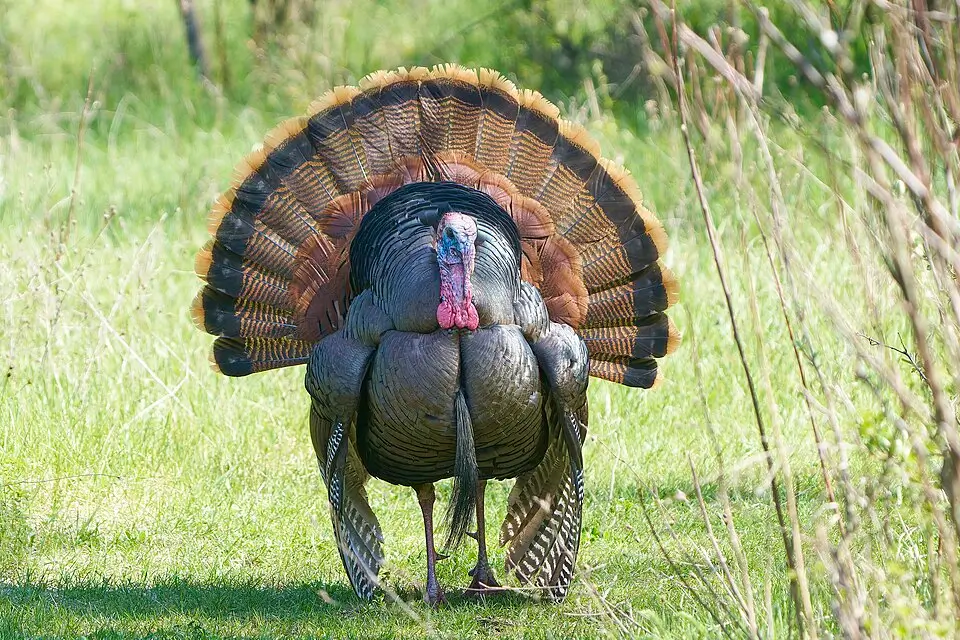
Wild turkeys are the largest members of the order Galliformes native to North America, and they are known for their striking physical characteristics. Adult male turkeys, known as toms or gobblers, are truly impressive animals. They are characterized by their iridescent feathers, which shimmer with hues of bronze, copper, green, and gold in bright sunlight. Males also display a prominent snood — the fleshy protuberance that drapes over the beak — as well as a wattle, the red fleshy growth beneath the chin, and a caruncle, the bumpy red or bluish skin on the head and neck. Perhaps most iconic is the beard, a cluster of coarse, hair-like feathers that protrude from the breast of males and occasionally older females. Toms also possess sharp spurs on their legs, which they use during competition with rival males.
Male wild turkeys are substantially larger than females. Toms can weigh anywhere from 11 to over 24 pounds, with particularly large individuals occasionally exceeding that range. Female turkeys, called hens, are noticeably smaller and more subtly colored, wearing muted browns and tans that provide excellent camouflage during the nesting season.
One of the most recognizable behaviors of the wild turkey is the strutting display performed by males during the spring breeding season. A gobbler in full strut is a breathtaking sight — tail feathers fanned wide, wings dragging along the ground, chest puffed outward, and head drawn back while the colors of the bare skin on the head shift dramatically from red to white to blue. This display, accompanied by deep, resonant gobbling, is the primary means by which males attract and court hens.
Wild turkeys are omnivores with a highly varied diet. They forage extensively on the ground, consuming acorns, seeds, berries, grasses, insects, small reptiles, and even amphibians depending on the season and available food sources. Acorns in particular are a critical food source, especially during the fall and winter months. Turkeys are also known to scratch through leaf litter and soil in search of invertebrates and plant material, leaving behind distinctive scratchings that hunters and trackers learn to recognize.
Despite their somewhat awkward appearance on the ground, wild turkeys are capable of surprisingly swift flight over short distances. They typically roost in trees at night to avoid ground predators, and their powerful legs allow them to run at speeds approaching 25 miles per hour when alarmed.
Wild turkeys have keen eyesight — one of their most important survival tools. Their eyes are positioned on the sides of their heads, giving them a wide field of view and excellent ability to detect movement, though their depth perception is somewhat limited compared to forward-facing eyes. Their hearing is also acute, making them a challenging quarry for hunters who must practice careful concealment and calling techniques.
There are several recognized subspecies of wild turkey across North America, including the Eastern (M. g. silvestris), the Osceola or Florida (M. g. osceola), the Rio Grande (M. g. intermedia), the Merriam's (M. g. merriami), and the Gould's (M. g. mexicana). In Idaho and the broader Mountain West region, hunters most commonly encounter the Merriam's turkey, which is well-adapted to the higher-elevation, coniferous forest habitats of the Rocky Mountain region.
Habitat & Range
The wild turkey is a remarkably adaptable species, capable of thriving in a wide range of habitats across North America. Historically, the species was concentrated in the eastern and central United States, but through both natural expansion and wildlife management programs involving trap-and-transplant efforts, wild turkeys now occupy a range that spans most of the contiguous United States, parts of Canada, and even portions of Mexico.
Wild turkeys generally favor habitats that offer a mosaic of forested areas for cover and roosting, open meadows or agricultural fields for foraging, and access to water. In the eastern part of their range, they are strongly associated with mature hardwood and mixed forests where mast-producing trees like oaks, hickories, and beeches provide abundant food. In the western states, including Idaho, turkeys adapt to different forest types. The Merriam's subspecies, in particular, is associated with ponderosa pine forests, open grasslands, and the riparian corridors that wind through mountains and high plateaus.
In Idaho, wild turkeys can be found across a variety of landscapes. The state's diverse topography — which includes rugged mountain ranges, broad river valleys, sagebrush steppe, and heavily forested zones — provides suitable habitat in many regions. Turkeys in Idaho are often associated with lower-elevation drainages and creek bottoms where mixed brush and timber provide cover, as well as agricultural areas where grain crops and grasses supplement their diet. The Snake River Plain and many of Idaho's river corridors have supported growing turkey populations in recent decades.
Idaho itself is a geographically diverse state located in the Pacific Northwest and Mountain West subregions of the Western United States. Bordered by Montana and Wyoming to the east, Nevada and Utah to the south, and Washington and Oregon to the west, Idaho encompasses roughly 83,569 square miles of varied terrain. This landscape diversity means that wildlife enthusiasts and hunters have opportunities to encounter wild turkeys in a wide range of settings, from the rolling farmland of the Palouse region to the pine-studded foothills of central Idaho.
Hunting Information
Turkey hunting is one of the most beloved traditions in American outdoor culture. Whether pursued in the classic spring season — when gobblers are actively breeding and responding to hen calls — or during fall seasons that target flocks foraging ahead of winter, turkey hunting demands skill, patience, and a deep understanding of turkey behavior.
Spring turkey hunting is widely considered the most exciting. Hunters typically set up before dawn near known roosting areas, then use a variety of calls — including box calls, slate calls, mouth diaphragm calls, and locator calls — to replicate the sounds of hens and draw in lovesick gobblers. The experience of hearing a distant tom answer a call with a thunderous gobble, then watching him emerge from the timber in full strut, is one of the most thrilling moments in all of hunting.
Fall turkey hunting takes a different approach, often involving the location and scattering of flocks, followed by the use of kee-kee calls or yelps to reassemble the birds. Dogs are also used in some states for fall turkey hunting, adding another layer of tradition to the pursuit.
In Idaho, hunters interested in pursuing wild turkeys should consult the Idaho Department of Fish and Game (IDFG) for current season dates, license requirements, and unit-specific regulations. As regulations can change from year to year based on population surveys and management objectives, it is essential to review the most up-to-date hunting rules directly from Idaho Fish and Game before planning any hunt. Hunters should also be aware of any specific unit requirements, reporting obligations, or permit systems that may apply to turkey hunting in different regions of the state.
Merriam's turkeys in Idaho are pursued using the same fundamental techniques that work across the country — careful scouting, effective calling, and disciplined concealment — but hunters in the Mountain West often find themselves navigating challenging elevation changes and diverse terrain that add an element of physical adventure to the experience.
Conservation
The story of the wild turkey's recovery is one of the great conservation successes in North American wildlife history. By the early 20th century, unregulated market hunting and widespread habitat destruction had reduced wild turkey populations to alarmingly low levels across much of their original range. Estimates suggest that by the 1930s, fewer than 30,000 wild turkeys remained in the wild across the entire continent.
The recovery effort that followed stands as a model for wildlife management. Through coordinated trap-and-transplant programs — in which wild-caught birds were relocated to suitable but unoccupied habitats — combined with stricter hunting regulations and improved land management practices, wild turkey populations rebounded dramatically across the 20th century. Today, wild turkey populations number in the millions across North America, occupying habitat in nearly every U.S. state as well as parts of Canada and Hawaii.
Organizations such as the National Wild Turkey Federation (NWTF), founded in 1973, have played a pivotal role in funding habitat conservation, supporting research, and promoting ethical hunting practices. The partnership between hunters, wildlife agencies, and conservation organizations has been fundamental to the turkey's ongoing success story.
Wild turkeys continue to face challenges, including habitat fragmentation, predation pressure, disease, and the ongoing effects of land use change. However, their resilience and adaptability, combined with the ongoing commitment of the hunting and conservation community, provide strong reasons for optimism about the future of this iconic bird.
In Idaho, as in other western states, ongoing management efforts aim to maintain healthy turkey populations in suitable habitats while balancing the needs of other wildlife and land users. Hunters who purchase licenses and tags directly contribute to these conservation efforts through the funding mechanisms established by the Federal Aid in Wildlife Restoration Act (Pittman-Robertson Act), which directs a portion of excise taxes on firearms and ammunition to state wildlife agencies.
Conclusion
The wild turkey (Meleagris gallopavo) is far more than a seasonal symbol or a gamebird — it is a living testament to what thoughtful conservation and responsible wildlife management can achieve. In Idaho and across North America, this remarkable bird continues to thrive, offering hunters and nature lovers alike the chance to engage with one of the continent's most dynamic and charismatic species. Whether you are planning your first spring turkey hunt in the ponderosa pines of Idaho or simply watching a flock forage across a frosty meadow at dawn, the wild turkey never fails to inspire.