Overview
Few animals in North America command as much immediate recognition — and instinctive caution — as the striped skunk (Mephitis mephitis). With its bold black-and-white coloration and legendary chemical defense system, this fascinating mammal has carved out a unique niche in the continent's ecological tapestry. Found from coast to coast across the United States, Canada, and into northern Mexico, the striped skunk is far more than a punchline or a roadside curiosity. It is a highly adaptable, ecologically valuable predator of insects and small animals, a subject of genuine scientific interest, and — perhaps surprisingly to some — a species with a long history of interaction with hunters and trappers across the American West.
In Idaho, a landlocked state spanning over 83,000 square miles of dramatic terrain in the Pacific Northwest and Mountain West, the striped skunk is a permanent and well-established resident. From the sagebrush flats of the Snake River Plain to the wooded foothills surrounding Boise, skunks quietly go about their nightly routines, largely unnoticed by the human population they often live surprisingly close to. Understanding this animal — its biology, behavior, habitat preferences, and its place in the hunting and trapping traditions of the region — offers a richer appreciation for one of the West's most distinctive wild neighbors.
Biological Traits
The striped skunk, Mephitis mephitis, belongs to the family Mephitidae, a group of mustelid-related mammals commonly known as skunks. The genus name Mephitis is derived from Latin, meaning "noxious exhalation" — a fitting tribute to the animal's most famous attribute.
Appearance
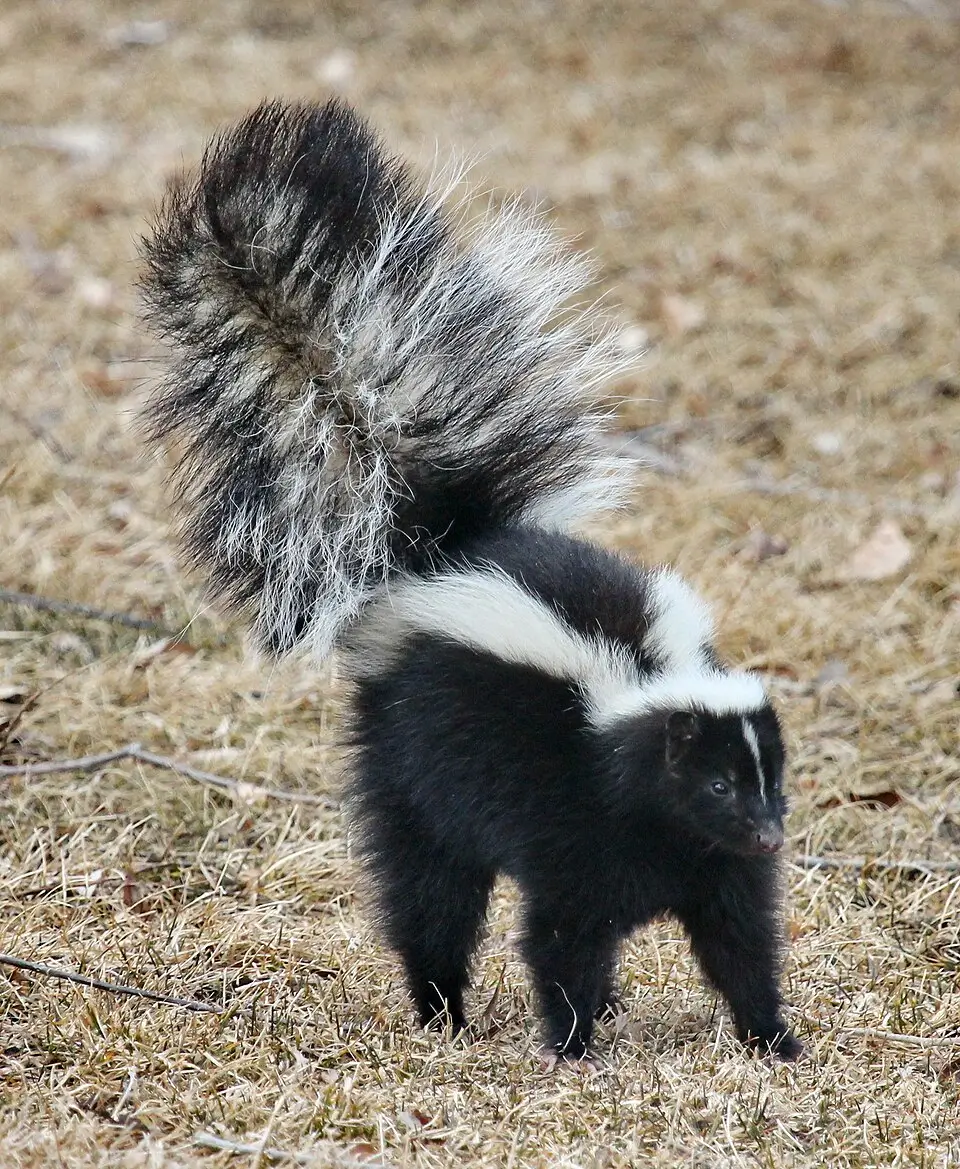
The striped skunk is perhaps the most visually distinctive mammal in North America. Its coat is jet black with a prominent white stripe that typically begins at the top of the head, splits at the shoulders, and runs in two parallel bands down either side of the back, converging again near the base of the bushy, plumed tail. Some individuals display considerable variation in their stripe patterns, with narrower or wider markings, but the general black-and-white theme is consistent across the species.
Adult striped skunks are roughly the size of a domestic house cat, with a stocky, low-slung body, a relatively small and pointed head, short powerful legs, and prominent curved claws well-suited to digging. The tail is large and expressive, often raised as a warning signal before the animal deploys its chemical defenses.
The Defense Mechanism
The striped skunk's primary defense — and its most famous characteristic — is its ability to spray a sulfur-containing chemical compound produced by a pair of anal scent glands located on either side of the anus. These glands can store enough of the pungent, oily musk to deliver multiple sprays, and the skunk can aim with remarkable accuracy at targets up to ten feet or more away. The spray contains sulfur-containing chemicals called thiols (previously known as mercaptans), which bind tenaciously to skin, fur, and fabric and produce the characteristic, persistent odor that can be detected from considerable distances. Before spraying, skunks typically provide a series of warnings: foot stomping, hissing, and raising the tail. This warning behavior reflects the animal's preference to conserve its chemical reserves, as the glands require time to replenish after a full discharge.
Diet and Foraging
Striped skunks are omnivores with highly opportunistic feeding habits. Their diet shifts with the seasons and local availability, but typically includes insects (particularly grubs, beetles, and grasshoppers), earthworms, small rodents, bird eggs, frogs, berries, fruits, nuts, and carrion. Their strong digging claws make them excellent at excavating insect larvae from the soil, and this behavior makes them genuinely beneficial in agricultural and garden settings, where they consume large quantities of pest insects.
Reproduction and Life Cycle
Striped skunks typically breed in late winter, generally between February and March. After a gestation period of approximately 60 to 75 days, females give birth to litters of commonly four to seven young, called kits. Kits are born blind and helpless but develop rapidly, opening their eyes at around three weeks and beginning to follow their mother on foraging expeditions by midsummer. By late summer or early fall, the young skunks begin to disperse and establish their own home ranges. The species is generally solitary outside of the breeding season, though females and their young may share communal denning sites in winter.
Dormancy and Winter Behavior
Striped skunks do not hibernate in the true physiological sense, but they do enter a state of winter torpor during cold weather. During this period, they remain in their dens — often located under buildings, in abandoned burrows, brush piles, or rocky outcrops — living off accumulated fat reserves. During mild winter spells, skunks may emerge to forage, making them occasionally visible even in colder months.
Lifespan and Predators
In the wild, striped skunks typically live two to four years, though longer lifespans are possible. Their primary predators include great horned owls, which have a poorly developed sense of smell and are therefore largely unbothered by the skunk's chemical defense. Coyotes, foxes, badgers, and bobcats will occasionally prey on skunks as well, particularly young or vulnerable individuals.
Habitat & Range
The striped skunk is one of the most widely distributed mammals in North America, ranging from southern Canada through the continental United States and into northern Mexico. This broad distribution reflects the species' remarkable ecological flexibility. Striped skunks thrive in a wide variety of habitats, including open grasslands, agricultural fields, woodland edges, brushy areas, suburban neighborhoods, and even the fringes of urban centers.
In Idaho, this adaptability is on full display. The state's diverse geography — encompassing high desert, river valleys, dense coniferous forests, mountain meadows, and agricultural plains — provides suitable habitat for skunks across much of the state's landscape. The Snake River Plain, with its mix of irrigated farmland, sagebrush steppe, and riparian corridors, is particularly hospitable. The Treasure Valley near Boise, one of Idaho's most densely populated regions, also supports healthy skunk populations, as skunks are well-adapted to living alongside human development.
Skunks tend to prefer habitat with abundant cover and a reliable food supply, particularly areas with loose, workable soil where they can excavate insect larvae and grubs. Proximity to water is often a factor, as well-watered areas support higher densities of the invertebrates that form a significant portion of the skunk's diet. Den sites under structures, in culverts, under brush piles, or in the burrows of other animals are commonly used throughout their range.
Hunting Information
The striped skunk has a long and genuine history in the North American trapping and hunting tradition. Historically, skunk fur was a commercially valuable commodity, and trappers across the continent harvested skunks as part of broader furbearer trapping seasons. Today, skunks continue to be legally harvested in many states as furbearers, with regulations varying considerably from state to state.
In Idaho, specific current season dates and licensing requirements for striped skunk were not available in the official state data consulted for this article. Idaho is home to a rich and active outdoor sporting tradition, and the state's Fish and Game department manages a wide variety of furbearer and small game species. Hunters and trappers interested in pursuing striped skunks in Idaho are strongly encouraged to consult the most current Idaho Department of Fish and Game regulations, as rules regarding licensing, seasons, and legal methods of take can change from year to year. The Idaho Department of Fish and Game's official website is the authoritative source for current, accurate regulatory information.
From a practical standpoint, those who do pursue skunks — whether for fur, nuisance control, or as part of broader trapping programs — typically do so using cage traps, foothold traps, or body-gripping traps set near den sites, along travel corridors, or near food sources. As with all furbearer harvest, ethical and humane practices are a hallmark of responsible trapping tradition.
It is also worth noting that in many jurisdictions, skunks may be taken in the context of nuisance wildlife control, particularly when they take up residence under homes, decks, or outbuildings. Landowners experiencing such situations in Idaho should consult both state regulations and, when appropriate, a licensed nuisance wildlife control professional.
Conservation
The striped skunk is currently classified as a species of Least Concern by the International Union for Conservation of Nature (IUCN), reflecting its wide distribution, adaptability, and stable population across its range. Unlike many wildlife species that have faced severe pressure from habitat loss and human encroachment, the striped skunk has in many respects benefited from human-altered landscapes, finding ample food and shelter in agricultural and suburban settings.
One conservation consideration worth noting is the skunk's role as a significant wildlife reservoir for rabies in North America. Striped skunks are one of the primary carrier species for the terrestrial strain of rabies in the United States, and this has important implications for public health and wildlife management. Hunters, trappers, and outdoor enthusiasts in Idaho and across the West should exercise appropriate caution when encountering skunks that appear disoriented, active during daylight hours, or otherwise behaving abnormally, as these can be indicators of rabies infection. Healthy skunks are primarily nocturnal and typically avoid human contact.
Despite this consideration, skunks play a genuinely important ecological role. As consumers of large quantities of insects — including many agricultural pest species — they provide measurable economic and ecological benefits. Their digging activity aerates soil, and as both predator and prey, they are woven into the food webs of every ecosystem they inhabit.
In Idaho's diverse wild landscape, the striped skunk is a permanent, valued, and ecologically meaningful part of the native fauna. Whether observed from a respectful distance in a Boise-area backyard, encountered on an early morning hunt in the sagebrush country of the Snake River Plain, or appreciated simply as a remarkable example of evolutionary adaptation, Mephitis mephitis deserves recognition as one of the American West's most remarkable and resilient wild neighbors.