Overview
Few animals embody the raw, unfiltered spirit of the North American wilderness quite like the snowshoe hare. Known scientifically as Lepus americanus, this remarkable lagomorph has captivated wildlife enthusiasts, naturalists, and hunters alike for generations. With its distinctive oversized hind feet, its dramatic seasonal coat transformation, and its fascinating boom-and-bust population cycles, the snowshoe hare stands as one of the continent's most ecologically significant small game species. From the boreal forests of Canada to the mountain ranges of the American West, this resilient creature plays a pivotal role in nearly every ecosystem it inhabits — acting as a critical link in the food chain between the plant life of dense forest understories and the predators that depend on it for survival.
In Idaho, a state celebrated for its sweeping wilderness, rugged mountain terrain, and extraordinary biodiversity, the snowshoe hare finds an exceptionally welcoming home. The vast forests, river corridors, and high-elevation thickets of Idaho provide ideal conditions for this species to thrive. For hunters and wildlife watchers across the Gem State, encountering a snowshoe hare — whether bounding through a snow-covered lodgepole pine forest or sitting perfectly still in its white winter camouflage — is always a memorable experience. This article takes a comprehensive look at the snowshoe hare: its biology, habitat preferences, ecological importance, and its place in the outdoor heritage of Idaho and the broader American West.
Biological Traits
The snowshoe hare (Lepus americanus) belongs to the family Leporidae and the order Lagomorpha, placing it among the rabbits, hares, and pikas. As a true hare rather than a rabbit, the snowshoe hare is born fully furred with open eyes — a condition known as precocial development — and is capable of moving about almost immediately after birth. This contrasts with true rabbits, which are born blind and hairless in underground burrows.
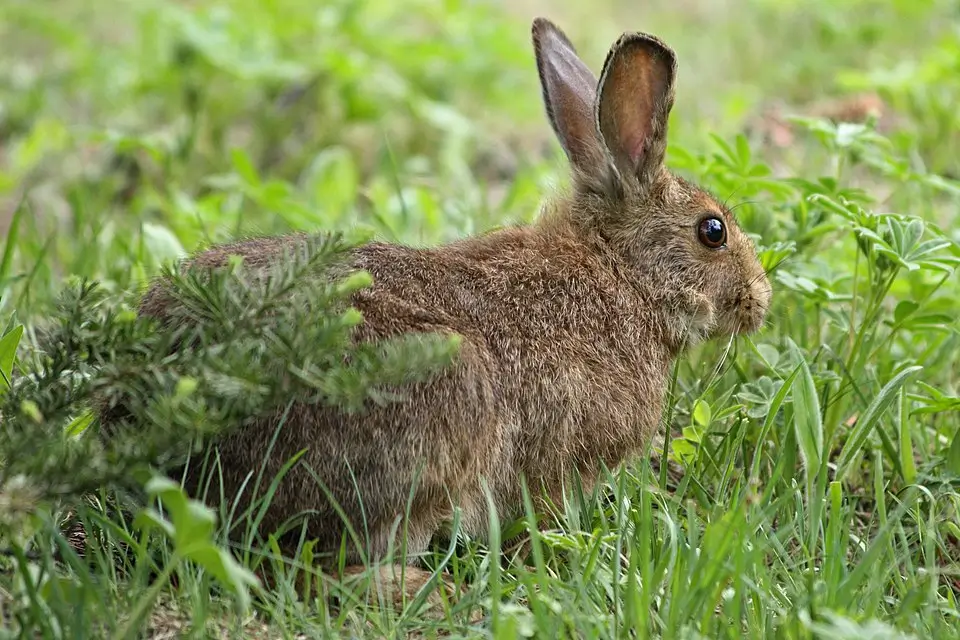
One of the snowshoe hare's most celebrated biological features is its dramatic seasonal color change, a process known as molting. During summer months, the hare sports a brownish-gray coat that blends seamlessly with the forest floor, leaf litter, and woody shrubs of its habitat. As autumn days shorten and temperatures drop, the hare undergoes a gradual transformation driven by changes in photoperiod — the length of daylight — rather than temperature alone. By the time winter arrives in full force, most snowshoe hares have completed their molt into a brilliant white coat that renders them nearly invisible against snow-covered landscapes. Come spring, the cycle reverses, and the brown summer coat returns.
The species takes its common name from its extraordinarily large hind feet. These oversized appendages, which can measure several inches in length and spread wide when the animal is in motion, function much like natural snowshoes. The broad surface area of the hind feet distributes the hare's weight across the snow, allowing it to move with remarkable agility and speed across deep snowpack — terrain that would slow or stop many of its predators. This adaptation is not merely cosmetic; it is a genuine survival advantage in the snowy northern and montane habitats the species calls home.
Snowshoe hares are primarily crepuscular and nocturnal, meaning they are most active around dawn, dusk, and through the night hours. They are herbivores with a diet that shifts dramatically with the seasons. In summer, they browse on grasses, forbs, ferns, and a wide variety of leafy vegetation. During winter, when green vegetation is buried beneath snow, they shift to a diet of twigs, bark, buds, and the needles of coniferous trees. Like other lagomorphs, snowshoe hares practice cecotrophy — the consumption of specialized soft fecal pellets directly from the anus — which allows them to extract maximum nutrition from their fibrous plant-based diet.
Perhaps the most scientifically fascinating aspect of the snowshoe hare's biology is its legendary population cycle. Across much of its range, particularly in the boreal forests of Canada and Alaska, snowshoe hare populations undergo dramatic fluctuations on a roughly 8-to-11-year cycle. Populations can swing from extraordinarily high densities to near-crashes and back again. These cycles are closely linked to the availability of food resources and, critically, to predator-prey dynamics. The Canada lynx (Lynx canadensis), whose range closely mirrors that of the snowshoe hare, is perhaps the most iconic example of a predator whose population tracks closely — and with a slight time lag — behind that of its primary prey, the snowshoe hare. This predator-prey relationship is one of the most studied and well-documented examples of ecological cycling in wildlife biology.
Habitat and Range
The snowshoe hare enjoys one of the broader ranges of any North American lagomorph. It is distributed across Canada from coast to coast, through Alaska, and into portions of the contiguous United States, particularly in the northern tier of states and in mountainous regions farther south where suitable habitat exists. In the American West, snowshoe hares are found in the Rocky Mountains, the Cascades, the Sierra Nevada, and associated ranges, often at elevations that experience significant winter snowpack.
Idaho, situated at the crossroads of the Pacific Northwest and the Mountain West, provides a diverse mosaic of habitats that support healthy snowshoe hare populations. The state's expansive coniferous forests — dominated by species such as lodgepole pine, Engelmann spruce, subalpine fir, and Douglas fir — create exactly the kind of dense, brushy understory that snowshoe hares prefer. Hares in Idaho are commonly found in areas with abundant low shrubs, young forest regeneration following timber harvest or wildfire, willow and alder thickets along stream corridors, and dense stands of young conifers.
Elevation plays an important role in Idaho snowshoe hare distribution. While the species can be found at a range of elevations, they tend to be most abundant in mid-to-high elevation forests where winters are snowy and long — conditions that align well with the hare's specialized winter adaptations. Riparian zones, particularly those lined with willows and other shrubby species, are known to be especially productive snowshoe hare habitat in Idaho and throughout the Mountain West.
Hunting Information
The snowshoe hare holds an honored place in North American small game hunting tradition. For generations, hunters have pursued this species across snowy woodlands, relishing both the challenge of the hunt and the culinary rewards that follow. Hare hunting is a pursuit that rewards patience, woodsmanship, and an intimate knowledge of the animal's habits and preferred habitats.
Hunting snowshoe hares can be pursued through a variety of methods. Still-hunting through dense conifer thickets and brushy areas, jumping hares from their forms — the shallow depressions where they rest — is a popular and effective technique. One of the most beloved traditional methods involves the use of trained beagles or other small hounds, whose baying and tracking ability make for an exceptionally enjoyable and social hunting experience. Hares pushed by dogs will often run in wide circles, eventually returning near their starting point, offering hunters strategic opportunities.
Snowshoe hare meat is lean, mild, and highly regarded by those who take the time to prepare it properly. It lends itself well to braised preparations, stews, and roasted dishes, and has a long history in the culinary traditions of both Indigenous peoples and European settlers across North America.
In Idaho, snowshoe hares are a legal small game species. However, because specific current season dates, bag limits, and licensing requirements were not available in the source data at the time of this writing, hunters are strongly encouraged to consult the Idaho Department of Fish and Game (IDFG) directly for the most up-to-date regulations before heading afield. Regulations can change from year to year, and it is always the hunter's responsibility to be fully informed of current rules. The IDFG website (idfg.idaho.gov) is the most reliable resource for current small game hunting information in Idaho.
Conservation
The snowshoe hare is currently listed as a species of Least Concern by most wildlife conservation assessments, reflecting its wide range and generally robust populations across its North American range. That said, the species is not without its conservation considerations. As a prey species at the base of the food web for many iconic predators — including the Canada lynx, bobcat, great horned owl, northern goshawk, red fox, coyote, and others — healthy snowshoe hare populations are essential to the ecological integrity of the northern and montane forest ecosystems they inhabit.
Climate change presents an emerging conservation concern for snowshoe hares. Research has indicated that as winters become shorter and snowpack diminishes in some portions of the species' range, the timing of the hare's seasonal coat molt may fall out of sync with actual snow conditions on the ground. A white hare sitting on brown, snow-free ground is conspicuous and far more vulnerable to predation — a phenomenon sometimes called "camouflage mismatch." Scientists are actively studying how hare populations may adapt, or struggle to adapt, to these changing conditions over time.
In Idaho and across the American West, habitat conservation efforts that protect mature and regenerating forest ecosystems also benefit snowshoe hare populations. Sustainable forest management practices, the maintenance of riparian corridors, and the preservation of high-elevation habitats all contribute to keeping hare populations healthy and resilient.
Regulated hunting, when conducted in accordance with scientifically established guidelines, poses no significant threat to snowshoe hare populations. Hunting seasons are managed with population sustainability in mind, and the snowshoe hare's relatively high reproductive rate — females can produce multiple litters per season, each containing several young — provides a natural buffer against moderate harvest pressure.