Overview
Few sights in the natural world rival the spectacle of sandhill cranes in flight. These elegant, ancient birds — with their distinctive crimson foreheads, pearl-gray plumage, and haunting, rattling calls — have been part of the North American landscape for an extraordinarily long time. The sandhill crane (Grus canadensis) is widely regarded as one of the oldest living bird species on the planet, with fossil records suggesting the lineage dates back millions of years. Today, these remarkable birds continue to thrive across vast stretches of the continent, from the Arctic tundra to the wetlands of the American South, and they remain a symbol of wildness, endurance, and the beauty of migratory spectacle.
For residents and visitors to Idaho, the sandhill crane is a familiar and cherished presence. Every year, these stately birds pass through or nest within Idaho's diverse landscapes, offering wildlife watchers, photographers, and hunters alike a remarkable opportunity to connect with one of North America's most charismatic avian species. Understanding the sandhill crane — its biology, its habits, its movements, and the conservation story behind its continued success — helps us appreciate just how extraordinary this bird truly is.
Biological Traits
The sandhill crane belongs to the family Gruidae, the true cranes, and is one of only two crane species native to North America — the other being the critically endangered whooping crane (Grus americana). The sandhill crane itself is divided into several subspecies, which vary somewhat in size and migratory behavior. These include the greater sandhill crane, the lesser sandhill crane, the Canadian sandhill crane, the Mississippi sandhill crane, the Florida sandhill crane, and the Cuban sandhill crane. The migratory subspecies tend to be the most numerous, while some non-migratory subspecies face greater conservation pressures due to restricted ranges.
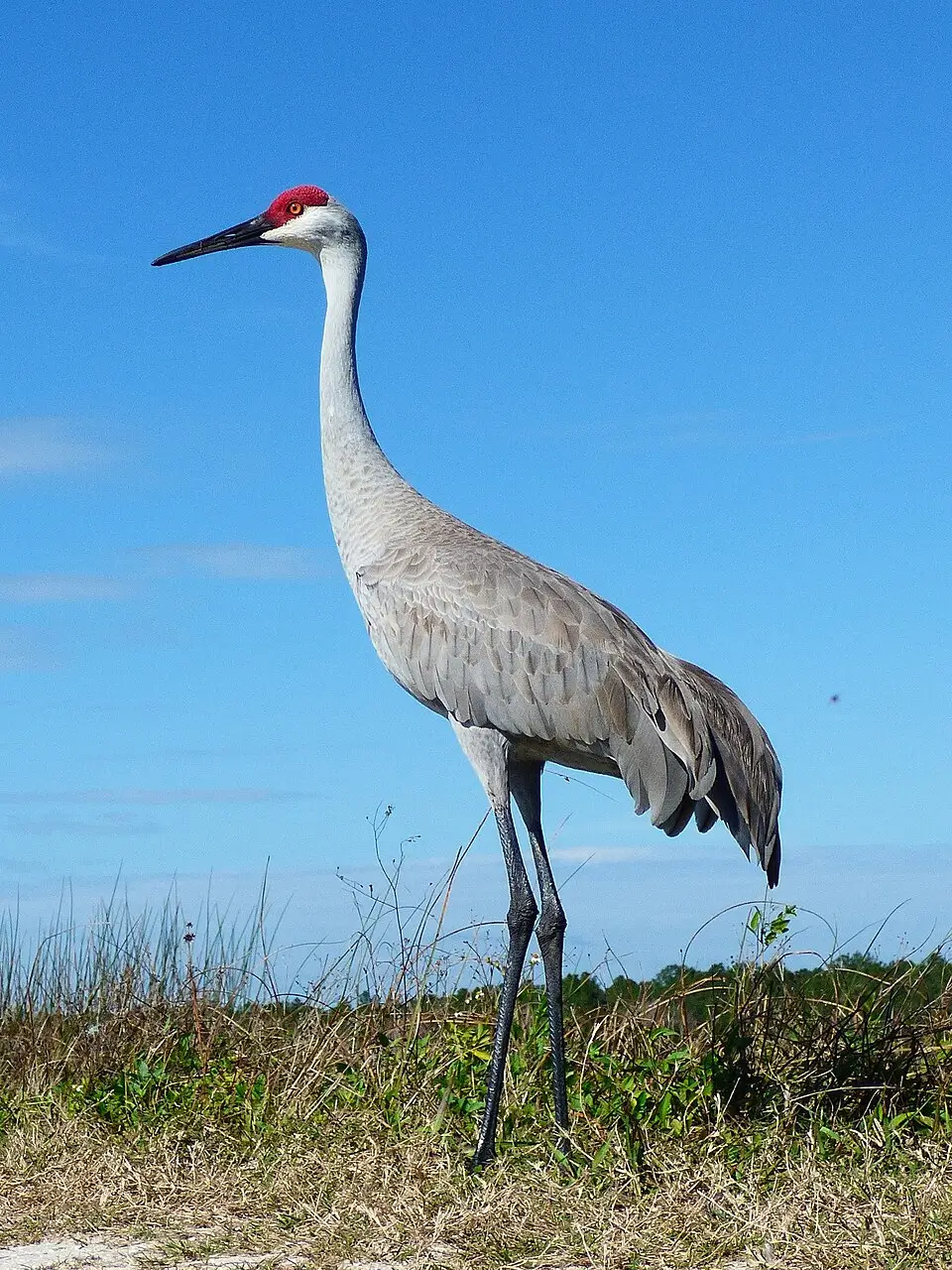
In terms of physical appearance, sandhill cranes are immediately recognizable. They are large, long-legged, long-necked birds with a characteristic upright posture that gives them an almost regal bearing. Their plumage is predominantly gray, though in the wild, many individuals appear brownish or rust-colored — a result of the birds preening with iron-rich mud, which stains the feathers. One of the crane's most distinctive features is the bright red patch of bare skin on the forehead and crown, which intensifies in color during periods of excitement or courtship. Adults also display a prominent bustle of feathers over the tail, giving the back end of the bird a fluffy, almost fountain-like appearance.
Sandhill cranes are notably large birds. Adults stand roughly three to four feet tall, with wingspans that can stretch to six feet or beyond, depending on the subspecies. Despite their size, they are powerful and graceful fliers, capable of soaring on thermal updrafts at high altitudes during migration. Their call — a loud, rolling, bugling sound often described as a rattle or a trumpet — is one of the most evocative sounds in nature and can carry for considerable distances across open terrain.
One of the most celebrated aspects of sandhill crane behavior is their elaborate courtship dancing. During breeding season, pairs and groups of cranes engage in energetic displays that involve leaping, wing-spreading, head-bobbing, and vocalizing. These dances serve to strengthen pair bonds, and sandhill cranes are generally monogamous, often pairing for life. They are also notably long-lived birds; individuals in the wild can reach 20 years of age or more, and captive birds have lived considerably longer.
Sandhill cranes are omnivores with a broad and opportunistic diet. They forage in fields, wetlands, and open grasslands, consuming seeds, grains, tubers, berries, insects, small rodents, snakes, frogs, and other invertebrates. Their long bills are well-suited to probing in soft soil or shallow water for food. During migration and on their wintering grounds, cranes often congregate in agricultural fields to feed on waste grain — a behavior that brings enormous flocks together in certain key stopover locations.
Nesting typically occurs in wetland habitats, where cranes build large platform nests of vegetation in shallow water or on marshy ground. Females generally lay one to two eggs per clutch, and both parents share incubation duties over roughly a month-long period. Chicks — called colts — are precocial, meaning they are mobile and able to leave the nest soon after hatching, though they remain under parental care for an extended period as they develop flight capability.
Habitat & Range
The sandhill crane occupies an impressively broad range across North America. Migratory populations breed in the northern United States, Canada, and into Alaska, and winter in the southern United States and Mexico. Some populations are non-migratory, residing year-round in Florida, Mississippi, and Cuba. The heart of the species' migratory corridor is the Central Flyway, and the Platte River in Nebraska is perhaps the most famous sandhill crane staging area in the world, where hundreds of thousands of birds gather each spring.
In Idaho, sandhill cranes are a meaningful part of the avian community. The state's geography — encompassing high mountain valleys, sagebrush plains, river corridors, and extensive wetland complexes — provides excellent habitat for cranes during both migration and the nesting season. Areas with shallow wetlands, marshes, meadows, and adjacent agricultural fields are particularly attractive to sandhill cranes. Idaho's Snake River Plain and its associated wetland systems have historically supported sandhill crane populations, and patient observers in the right locations can witness impressive gatherings of these birds during migration periods.
Cranes favor open, flat terrain where they can maintain clear sightlines around them — a reflection of their vulnerability to ground predators when roosting or nesting. Shallow water roosting sites are important for safety at night, as water provides a natural barrier against coyotes and other terrestrial threats. The intersection of wetland habitats and productive foraging areas in agricultural landscapes makes Idaho a valuable component of the broader sandhill crane migratory network.
Hunting Information
Sandhill crane hunting is a legal and regulated activity in many states across the United States, managed under the framework of the Migratory Bird Treaty Act and overseen cooperatively by the U.S. Fish and Wildlife Service and individual state wildlife agencies. The sandhill crane is sometimes called the "ribeye of the sky" by hunters who prize the bird for its excellent table qualities — the dark, rich breast meat is often compared favorably to high-quality beef or venison, making it a coveted game bird among waterfowl and upland hunters alike.
Hunting sandhill cranes requires specific federal migratory bird hunting stamps and permits in addition to any state-level licenses and tags. The regulations governing sandhill crane hunting can vary significantly from state to state and year to year, based on population assessments and management objectives developed by wildlife biologists. Hunters interested in pursuing sandhill cranes in Idaho should consult the Idaho Department of Fish and Game directly for the most current and accurate season dates, bag limits, license requirements, and zone designations, as these details are subject to annual revision and were not specified in the source data available at the time of writing.
Successful sandhill crane hunting typically involves decoy spreads, calling, and careful scouting of feeding and roosting areas. The birds' wariness and keen eyesight make them a challenging quarry that demands patience, woodsmanship, and quality concealment. Many hunters report that a successful sandhill crane hunt is among the most memorable and rewarding field experiences available in North American waterfowl hunting, combining the thrill of the pursuit with exceptional table fare.
Idaho's vast open landscapes, agricultural valleys, and wetland systems provide a compelling backdrop for crane hunting. The state's outdoor heritage and access to public lands make it an attractive destination for hunters seeking this unique and increasingly popular experience.
Conservation
The conservation story of the sandhill crane is largely one of success and resilience. While some non-migratory subspecies, such as the Mississippi sandhill crane, remain critically endangered and the subject of intensive recovery efforts, the migratory populations of sandhill cranes have recovered remarkably well from historic lows caused by unregulated hunting and habitat loss in the nineteenth and early twentieth centuries. Today, the greater and lesser sandhill crane populations number in the hundreds of thousands, representing one of the notable conservation success stories in North American wildlife management.
This recovery reflects the effectiveness of the Migratory Bird Treaty Act, signed in 1918 between the United States and Canada, which brought commercial hunting of migratory birds to an end and placed their management on a scientific, population-based foundation. The collaboration between federal agencies, state wildlife departments, non-governmental conservation organizations, and the hunting community has been central to maintaining and enhancing sandhill crane populations across the continent.
Habitat conservation remains a priority for the long-term health of sandhill crane populations. Wetland preservation, responsible agricultural practices, and the maintenance of key stopover sites along migration corridors are all important components of crane conservation. Organizations dedicated to wetland habitat — including Ducks Unlimited and various state and federal land management agencies — contribute meaningfully to the ecosystems that cranes depend upon.
In Idaho, land stewardship that protects and enhances wetland habitats supports not only sandhill cranes but a rich diversity of other wildlife. Hunters and wildlife enthusiasts who advocate for healthy landscapes and responsible resource management play an important role in the ongoing conservation of this iconic species.
The sandhill crane stands as proof that with thoughtful management, legal protection, and committed conservation effort, wild species can recover and flourish. For those who encounter these birds on Idaho's wetlands and open plains — whether through binoculars, a camera lens, or in the field during hunting season — the sandhill crane offers a powerful reminder of what is possible when humans and wildlife share the landscape wisely.