Overview
Few animals capture the spirit of the American wilderness quite like the Rocky Mountain elk. Towering over most other members of the deer family, bugling through misty mountain valleys at dawn, and roaming some of the most spectacular landscapes in North America, the Rocky Mountain elk (Cervus canadensis nelsoni) stands as one of the continent's most celebrated and awe-inspiring large mammals. Whether encountered on a backcountry hiking trail, spotted from a scenic overlook, or pursued during a hard-earned hunting season in the high country, this magnificent animal commands respect and admiration from wildlife enthusiasts and hunters alike.
The Rocky Mountain elk is a subspecies of the North American elk (Cervus canadensis), itself a member of the broader deer family Cervidae. Within that taxonomic framework, elk belong to the order Artiodactyla — the even-toed ungulates — alongside deer, moose, caribou, and a host of other hoofed mammals. The subspecies designation nelsoni honors Edward William Nelson, a noted American naturalist and wildlife biologist of the late 19th and early 20th centuries whose contributions to North American zoology were immense.
Today, the Rocky Mountain elk is not only a keystone species of the mountain West, but also one of the most sought-after big game animals in the United States. States like Idaho, Montana, Wyoming, Colorado, and Oregon host substantial populations, drawing hunters from across the country each fall. Understanding the biology, habitat preferences, and broader ecological role of this animal is essential for anyone who hopes to pursue it responsibly or simply appreciate it from afar.
Biological Traits
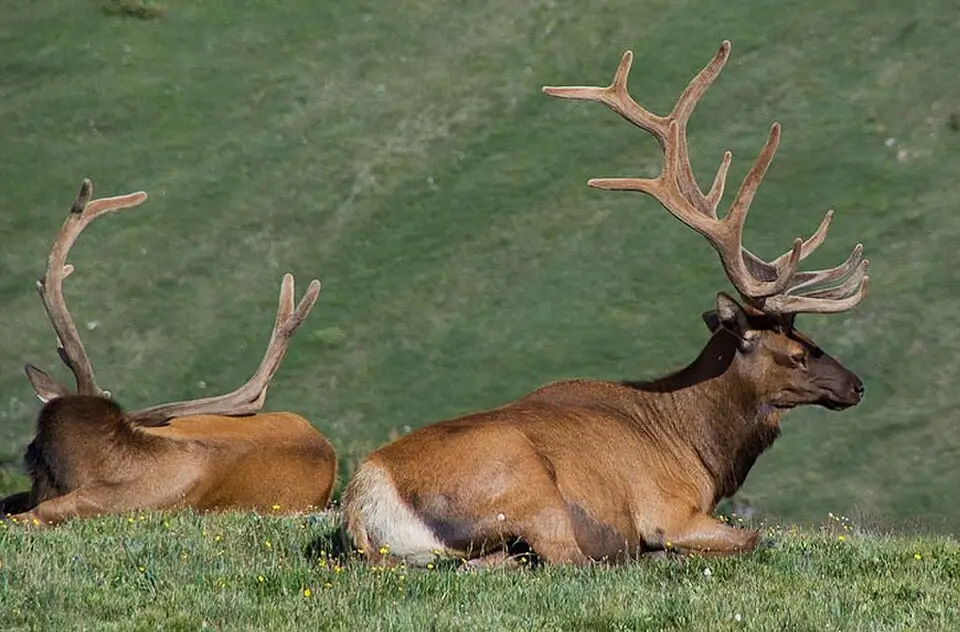
The Rocky Mountain elk is one of the largest land mammals in North America, and its sheer physical presence is undeniable. Adult bulls are particularly impressive, standing roughly five feet tall at the shoulder and capable of weighing anywhere from 700 to well over 1,000 pounds in peak condition. Cows, while considerably smaller, are themselves substantial animals, often weighing between 400 and 600 pounds.
One of the most iconic features of the bull elk is its antlers. Growing anew each year, these remarkable bony structures can span five feet or more from tip to tip and may weigh upward of 40 pounds on a mature bull. The antler cycle begins in the spring, when rising levels of testosterone and longer daylight hours trigger rapid growth. During this period, antlers are covered in velvet — a soft, nutrient-rich tissue that supplies blood and minerals to the growing bone. By late summer, the velvet dries and bulls rub it off against trees and shrubs, revealing the hardened, polished antlers that will serve them during the autumn rut.
The rut itself is one of the most dramatic spectacles in all of North American wildlife. Beginning in late summer and intensifying through September and into October, bull elk engage in fierce competition for breeding rights. They emit their famous bugle — a haunting, multi-toned vocalization that echoes through mountain valleys — to advertise their fitness to cows and to challenge rival bulls. Physical confrontations between evenly matched bulls can be intense, with combatants locking antlers and pushing against each other with tremendous force. After the rut concludes, bulls shed their antlers and spend the winter recovering from the physical toll of the breeding season.
Elk are herbivores, relying on a broad diet of grasses, sedges, forbs, and browse depending on the season. In summer, they take advantage of lush high-elevation meadows, grazing on nutrient-rich vegetation that helps them put on fat reserves for winter. As snow accumulates and temperatures drop, elk migrate to lower elevations where wind-exposed ridges and south-facing slopes provide more accessible forage. Willows, aspen bark, and dried grasses become important dietary staples during the lean winter months.
Cow elk typically give birth to a single calf in late May or June, following a gestation period of approximately 240 to 262 days. Calves are born spotted — a camouflage adaptation that helps conceal them from predators during their first vulnerable weeks of life. Within a few days of birth, calves are mobile enough to follow their mothers, and by late summer they are weaned and consuming solid vegetation. The bond between cow and calf remains strong through the animal's first year of life.
Elk are social animals, generally organizing themselves into loose herds that are segregated by sex for much of the year. Cows, calves, and young bulls tend to move together in larger groups, while mature bulls often travel alone or in small bachelor groups outside of the rut. This social structure shapes movement patterns, habitat use, and behavior in meaningful ways that hunters and wildlife observers quickly learn to read.
Habitat & Range
As their name suggests, Rocky Mountain elk are closely associated with the mountainous landscapes of the American West. Their range extends broadly across the Rocky Mountain chain, from northern British Columbia and Alberta in Canada south through the intermountain West and into portions of the southwestern United States. Significant populations also exist in reintroduced areas throughout the central and eastern United States, though the heartland of the subspecies remains the rugged mountain terrain of states like Idaho, Montana, Wyoming, and Colorado.
Rocky Mountain elk are highly adaptable in terms of habitat, utilizing a wide variety of terrain types across the course of a year. During summer, herds gravitate toward high-elevation forests, subalpine meadows, and riparian corridors where cool temperatures and abundant forage are available. Coniferous forests dominated by lodgepole pine, Douglas fir, Engelmann spruce, and subalpine fir provide important cover from predators and relief from summer heat.
As autumn arrives and hunting seasons open across the West, elk behavior shifts noticeably. The rut draws bulls out of their seclusion and into more open terrain where they can bugle, display, and compete for cows. This period of increased activity makes elk more visible — and more vulnerable to hunters — than at almost any other time of year.
Idaho, in particular, represents exceptional elk country. The state's rugged topography, vast wilderness areas, and diverse mix of public land provide habitat for a robust elk population. The Gem State's landscape encompasses portions of the northern Rocky Mountains, the Snake River Plain, and the wild central mountains of the Clearwater and Salmon River drainages — all of which support elk. Idaho's proximity to Yellowstone and its connectivity with populations in Montana and Wyoming further enhances the ecological significance of elk within the state.
Hunting Information
Rocky Mountain elk hunting is a deeply ingrained tradition across the mountain West, and Idaho ranks among the premier destinations in the country for hunters pursuing this species. The state's extensive public lands — including multiple national forests, Bureau of Land Management holdings, and vast wilderness areas such as the Frank Church–River of No Return Wilderness — provide hunters with tremendous access to quality elk habitat.
Elk hunting in the West is physically demanding by nature. High-elevation terrain, unpredictable autumn weather, and the sheer size of the animals all present challenges that test a hunter's fitness, woodsmanship, and patience. Most serious elk hunters spend months preparing physically and logistically before their seasons begin.
A variety of hunting methods are employed for Rocky Mountain elk. Archery hunters who pursue elk during the early season — typically when the rut is approaching or underway — often rely on calling techniques, using cow calls and bugles to locate and draw in bulls. Rifle hunters typically work the general season, glassing open slopes and ridges or still-hunting through timber. Muzzleloader seasons provide yet another opportunity for hunters seeking a more traditional challenge.
Because specific season dates, license structures, and tag allocation systems vary from year to year and are subject to change by state wildlife agencies, hunters interested in pursuing elk in Idaho are strongly encouraged to consult the Idaho Department of Fish and Game directly for the most current and accurate regulations, season dates, and licensing requirements before planning any hunt.
Conservation
The story of Rocky Mountain elk conservation is one of the great wildlife success stories of the 20th century. By the late 1800s, unregulated market hunting and habitat loss had decimated elk populations across much of their historic range. Recognizing the crisis, early conservationists, sportsmen's organizations, and state and federal wildlife managers implemented protective regulations and coordinated restoration efforts that gradually rebuilt herds across the West.
Today, Rocky Mountain elk populations are generally considered healthy and well-managed throughout much of their range. Conservation organizations such as the Rocky Mountain Elk Foundation have played a pivotal role in protecting and restoring elk habitat, funding wildlife research, and advocating for sound management practices. The hunter-funded model of conservation — in which license fees, excise taxes on sporting equipment, and tag revenues support wildlife programs — has been central to elk recovery and ongoing management.
Modern elk management faces a new set of challenges, including chronic wasting disease, changing land use patterns, expanding predator populations, and the effects of climate change on high-elevation habitat. Wildlife agencies across the West continue to monitor populations carefully and adjust management strategies as conditions evolve.