Overview
Few animals capture the human imagination quite like the red fox. With its striking russet coat, bushy tail, and sharp, intelligent eyes, Vulpes vulpes has earned a place in folklore, literature, and cultural tradition across virtually every continent it inhabits. From the cunning trickster of Aesop's fables to the celebrated quarry of traditional European fox hunts, this animal has woven itself into the fabric of human culture in a way that few wild creatures can claim. Yet beyond the mythology and the stories, the red fox is a genuinely remarkable animal — one of the most adaptable, widely distributed, and ecologically successful carnivores on Earth.
In Idaho, a state defined by dramatic contrasts — sweeping high desert plains, rugged mountain ranges, dense conifer forests, and fertile river valleys — the red fox finds a landscape that suits its opportunistic nature perfectly. Whether trotting across a frost-covered meadow in the Sawtooth foothills or navigating the agricultural patchwork of the Snake River Plain, the red fox is a familiar and fascinating presence for hunters, wildlife watchers, and outdoor enthusiasts throughout the Gem State.
This article explores the biology, range, behavior, and hunting traditions associated with the red fox, with a particular focus on what makes this animal so special in the context of Idaho's diverse wild places.
Biological Traits
The red fox (Vulpes vulpes) belongs to the family Canidae — the same family that includes wolves, coyotes, domestic dogs, and other foxes. It is the largest of the true foxes, and its scientific name, Vulpes vulpes, reflects a classification that has been consistent since Carl Linnaeus first described the species in 1758.
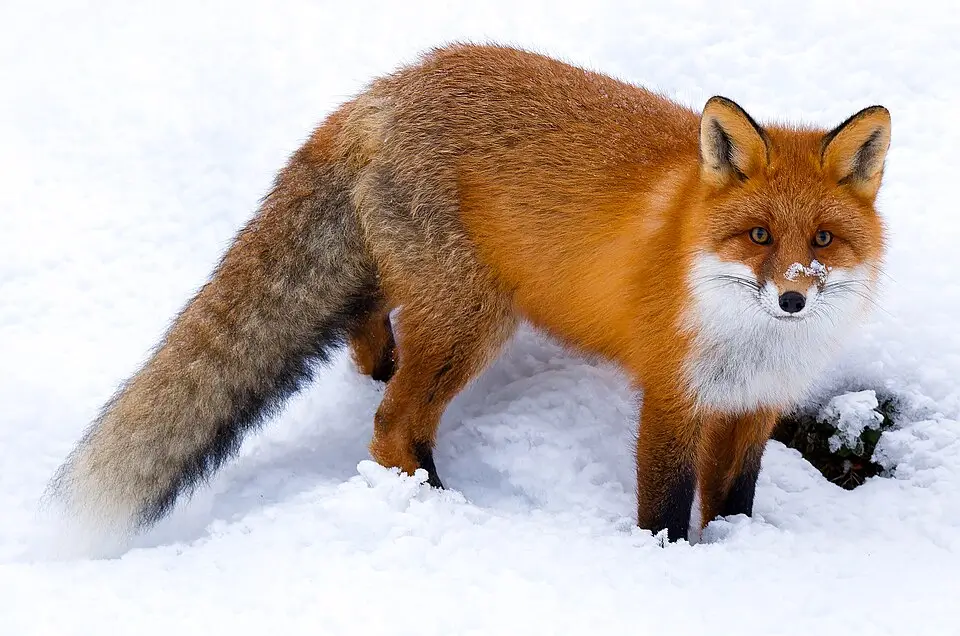
The red fox is instantly recognizable to most people, though it is worth noting that the species displays considerable variation in coat color. While the classic form features a vibrant reddish-orange coat on the back and sides, a white underside, and a long, bushy tail — often called a "brush" — tipped in white, other color morphs exist naturally within the species. These include the silver fox, which displays black fur with silver-tipped guard hairs, and the cross fox, which shows a distinctive dark stripe running across the shoulders intersecting with the dorsal stripe. All of these color variations belong to the same species and can appear within the same litter.
The red fox is a medium-sized predator. Adults typically weigh between 6 and 30 pounds depending on geographic location, sex, and the availability of food resources, with males generally larger than females. Their legs are slender and built for agile movement, and they possess the characteristic upright, pointed ears that allow them to detect the faintest sounds of prey moving beneath snow or grass.
One of the most celebrated aspects of red fox biology is their intelligence and sensory capability. Red foxes possess excellent hearing, capable of detecting sounds at very high frequencies. They are known to use the Earth's magnetic field as a hunting aid — a rare ability among mammals — which helps them accurately pounce on prey hidden beneath snow. Their sense of smell is acute, and they use scent marking extensively to communicate territory boundaries to other foxes.
Red foxes are primarily nocturnal or crepuscular, meaning they are most active during the hours around dawn and dusk, though daytime activity is not uncommon, particularly during the breeding season or when raising young. They are largely solitary animals outside of the mating season, with each individual maintaining a home range that it patrols regularly.
Breeding typically occurs in late winter, and after a gestation period of approximately 52 days, a vixen (female fox) gives birth to a litter of cubs — typically between two and six, though larger litters are possible. Cubs are born blind and helpless and spend their early weeks in the den under the close care of their mother, while the male often assists by bringing food. By late summer, the young foxes are independent and disperse to establish their own territories.
The red fox is an omnivore and an opportunist of the highest order. Its diet shifts with the seasons and the landscape, encompassing small mammals such as voles, mice, and rabbits, as well as birds, eggs, insects, earthworms, berries, and carrion. This dietary flexibility is one of the core reasons for the species' extraordinary success as a global colonizer.
Habitat & Range
The red fox holds the distinction of having the widest natural range of any land carnivore in the world. Vulpes vulpes is native to most of the Northern Hemisphere, including North America, Europe, Asia, and North Africa. It has also been introduced to Australia, where it has become a significant ecological concern. This extraordinary range speaks to the animal's ability to thrive in an astonishing variety of environments — from arctic tundra and boreal forest to temperate grasslands, Mediterranean scrublands, and even suburban and urban areas.
In North America, red foxes are found across Canada, the contiguous United States, and into Alaska. However, the picture is somewhat complex: while some North American red fox populations are native, others are descended from European foxes introduced during colonial times for hunting purposes, and the degree to which native and introduced lineages have mixed varies by region.
In Idaho, red foxes inhabit a wide range of ecosystems that mirror the state's remarkable geographic diversity. The state encompasses portions of the Rocky Mountain range, the Columbia Plateau, the Snake River Plain, and the northern panhandle region where ecosystems transition toward those of the Pacific Northwest. Red foxes are found in mountain meadows, sagebrush steppe, riparian corridors, and forested uplands. They tend to favor edge habitats — areas where different ecosystem types meet — because these zones support high prey diversity and offer both open hunting ground and shelter.
Higher elevation populations in Idaho's mountain ranges are sometimes referred to as mountain or "high country" red foxes, and there is ongoing scientific interest in the genetic distinctiveness of these subalpine populations relative to lowland red foxes. These mountain foxes, which navigate snowfields and alpine meadows with ease, represent some of the most ecologically distinct red fox populations in the American West.
Hunting Information
The red fox has a long and storied history as a game animal. In Europe, mounted fox hunting became one of the most culturally embedded field sports of the aristocratic tradition, a practice that spread to colonial America and left a lasting mark on hunting culture throughout the English-speaking world. In North America, fox hunting — both with hounds and through more modern methods — remains a pursuit enjoyed by dedicated sportsmen and women.
In Idaho, as in many western states, the red fox may be pursued by hunters, and fox hunting and trapping can be meaningful ways to engage with this remarkable animal and participate in wildlife management. However, because specific season dates, bag limits, and licensing requirements are subject to change and are managed by the Idaho Department of Fish and Game, hunters and trappers should always consult the most current regulations directly from Idaho Fish and Game before heading afield. Regulations can vary by zone, method of take, and season, and staying current is both a legal obligation and a sign of ethical sportsmanship.
Fox calling is a popular and highly effective method used by hunters in Idaho and across the West. Using electronic or mouth calls that mimic the distress sounds of injured rabbits or rodents, hunters can bring curious and hungry foxes into close range, offering exciting and challenging shooting opportunities. Red foxes are alert and sharp-sensed, making them a rewarding quarry that demands patience, woodsmanship, and skill.
Trapping is another traditional method used to harvest red foxes. Trappers value the red fox for its pelt, which has long been prized in the fur trade for its beauty and warmth. Ethical trapping practices, including the use of properly sized traps and regular checking of trap lines, are fundamental to responsible furbearer trapping in Idaho.
Winter is generally the optimal season for fox hunting and trapping throughout Idaho, as the animals' fur is at its prime condition, tracking in snow is possible, and the breeding season increases fox movement and vocalization.
Conservation
The red fox is currently classified as a species of Least Concern by the International Union for Conservation of Nature (IUCN), a reflection of its vast global range, large population size, and remarkable adaptability. Unlike many wildlife species that struggle in the face of habitat alteration and human encroachment, the red fox has in many cases benefited from landscape changes associated with agriculture and suburban development, which create the fragmented, edge-rich habitats it prefers.
That said, specific populations — particularly those inhabiting high-elevation or geographically isolated habitats — may warrant additional attention. The Sierra Nevada red fox (Vulpes vulpes necator), for example, is a rare subspecies native to the high mountains of California and possibly southern Oregon, and its status has raised conservation concern. Idaho's mountain red fox populations, while not currently under the same level of concern, represent a reminder that within broadly abundant species, individual populations can have unique ecological and genetic significance worth understanding and protecting.
In Idaho, the red fox contributes to ecosystem health in multiple ways. As a mid-level predator, it helps regulate populations of small mammals and plays a role in controlling agricultural pests such as voles and mice. Its presence supports the broader web of predator-prey relationships that characterize healthy Idaho ecosystems. Responsible hunting and trapping, conducted within the framework of science-based wildlife management, can serve as tools that support sustainable red fox populations while connecting people to the natural world in meaningful ways.
Hunters, trappers, and wildlife observers all play an important role in citizen science and wildlife monitoring. Reporting observations to Idaho Fish and Game, participating in survey programs, and supporting habitat conservation efforts are all ways that outdoor enthusiasts can contribute to the long-term health of red fox populations in the Gem State.