Overview
Few animals have shaped the landscape of North America quite like the North American beaver (Castor canadensis). Revered by ecologists, celebrated in folklore, and historically prized by fur traders, this remarkable semi-aquatic mammal holds a place of profound significance in both natural and human history. From the Atlantic seaboard to the Pacific Northwest, the beaver has left an indelible mark on the continent's waterways, wetlands, and woodlands. In a state like Idaho — a place defined by its spectacular river systems, mountain streams, and wild backcountry — the beaver is more than just a resident animal. It is an architect of entire ecosystems, quietly transforming the land one branch at a time.
The North American beaver is the largest rodent native to North America and one of only two living species in the genus Castor, the other being the Eurasian beaver (Castor fiber). Often called "nature's engineer," the beaver's instinct to build dams and lodges has made it one of the most ecologically influential animals on the planet. Understanding this creature — its biology, its habits, its ecological role, and its place in the outdoor tradition — is a rewarding endeavor for any wildlife enthusiast, hunter, or conservationist.
Biological Traits
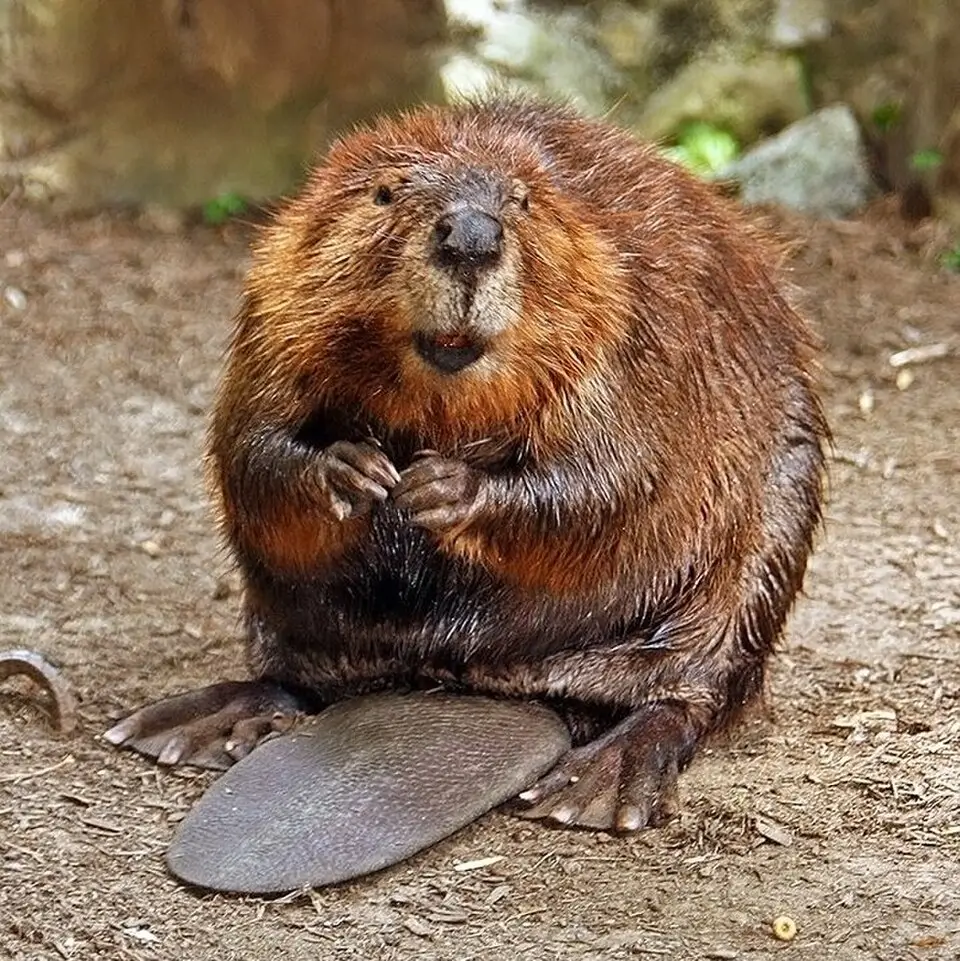
The North American beaver (Castor canadensis) is a member of the family Castoridae, an ancient lineage of rodents with fossil records stretching back millions of years. As the continent's largest rodent, adult beavers are impressively built animals, with stout, muscular bodies well-adapted to both terrestrial and aquatic life. Their most iconic feature is the broad, flat, scaly tail, which serves multiple purposes: it acts as a rudder during swimming, provides balance when the animal stands upright to gnaw trees, and is slapped loudly against the water as an alarm signal to warn other beavers of approaching danger.
The beaver's dense, waterproof fur is another defining characteristic. Comprised of two layers — a coarse outer coat and a fine, dense underfur — it provides exceptional insulation in cold water and harsh winter conditions. This fur was the driving force behind the North American fur trade of the 17th, 18th, and 19th centuries, making beavers one of the most economically significant animals in the history of the continent.
Beavers possess large, orange-tinted incisor teeth that are continuously growing throughout their lives. These incisors are coated with hard enamel on the front surface and softer dentin on the back, which causes them to self-sharpen as the animal gnaws. This extraordinary dental adaptation allows beavers to fell trees of considerable size, a behavior central to their survival and their role as ecosystem engineers. Their preferred food sources include the bark, leaves, and twigs of deciduous trees such as aspen, willow, cottonwood, and alder, though they also consume aquatic vegetation and other plant matter.
Beavers are highly social animals that live in family groups called colonies, typically consisting of a mated pair and their offspring from the current and previous year. They are largely monogamous and mate for life, reinforcing the cohesion of the family unit. Young beavers, called kits, are born fully furred and with their eyes open, making them relatively precocial compared to many other rodent species. Kits typically remain with their parents for about two years before dispersing to establish their own territories.
One of the beaver's most fascinating biological features is its castor glands, which produce a musky secretion known as castoreum. Beavers use castoreum to mark their territories, communicating information about identity and reproductive status to neighboring individuals. Castoreum has also been historically used by humans in perfumery and as a flavoring agent.
Habitat & Range
The North American beaver has one of the broadest distributions of any large mammal on the continent. Its range extends from Canada and Alaska southward through much of the contiguous United States and into northern Mexico. While populations were dramatically reduced during the era of intensive fur trapping, conservation efforts and the natural resilience of the species have allowed beavers to recolonize much of their historical range.
Beavers are quintessential wetland and riparian species. They inhabit rivers, streams, lakes, ponds, and marshes — essentially any freshwater environment that can supply the trees and shrubs they need for food and construction material. Their engineering behavior directly creates and maintains wetland habitat. By damming streams, beavers raise the local water table, slow the flow of water across the landscape, and create ponds that become rich havens for a stunning diversity of wildlife, including waterfowl, fish, amphibians, reptiles, and countless invertebrates.
In Idaho, beavers are found across a wide variety of aquatic habitats. The state's geography is extraordinarily well-suited to beaver occupation. Idaho is home to some of the most pristine river and stream systems in the American West, including portions of the Snake River, the Salmon River, the Clearwater, and hundreds of smaller drainages that thread through forested mountain terrain. The riparian corridors along these waterways — lined with willows, cottonwoods, and aspens — provide ideal habitat for beavers throughout the year.
The mountainous terrain of central and northern Idaho, combined with the high-elevation meadows and stream systems of the Frank Church–River of No Return Wilderness and other protected areas, supports healthy beaver populations in places that see relatively little human disturbance. In these settings, beaver activity contributes meaningfully to watershed health, helping to regulate water flow, reduce erosion, improve water quality, and create the kind of complex, productive aquatic habitats that support other game species including trout, elk, and moose.
Hunting Information
The North American beaver has a long and storied history as a furbearing species. Beaver pelts were among the most coveted commodities of the North American fur trade, and harvesting beavers through trapping remains a legitimate and regulated outdoor tradition across much of their range, including in Idaho. Trapping and hunting beavers can serve important wildlife management goals, helping to control beaver populations in areas where their dam-building activity may create conflicts with agriculture, roads, or other infrastructure.
In Idaho, the beaver is classified as a furbearing species and is subject to regulation by the Idaho Department of Fish and Game. However, specific season dates, license requirements, and bag limits for beaver trapping and hunting in Idaho were not available in the source data consulted for this article. Hunters and trappers interested in pursuing beavers in Idaho are strongly encouraged to consult the Idaho Department of Fish and Game directly at their official website or by contacting a regional office for the most current and accurate regulatory information. Regulations can change from season to season, and compliance with all applicable state and federal rules is both a legal obligation and an ethical responsibility.
Beaver trapping is typically conducted using body-gripping traps or cage traps set at dam crossings, runs, and entrances to lodges or food caches. Castoreum, the beaver's own natural musk, is a highly effective attractant used by experienced trappers. Beavers are most active at dawn and dusk and throughout the night, so sets placed in the evening often yield results by the following morning.
For those interested in pursuing beavers in Idaho's backcountry, the state's vast public land system — including national forests, Bureau of Land Management lands, and wilderness areas — offers extensive opportunity. Always verify land-specific regulations before setting traps, as rules may differ between jurisdictions.
Conservation
The story of the North American beaver is one of the great conservation successes of the 20th century. Once nearly extirpated from large portions of its range due to overharvesting during the fur trade era, the species has made a remarkable comeback thanks to protective regulations, habitat recovery, and reintroduction programs. Today, beaver populations across North America are considered stable and, in many regions, thriving.
Beyond simple population recovery, the conservation community has developed a deep appreciation for the beaver's outsized ecological role. Beaver wetlands are now recognized as critical habitat for a broad range of species and as important buffers against drought, wildfire, and climate variability. In the American West, where water is a precious and often scarce resource, beaver-created wetlands can retain water in the landscape during dry seasons, supporting vegetation and wildlife long after surface flows have diminished.
Conservation organizations and land managers increasingly view beavers not merely as a species to protect, but as an active tool for ecological restoration. Introducing or reintroducing beavers to degraded stream systems can accelerate the recovery of riparian habitats in ways that are difficult and expensive to replicate through human engineering alone. In Idaho and neighboring states, there is growing interest in using beavers as a nature-based solution to improve watershed function and resilience.
Responsible hunters and trappers play an important role in beaver conservation as well. Regulated harvest ensures that populations remain in balance with their habitat and reduces the potential for conflicts with human land use, while the tradition of pursuing furbearers connects participants to a rich cultural heritage and generates funding for wildlife management through license fees and excise taxes.