Overview
Few animals embody the spirit of wetland ecosystems quite like the muskrat (Ondatra zibethicus). This remarkable semi-aquatic rodent has thrived across North America for millennia, carving out a unique ecological niche in marshes, ponds, rivers, and streams from coast to coast. Widely recognized by trappers, naturalists, and wildlife enthusiasts alike, the muskrat is a cornerstone species in countless wetland environments — including those found throughout Idaho's diverse landscape of rivers, lakes, and marshlands.
Despite its modest size, the muskrat punches well above its weight in terms of ecological importance. It shapes the very wetlands it inhabits, providing habitat for other species through its construction activities, and has long served as a valuable furbearer for trappers and hunters across North America. Understanding this animal — its biology, behavior, and place in the ecosystem — offers a richer appreciation for the intricate web of life that defines North American wetlands.
Whether you are a seasoned trapper, a curious naturalist, or simply someone who has spotted one of these creatures gliding silently across a quiet mountain pond in Idaho, the muskrat's story is one worth knowing in full.
Biological Traits
The muskrat (Ondatra zibethicus) is the sole member of the genus Ondatra and belongs to the family Cricetidae, placing it in the same broad family as voles, lemmings, and many other rodents. Despite its common name and rat-like appearance, the muskrat is more closely related to voles than to true rats or mice.
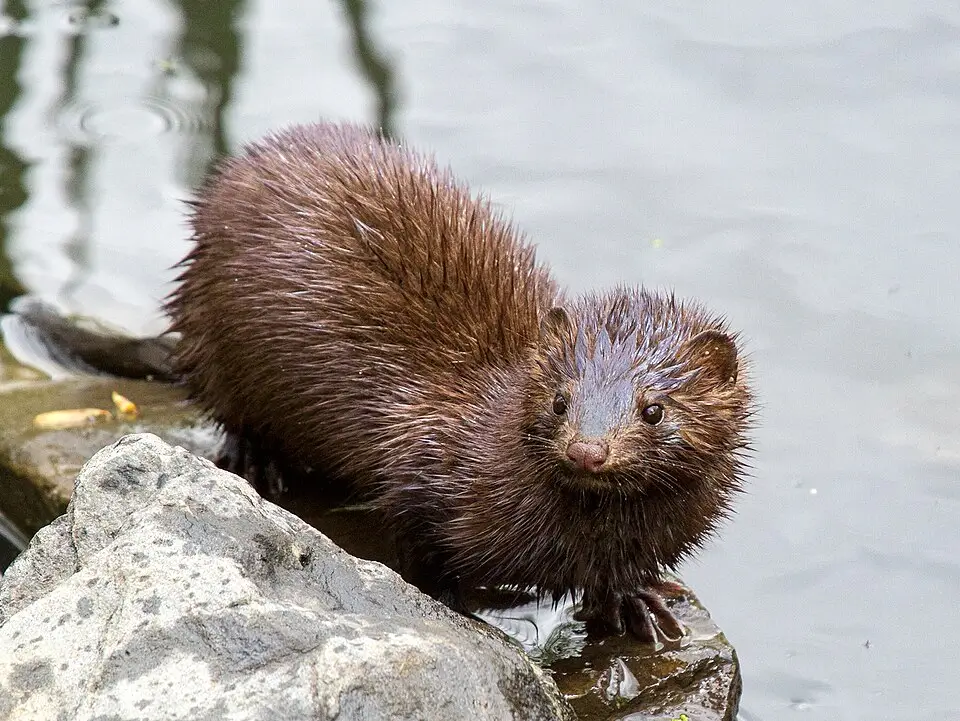
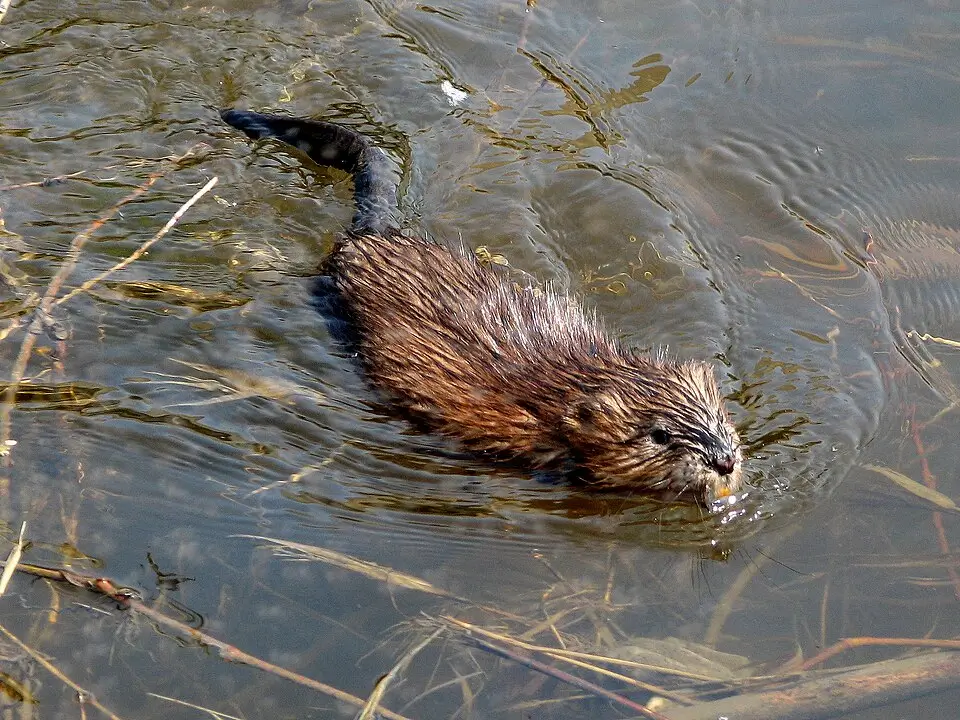
One of the most immediately recognizable features of the muskrat is its body shape, which is clearly adapted for life in and around water. The animal has a stocky, rounded body, small eyes and ears, and short legs — all features that reduce drag and heat loss in aquatic environments. Its hind feet are partially webbed, providing effective propulsion when swimming. Perhaps most distinctive is its long, laterally flattened tail, which acts as a rudder in the water, allowing the muskrat to maneuver with surprising agility.
The muskrat's dense, water-repellent fur is another key adaptation. It consists of two layers: a coarse outer coat of guard hairs and a thick, soft underfur that traps air and provides insulation against cold water. This fur, which typically ranges in color from dark brown to chestnut on the back to a lighter gray or buff on the belly, has historically made the muskrat one of the most commercially valuable furbearers in North America.
The name "muskrat" is derived from two glands near the base of the tail that produce a musky-scented secretion known as musk. This substance is used for communication and scent-marking within the animal's territory. Males use it prominently during breeding season to attract mates and signal their presence to rival males.
Muskrats are prolific breeders. Females can produce multiple litters per year, with litter sizes typically ranging from four to eight young. The young are born relatively helpless — hairless and with eyes closed — but develop quickly. This high reproductive rate helps sustain muskrat populations even in the face of significant predation pressure from natural predators such as mink, otters, red foxes, coyotes, great horned owls, and large raptors.
The muskrat's diet is primarily herbivorous, consisting of aquatic and semi-aquatic plants such as cattails, bulrushes, water lilies, sedges, and various other wetland vegetation. They may also supplement their diet with animal matter including freshwater mussels, crayfish, frogs, and fish when plant material is scarce.
Muskrats are capable of remaining submerged for relatively long periods — up to 15 to 20 minutes in some cases — thanks to a slowed heart rate and an efficient oxygen-use system during dives. This ability makes them formidable aquatic foragers and helps them evade predators.
Habitat & Range
The muskrat is one of the most widely distributed mammals in North America. Its range extends from Alaska and much of Canada southward through the contiguous United States, reaching into parts of northern Mexico. It has also been introduced — sometimes controversially — to parts of Europe and Asia, where it has established robust feral populations.
Within this vast range, the muskrat demonstrates remarkable habitat flexibility. It thrives in freshwater marshes, slow-moving rivers and streams, lakes, ponds, reservoirs, swamps, and even brackish coastal marshes. The common denominator across all of these environments is the presence of water and an abundance of emergent or aquatic vegetation that serves as both food and building material.
Muskrats are famous for their engineering abilities. They construct two primary types of dwellings: lodges and burrows. Lodges are dome-shaped structures built from plant material such as cattails, rushes, and mud, and are commonly seen rising from the surface of marshes and ponds. These lodges can be impressive structures, sometimes reaching several feet in height and diameter, with underwater entrances that help protect inhabitants from terrestrial predators. In areas with firm banks, muskrats may instead excavate burrow systems with underwater entrances, living in tunnel networks that can extend several feet inland.
In Idaho, the muskrat finds ample habitat across the state's rich network of wetlands, rivers, and lakes. Idaho's geography — ranging from the Snake River Plain to the high mountain valleys of the north and east — supports a wide variety of aquatic ecosystems. The Snake River and its associated marshlands, the lakes and ponds of northern Idaho, and the irrigated agricultural lowlands all provide suitable habitat. Wherever there is standing or slow-moving water with healthy stands of cattails and other emergent vegetation, there is a good chance that muskrats are present.
Idaho's position as a landlocked state in the Pacific Northwest and Mountain West means it experiences a range of climatic conditions, from the relatively mild and wet climate of the Panhandle region to the more arid conditions of the Snake River Plain. Muskrats adapt to these varying conditions and can be found in many of Idaho's wetland habitats year-round, even surviving under ice in winter months by relying on cached food stores and the insulating properties of their lodges.
Hunting and Trapping Information
The muskrat has one of the longest and most storied histories of any furbearer in North America. For centuries, Indigenous peoples across the continent harvested muskrats for food, clothing, and ceremony. With the arrival of European colonists and the rise of the commercial fur trade, muskrat pelts became one of the most important commodities traded across the continent. Even today, muskrats remain among the most commonly trapped furbearers in North America.
Traditional methods for harvesting muskrats include foothold traps, body-gripping (conibear) traps, and cage traps, most often set at burrow entrances, runs, and feed beds along waterways. Trappers skilled in reading wetland habitat can often locate active muskrat sign — including lodge structures, feeding platforms, and well-worn runs through marsh vegetation — that indicate productive trapping locations.
For those interested in harvesting muskrats in Idaho, it is important to consult the Idaho Department of Fish and Game for current, up-to-date regulations regarding trapping and hunting seasons, licensing requirements, and any applicable rules specific to trapping methods or geographic areas. Regulations can change from year to year, and what applies in one region or season may differ elsewhere in the state. Hunters and trappers should always obtain the appropriate licenses and permits before pursuing any furbearer species.
The muskrat's value is not purely commercial. Muskrat meat is eaten in various parts of North America and has been described as mild and somewhat similar to rabbit or dark-meat poultry. Historically, muskrat was a staple food for many Indigenous communities and was also eaten by European settlers during periods when other food sources were scarce.
Conservation
From a conservation standpoint, the muskrat is currently classified as a species of Least Concern by the International Union for Conservation of Nature (IUCN). Its wide range, high reproductive rate, and adaptability to a variety of habitats have helped it maintain healthy populations across most of its native range.
That said, muskrat populations are not without their challenges. Habitat loss due to wetland drainage, urban development, and agricultural conversion has reduced available habitat in some regions. Water quality issues, pollution, and changes in wetland hydrology can also impact local muskrat populations. Natural disease events, such as outbreaks of "muskrat plague" (a form of tularemia or hemorrhagic disease), can periodically cause significant localized population declines, though populations typically recover over time.
Predator populations — including mink, which are closely tied to the same wetland habitats as muskrats — can also exert significant pressure on local muskrat numbers, particularly when mink populations are high.
Conservation of muskrat populations is closely tied to the broader health of North American wetlands. Wetland conservation efforts, including programs that protect and restore marshes and riparian corridors, directly benefit muskrats and the many other species that share their habitat. In Idaho, stewardship of riparian zones along the Snake River and its tributaries, as well as protection of northern Idaho's lakes and marshes, plays an important role in maintaining healthy muskrat populations.
Responsible trapping, guided by science-based harvest regulations established by state wildlife agencies, is also an important component of muskrat conservation management. Sustainable harvest practices ensure that muskrat populations remain healthy and productive over the long term.
Conclusion
The muskrat is a testament to the power of adaptation and resilience in the natural world. From the icy marshes of the Canadian north to the warm backwaters of the American South, and from the irrigated wetlands of Idaho's Snake River Plain to the placid mountain lakes of the state's northern Panhandle, this small but remarkable animal leaves its mark on every wetland it inhabits. For trappers, hunters, naturalists, and conservationists alike, the muskrat represents both the richness of North America's wetland heritage and the importance of protecting these vital ecosystems for generations to come.