Overview
Few animals capture the spirit of the American West quite like the mule deer. With its oversized, mule-like ears, distinctive bounding gait, and impressive antlers, Odocoileus hemionus has become one of the most recognizable and celebrated big game animals on the continent. Whether you are an avid hunter, a wildlife photographer, or simply an outdoor enthusiast hiking through sagebrush-covered hillsides, encountering a mule deer in its natural environment is an experience that stays with you. These animals are deeply woven into the cultural and ecological fabric of western North America, and they hold a place of special significance in states like Idaho, where wild landscapes provide ideal conditions for thriving mule deer populations.
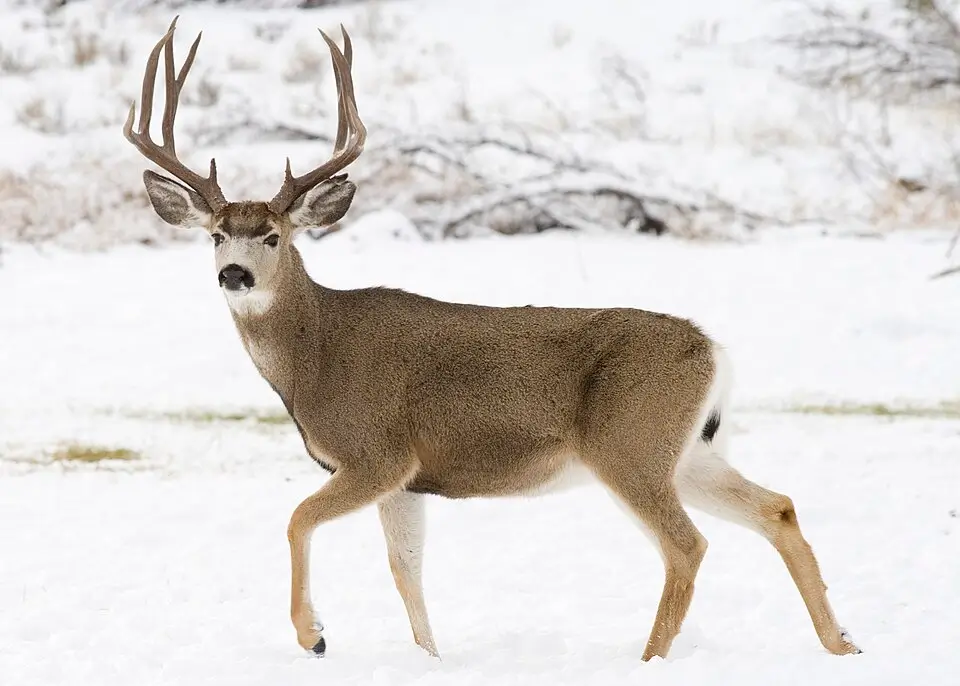
Mule deer belong to the family Cervidae, the same family that includes elk, moose, caribou, and whitetail deer. They are closely related to the black-tailed deer, which some taxonomists consider a subspecies of Odocoileus hemionus. The common name "mule deer" comes from the animal's famously large ears, which rotate independently and help the deer detect predators across open, rugged terrain. These ears are one of the most immediately identifiable features of the species, distinguishing it at a glance from its eastern cousin, the white-tailed deer.
Idaho, a landlocked state nestled in the Pacific Northwest and Mountain West subregions of the Western United States, offers some of the finest mule deer country anywhere in the world. Bordering Montana and Wyoming to the east, Nevada and Utah to the south, and Washington and Oregon to the west, Idaho's 83,569 square miles of diverse terrain — from alpine ridgelines to high desert basins — provide a mosaic of habitats that mule deer rely upon throughout the year. The state's capital and largest city, Boise, sits in the heart of some of the most productive mule deer range in the region.
Biological Traits
The mule deer (Odocoileus hemionus) is a medium-to-large cervid with several distinctive physical characteristics that set it apart from other North American deer species. The most iconic feature, as previously noted, is the pair of large, prominent ears that inspired the animal's common name. These ears provide exceptional hearing and are constantly in motion, scanning the environment for signs of danger.
Mule deer are sexually dimorphic, meaning males (bucks) and females (does) differ noticeably in size and appearance. Bucks are considerably larger than does and carry antlers that are shed and regrown each year. One of the most distinctive characteristics of mule deer antlers is their bifurcated, or forked, branching pattern. Rather than growing tines off a single main beam as white-tailed deer antlers typically do, mule deer antlers fork into two main branches, each of which may fork again. This unique configuration gives mature mule deer bucks some of the most visually impressive headgear in North American wildlife.
The coat of a mule deer changes with the seasons. During summer months, the coat is a reddish-tan or tawny color, helping the animal blend into the warm-toned landscapes of the West. In autumn and winter, the coat transitions to a grayish-brown, providing better camouflage against the rocky, dormant vegetation of the season. Mule deer have a distinctive white rump patch and a narrow, rope-like tail with a black tip — another feature that helps distinguish them from white-tailed deer, which have a broad, all-white tail they raise like a flag when alarmed.
One of the most fascinating behavioral traits of the mule deer is its unique style of locomotion known as "stotting" or "pronking." When alarmed, mule deer will often bound away in a stiff-legged, four-footed jumping gait, with all four hooves leaving and returning to the ground simultaneously. This behavior is thought to serve multiple purposes: it allows the deer to navigate rough, rocky terrain rapidly, and it may also signal to predators that the animal is fit and not worth pursuing. This bounding run is one of the most memorable sights in western wildlife.
Mule deer are primarily crepuscular, meaning they are most active during the low-light hours of dawn and dusk. They are also known to move at night, particularly during hunting pressure or extreme heat. Their diet is largely composed of browse — shrubs, forbs, and woody plants — though they will also consume grasses and agricultural crops where available. Seasonal migration is a hallmark of mule deer behavior in many parts of their range, with animals moving to higher elevations in summer and descending to lower, snow-free winter ranges when cold weather arrives.
The rut, or breeding season, for mule deer typically occurs in the fall, generally from late October through December, with peak activity often observed in November. During the rut, bucks become less cautious and more focused on locating does, making this one of the most exciting times for hunters and wildlife observers alike.
Habitat & Range
Mule deer are quintessentially western animals. Their range covers much of western North America, from the coastal mountains of British Columbia and the deserts of Baja California in the south, to the Great Plains in the east. They thrive in a remarkably diverse array of habitats, including mountain forests, sagebrush steppe, desert scrubland, riparian corridors, and alpine tundra. This adaptability is one of the reasons mule deer are so widespread and abundant across the West.
In Idaho specifically, mule deer can be found across a broad swath of the state's varied landscapes. The high desert terrain of southern Idaho, with its vast expanses of sagebrush and bitterbrush, provides critical winter range for many deer herds. The mountain ranges of central and eastern Idaho — including portions of the Rocky Mountain system — offer summer and fall habitat rich with forbs, shrubs, and timber for cover. River breaks and canyon systems are also important habitats, offering both cover and forage.
Seasonal migration is particularly important for mule deer in mountainous states like Idaho. As winter snowpack deepens at higher elevations, deer move down to lower valleys and foothills where food remains accessible. The quality and availability of winter range is often considered a limiting factor for mule deer populations, making the protection of these seasonal movement corridors a priority for wildlife managers.
Mule deer share their habitat with a variety of other wildlife, including elk, pronghorn, wild turkeys, and numerous predator species such as mountain lions, coyotes, and wolves. These ecological relationships shape mule deer behavior and population dynamics in complex and fascinating ways.
Hunting Information
Mule deer hunting is one of the most storied traditions in western North America, and Idaho ranks among the premier destinations for hunters seeking a quality mule deer experience. The state's vast public lands — including national forests, Bureau of Land Management areas, and state endowment lands — provide exceptional access for hunters of all backgrounds.
Mule deer are typically hunted using a variety of methods, including spot-and-stalk hunting, still hunting, and hunting from blinds or tree stands near water sources and feeding areas. The open, often treeless terrain of much of mule deer country makes spot-and-stalk hunting particularly popular and effective. Hunters use binoculars and spotting scopes to locate animals from a distance before planning a careful approach.
The fall rut is widely considered the best time to pursue mature bucks, as increased buck movement and reduced wariness make encounters more frequent. Early season hunts, when deer are still in summer patterns and found at higher elevations, can also be productive and offer hunters the chance to pursue bucks in spectacular alpine settings.
Archery, rifle, and muzzleloader seasons are all available for mule deer hunting in many western states, including Idaho. Hunters interested in pursuing mule deer in Idaho should consult the Idaho Department of Fish and Game for current season dates, tag requirements, unit-specific regulations, and licensing information, as these details are updated annually and vary by management unit. Obtaining accurate, up-to-date information from the state wildlife agency is the best way to ensure a legal, ethical, and successful hunt.
Conservation
The conservation of mule deer is a shared priority among hunters, wildlife managers, landowners, and conservation organizations across the West. Mule deer populations have faced various challenges over the decades, including habitat loss and fragmentation, severe winters, drought, predation, and disease. Efforts to maintain and improve mule deer populations focus on habitat conservation and restoration, particularly the protection of critical winter range and migration corridors.
Hunter-funded conservation programs have played an essential role in mule deer management. License and tag fees, as well as federal excise taxes on sporting goods under the Pittman-Robertson Act, provide substantial funding for state wildlife agencies to conduct research, manage habitat, and monitor deer populations. Organizations dedicated to mule deer conservation work alongside government agencies to restore critical habitat, improve forage quality, and reduce barriers to migration such as highway fencing.
In Idaho, the Idaho Department of Fish and Game actively monitors mule deer populations and adjusts hunting seasons and harvest quotas to ensure sustainable management. Scientific population surveys, GPS collar studies, and winter range assessments all contribute to evidence-based management decisions that benefit both deer and hunters for the long term.
The future of mule deer in Idaho and across the West looks promising, provided that collaborative conservation efforts continue and wild, open landscapes are preserved for generations to come. Whether you pursue them with a rifle, a bow, or a camera, mule deer represent one of the great wildlife success stories of western North America — a testament to what thoughtful management and a conservation ethic can achieve.